

Terrace of the Angel Castel Sant’Angelo: Rome’s Best View
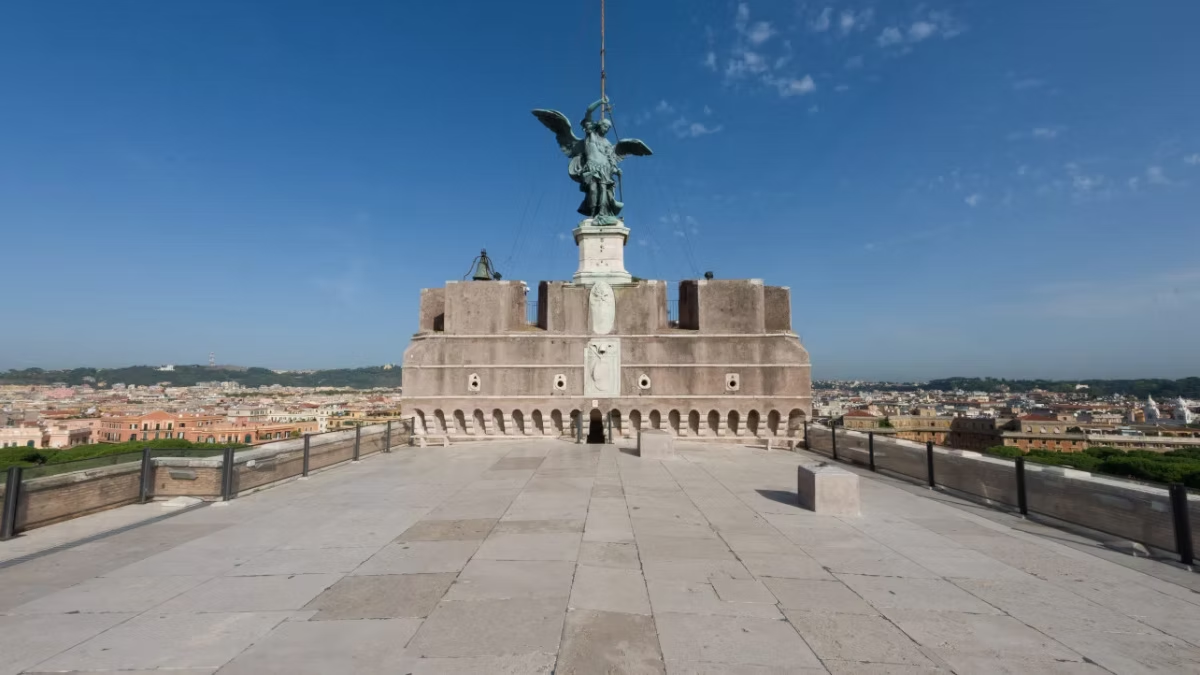
The Terrace of the Angel is the open rooftop platform at the very top of Castel Sant’Angelo, crowned by a bronze statue of the Archangel Michael. It’s a full 360-degree viewpoint over Rome — St. Peter’s dome, the Tiber and its bridges, the historic center, and the Vittoriano — and for most visitors it’s the single best reason to make the climb.
Everything about a visit to Castel Sant’Angelo builds toward this point. You climb Hadrian’s ancient spiral ramp, wind through Renaissance courtyards and papal rooms, and pass the old prison cells, and then a last staircase opens onto open sky and one of the widest panoramas in Rome. It’s the moment the castle’s whole story — mausoleum, fortress, papal refuge, museum — comes together under the gaze of the bronze angel above.
This guide covers what the terrace is, what you can see from it, the Tosca connection that makes it famous beyond Rome, how to reach it, and when to go for the best light and the smallest crowd.
What Is the Terrace of the Angel
The Terrace of the Angel is the rooftop of Castel Sant’Angelo, named for the 18th-century bronze statue of the Archangel Michael that stands above it, sheathing his sword. It marks the spot where, according to legend, Pope Gregory the Great saw a vision of the angel in 590 AD, signaling the end of a plague and giving the castle its name.
The terrace sits at the summit of the building’s five levels, directly beneath the bronze Michael sculpted by Peter Anton von Verschaffelt in the 18th century, which replaced earlier angel statues on the same spot (an older marble angel now stands in a courtyard below). The statue faces outward over the city, sword raised and then sheathed, exactly as legend has it appeared to Pope Gregory the Great during the plague of 590 AD — the vision that gave the “Castle of the Holy Angel” its name. Our guide to the statue of Saint Michael goes deeper into that legend and the statue’s history.
The terrace itself is an open, unroofed platform, not large, ringed by a stone parapet. There’s no glass or barrier between you and the view in most directions, which is part of what makes it feel so exposed and dramatic after the enclosed rooms below.
The 360-Degree Panorama
From the Terrace of the Angel you get an unbroken 360-degree view of Rome: St. Peter’s dome and Vatican City to one side, the Tiber River and its bridges below, the historic center’s rooftops and domes across the water, and the Vittoriano monument in the distance.
This is the terrace’s whole appeal — a rooftop panorama with nothing comparable nearby. Looking toward the Vatican, St. Peter’s dome dominates the skyline, close enough to pick out its lantern and the colonnade of the piazza in front of it. Turn toward the river and the Tiber curves beneath the castle, with Ponte Sant’Angelo and its line of Bernini angel statues directly below, and further bridges visible upstream and down. Across the water, the historic center spreads out in a mass of terracotta roofs, church domes, and bell towers, with the white bulk of the Vittoriano monument recognizable on the horizon toward the Capitoline Hill. On a clear day, the view extends well beyond the immediate skyline toward the hills that ring the city.
It’s genuinely one of the best public viewpoints in Rome, and it’s worth knowing how it stacks up against the city’s other rooftop and dome views before you decide how much time to give it; see our comparison of the best views in Rome for how the terrace measures up.
The Tosca Connection
The terrace has a cultural life well beyond tourism. It’s the setting for the final act of Puccini’s opera Tosca, where the heroine leaps to her death from the ramparts after Cavaradossi’s execution — one of the most famous closing scenes in opera. Visitors who know the opera often come specifically to stand where that scene is set, and the terrace’s dramatic, exposed position over the city makes the connection easy to feel even without knowing the plot. Our guide to Tosca and Castel Sant’Angelo covers the opera’s third act in full and why the castle became its setting.
How to Reach the Terrace
The Terrace of the Angel is the last stop on the visit, reached only after climbing through all five levels of the castle: Hadrian’s original spiral ramp at the base, the Renaissance courtyards, the papal apartments with their frescoed halls, and the smaller museum rooms and former prison cells. There’s no shortcut or elevator to the top — it’s a continuous climb, mostly on ramps and stairs, and the terrace is the reward at the end rather than a stop you can visit on its own. Our floor-by-floor walkthrough of the inside of Castel Sant’Angelo lays out the full route so you know what to expect before you reach the top.
Because the terrace and the upper levels are the last areas open before closing, staff begin moving visitors down as the day’s last admission passes. If reaching the top with time to enjoy the view matters to you — and it should — build in enough of the day and don’t arrive right at last entry.
Best Time and Light
Late afternoon into early evening gives the most flattering light on the terrace, with the sun lowering over St. Peter’s and the city taking on a warm glow. Early morning, right at opening, is the calmest and least crowded option. Midday sun is harsher and the terrace is at its busiest.
Photographers and anyone chasing atmosphere generally prefer the last couple of hours before closing, when the light turns golden and the crowds thin as the day winds down. Morning, close to the 9:00 AM opening, is the other good option — cooler, quieter, and with clear light over the Vatican before the haze of a warm afternoon sets in. Midday tends to be both the most crowded and the least interesting light-wise, especially in summer. For a fuller breakdown of hour, day, and season, see our guide to the best time to visit Castel Sant’Angelo.
What You Can Identify From Up There
With a little orientation, most visitors can pick out the following from the terrace:
- St. Peter’s Basilica — the dome is the clearest landmark on the skyline, with Vatican City spread beneath and around it.
- The Tiber River — directly below, curving around the castle, with Ponte Sant’Angelo and its angel statues the closest bridge.
- The historic center — the dense rooftops and domes across the river, including the general direction of Piazza Navona and the Pantheon.
- The Vittoriano — the large white monument on Piazza Venezia, visible in the distance toward the Capitoline Hill.
- The surrounding hills — on a clear day, the wider skyline beyond the city center, giving a sense of Rome’s full scale.
The Café and Crowds
There’s a small café on one of the upper levels near the terrace, a welcome stop after the climb, with basic drinks and snacks and its own view over the city — a good spot to sit for a few minutes rather than only passing through. The terrace itself is not large, and it can feel genuinely crowded at midday and on the free first Sunday of the month, when the whole castle sees more visitors than usual. Early or late in the day, and on any afternoon outside peak season, it thins out considerably and it’s easy to find a stretch of parapet to yourself. Our guide to the best photo spots at Castel Sant’Angelo has specific angles worth seeking out once you’re up there.
Why It’s the Highlight of Any Visit
Everything below the terrace is worth seeing — the ancient ramp, the papal rooms, the prison cells — but the terrace is where the visit resolves. It’s the physical high point of the building and, for most people, the emotional one too: the view ties together the Vatican, the river, and the historic center in a single frame, and the bronze angel overhead connects the whole legend of the castle’s name back to the spot where it was supposedly seen. If time is tight, everything else can be shortened; the terrace shouldn’t be.
Frequently Asked Questions
What is the Terrace of the Angel at Castel Sant’Angelo?
It’s the open rooftop platform at the top of Castel Sant’Angelo, named for the bronze statue of the Archangel Michael that stands above it. It offers a 360-degree panorama over Rome and is the final stop on a visit to the castle.
Why is it called the Terrace of the Angel?
It takes its name from the bronze statue of the Archangel Michael that crowns it, sculpted by Peter Anton von Verschaffelt in the 18th century. The statue marks the spot where legend says Pope Gregory the Great saw a vision of the angel in 590 AD, giving the whole castle its name.
What can you see from the Terrace of the Angel?
You get a 360-degree view that includes St. Peter’s dome and Vatican City, the Tiber River and its bridges directly below, the rooftops and domes of Rome’s historic center, and the Vittoriano monument in the distance. On a clear day the view extends to the hills beyond the city.
How do you get to the terrace?
The terrace is reached only by completing the full climb through Castel Sant’Angelo — Hadrian’s spiral ramp, the Renaissance courtyards, the papal apartments, and the upper museum rooms. There’s no elevator or shortcut, and it’s the last area you reach on a visit.
Is the Terrace of the Angel connected to the opera Tosca?
Yes. The terrace is the setting for the final act of Puccini’s Tosca, where the heroine leaps from the ramparts after Cavaradossi’s execution. It’s one of opera’s most famous closing scenes, and many visitors come specifically to see the setting for themselves.
Is there a café on the terrace?
There’s a small café on one of the upper levels near the terrace with basic drinks and snacks, and its own view over the city. It’s a good place to pause after the climb rather than rushing straight back down.
What is the best time to visit the terrace for photos?
Late afternoon into early evening gives the warmest, most flattering light over St. Peter’s and the city, while early morning near opening is calmer and clearer. Midday tends to have harsher light and the largest crowds.
Is the Terrace of the Angel crowded?
It can be, especially at midday and on the free first Sunday of the month, since the terrace itself is fairly small. Early morning and the last couple of hours before closing are noticeably quieter.
Can you skip the rest of the castle and go straight to the terrace?
No. The terrace is only reachable by completing the full climb through all five levels of the castle, so there’s no way to see it without passing through the courtyards, papal apartments, and museum rooms first.
Is the Terrace of the Angel worth the climb?
For most visitors, yes — it’s widely considered the highlight of the whole visit. The climb through the ramp, courtyards, and papal rooms is worthwhile on its own, but the 360-degree view from the top is the payoff most people remember.
