

Best Views in Rome: Where the Terrace of the Angel Ranks
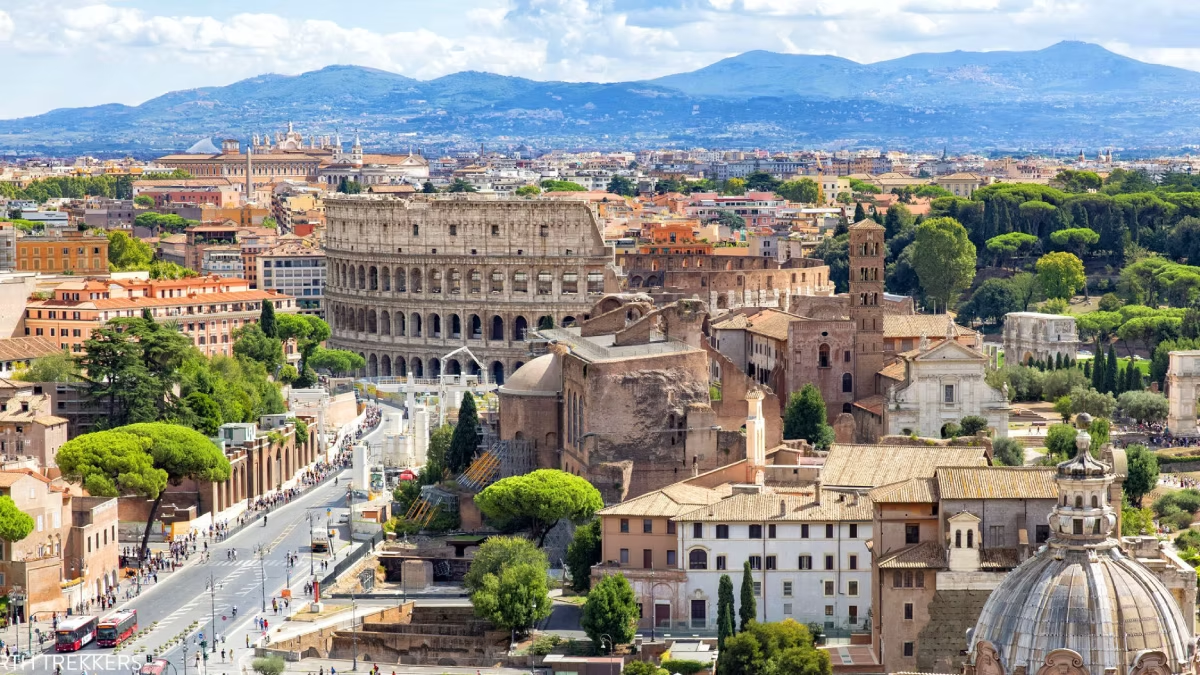
Rome has several outstanding viewpoints, each with a different personality — the Gianicolo and Pincio are free and panoramic, the Vittoriano and St. Peter’s Dome climb higher, and the Orange Garden pairs a view with a quiet park. The Terrace of the Angel at Castel Sant’Angelo stands out because it is central, it frames St. Peter’s dome directly across the river, and it comes built into a 1,900-year-old monument rather than a standalone lookout, so the view is one part of a bigger visit.
Rome is a city best understood from above, and it offers more good viewpoints than most visitors have time for. Some are free and open around the clock; others are ticketed, timed, or tied to a museum or monument you’re visiting anyway. None of them is objectively “the best” — it depends on whether you want the highest vantage, the most romantic sunset, the most famous postcard shot, or a view you can fold into a visit you’re already making.
This guide compares the city’s leading viewpoints on what you actually see, what it costs, how crowded it gets, and the best time to go — then makes the honest case for where the Terrace of the Angel fits among them.
How the Viewpoints Compare at a Glance
| Viewpoint | What you see | Cost | Best time |
|---|---|---|---|
| Terrace of the Angel (Castel Sant’Angelo) | 360° over the historic center, the Tiber, and St. Peter’s dome | Included in castle admission (~€16) | Late afternoon into early evening |
| Vittoriano terraces | Wide rooftop panorama toward the Forum, Capitoline, and St. Peter’s | Free (elevator is a small paid extra) | Weekday mornings |
| Gianicolo (Janiculum) | The classic postcard skyline of domes and rooftops | Free | Sunset |
| Pincio / Villa Borghese | Piazza del Popolo and the center, framed by garden greenery | Free | Late afternoon |
| Orange Garden (Giardino degli Aranci) | The Tiber bend and St. Peter’s from the Aventine, through orange trees | Free | Early morning or sunset |
| St. Peter’s Dome climb | The highest view in Rome, directly over St. Peter’s Square | Paid climb (elevator + stairs, or stairs only) | Weekday, first entry |
| Rooftop bars | Curated, styled views paired with a drink | Cost of a drink, often with a minimum spend | Aperitivo hour |
Vittoriano Terraces
The Vittoriano’s rooftop terraces, reached mostly by panoramic elevator, give a wide, free view over central Rome from one of the city’s most central buildings. The elevator itself carries a small fee; the terrace and much of the monument are free to enter.
The Vittoriano — the huge white marble monument on Piazza Venezia — has rooftop terraces that open out over the Forum, the Capitoline Hill, and, on a clear day, as far as St. Peter’s. Getting up is easy: a glass panoramic elevator runs from the side of the building for a modest fee, bypassing most of the stair climb. The location could not be more central, sitting at the hinge between the historic center and ancient Rome, which makes it an easy add-on to a day of sightseeing rather than a special trip. Crowds build through the middle of the day, especially with tour groups passing through Piazza Venezia; weekday mornings are calmer. The view is broad and well-oriented for identifying Rome’s landmarks, though the monument itself is such a dominant white presence that it’s the one classic view of Rome that doesn’t include the Vittoriano.
Gianicolo (Janiculum Hill)
The Gianicolo delivers Rome’s most photographed skyline — a long balustrade above Trastevere with domes and rooftops stretching to the horizon. It’s free, open all day, and best at sunset, though it sits away from the center and needs a walk, bus, or taxi to reach.
The Janiculum is the hill most Romans point to when asked where to watch the sunset, and the reputation is earned: the terrace near the Garibaldi monument looks out over Trastevere’s rooftops with the whole city laid out beyond. It’s free and unticketed at any hour. The catch is access — it’s a genuine hill climb from Trastevere on foot, or a bus/taxi ride from the center, and there’s no monument or museum built around the view itself, so it’s a dedicated trip rather than something you fold into another stop. At sunset it draws a crowd of tourists, couples, and street vendors, which adds atmosphere but also noise; earlier in the day it’s near-empty and quieter.
Pincio / Villa Borghese
The Pincio terrace, at the edge of Villa Borghese park above Piazza del Popolo, offers a classic late-afternoon view over the center framed by trees and gardens. It’s free, easy to reach on foot from the center, and pairs naturally with a walk through the park.
The Pincio terrace sits right where Villa Borghese meets Piazza del Popolo, and it’s one of the easiest great views to reach — a short walk up from the piazza rather than a hillside trek. It looks out over the rooftops and domes of the historic center, with the park’s umbrella pines framing the shot, and it’s especially loved at sunset. It’s free, always open, and a natural stop if you’re already spending time in Villa Borghese or visiting the Borghese Gallery. Crowds gather for sunset but the terrace is large enough to absorb them better than some smaller lookouts.
Orange Garden (Giardino degli Aranci)
The Orange Garden on the Aventine Hill is a small, free park with a low wall overlooking the Tiber bend and a clear line to St. Peter’s dome. It’s quieter than the Gianicolo or Pincio and a favorite for a peaceful early-morning or sunset visit.
Tucked on the Aventine Hill above Trastevere and Testaccio, the Orange Garden is smaller and less visited than Rome’s headline viewpoints, which is much of its appeal. The wall at the far end looks over the river bend toward St. Peter’s, framed by the garden’s namesake orange trees. It’s free, calm even at sunset compared with the Gianicolo, and often combined with a peek through the famous keyhole at the nearby Knights of Malta priory, which frames St. Peter’s dome through a hedge tunnel. The tradeoff is that it’s a bit out of the way from the main sightseeing circuit and involves a walk up the Aventine.
St. Peter’s Dome Climb
Climbing to the top of St. Peter’s Dome gives the highest and most dramatic view in Rome, directly over St. Peter’s Square and the Vatican gardens, but it’s a real physical climb (partly by elevator, then a narrow stair) and requires a ticket and, in peak season, patience for lines.
No view in Rome is higher or more dramatic than the one from the lantern atop St. Peter’s Dome. You look straight down into St. Peter’s Square, across the Vatican gardens, and out over the whole city in a sweep no other viewpoint matches. Getting there requires a ticket and a genuine climb — an elevator covers part of the ascent, but the final stretch is a narrow, sloped staircase that isn’t for anyone with mobility limits or claustrophobia. Lines build fast in peak season, so going first thing in the morning matters. It’s arguably the single best individual view of Rome, and it directly overlooks the neighbor to Castel Sant’Angelo across the river, which is part of what makes the castle’s own terrace worth comparing against it.
Rooftop Bars
Rome’s rooftop bars turn a good view into an evening out, with curated sightlines toward domes and rooftops paired with a drink, usually around aperitivo hour. They cost the price of a drink (often with a minimum spend) and are best booked ahead for a table with the view.
Several hotels and rooftop bars around the center — near the Spanish Steps, Piazza Navona, and along the river — have leaned into their views, and a well-placed rooftop bar can rival any formal viewpoint for atmosphere at golden hour. The tradeoff is that you’re paying bar prices for the privilege, tables with the best sightlines fill up, and the view is usually a slice of the skyline rather than a full panorama. They’re a good complement to a daytime viewpoint rather than a substitute — a place to end the day rather than see the whole city.
Where the Terrace of the Angel Fits
The Terrace of the Angel doesn’t beat the Dome climb for sheer height, but it wins on location and context: it’s close to the historic center, it frames St. Peter’s dome directly across the Tiber, and reaching it is part of a visit to a genuinely remarkable 1,900-year-old monument rather than a dedicated trip to a lookout.
Ranked purely by altitude and drama, St. Peter’s Dome wins, and the Gianicolo probably wins on the classic wide skyline shot. But the Terrace of the Angel earns its place near the top of the list for reasons the others don’t share. First, location: it sits on the river between the historic center and the Vatican, a few minutes’ walk from Ponte Sant’Angelo, so it’s central to almost any Rome itinerary rather than a special hillside detour. Second, the framing: from the terrace you look directly across the Tiber at St. Peter’s dome, close enough to feel present in the shot rather than a hazy landmark on the horizon — a composition that’s hard to match from the Gianicolo or Pincio, which see the dome from further away and a different angle.
Third, and most distinctive: the view here isn’t the destination on its own. It’s the payoff at the top of a visit that already includes Hadrian’s Mausoleum, Renaissance papal apartments, the Sala Paolina frescoes, and the prison cells that held Beatrice Cenci and Giordano Bruno’s associates. You climb a helical Roman ramp, walk through 1,900 years of history, and arrive at the terrace as a reward rather than a standalone errand. That combination — history plus view — is what separates it from a pure lookout like the Gianicolo or Pincio, and it’s why visitors who rank it highly usually cite the whole experience, not just the sightline. Being honest about the tradeoffs: the terrace is smaller than the Dome’s lantern gallery, it involves an admission ticket rather than free access, and it can feel crowded in the final hour before close, so timing still matters.
Frequently Asked Questions
What is the best view in Rome?
There’s no single answer — it depends on what you want. The Gianicolo gives the classic wide skyline, St. Peter’s Dome gives the highest and most dramatic vantage, and the Terrace of the Angel at Castel Sant’Angelo gives a central view that frames St. Peter’s dome and comes with a major historic monument attached.
Is the Terrace of the Angel better than the Gianicolo?
They’re different experiences rather than directly comparable. The Gianicolo is free, higher above the city on a hillside, and famous for its wide sunset skyline; the Terrace of the Angel is closer to the river and historic center, requires admission, and frames St. Peter’s dome up close as part of a visit to the castle itself.
Is it worth climbing St. Peter’s Dome instead of visiting the Terrace of the Angel?
Both are worth doing if you have time for each; they’re not substitutes. The Dome climb gives the single highest view in the city but is a genuine physical climb with lines in peak season, while the castle terrace is an easier ascent bundled with a broader historical visit and a closer, framed view of the Dome itself.
Are any of Rome’s best viewpoints free?
Yes — the Gianicolo, the Pincio terrace, and the Orange Garden on the Aventine are all free and open at any hour. The Vittoriano terraces are free to enter, though the panoramic elevator that reaches them carries a small fee. The Terrace of the Angel and the St. Peter’s Dome climb both require paid admission.
What is the closest great view to St. Peter’s Basilica?
The Terrace of the Angel is the closest major viewpoint to St. Peter’s, a short walk from the Vatican across Ponte Sant’Angelo, and it looks directly at the dome across the Tiber. The Dome climb itself is, of course, at St. Peter’s, but it looks out from the basilica rather than toward it.
Which viewpoint is best at sunset?
The Gianicolo and the Pincio are the two classic sunset spots, both free and both drawing crowds in the final hour before dusk. The Terrace of the Angel is also excellent at sunset, with the added advantage that the castle’s last admission is typically before closing, so plan your entry time to be on the terrace as the light turns.
Do I need to book tickets in advance for these viewpoints?
The free viewpoints — the Gianicolo, Pincio, and Orange Garden — need no booking. St. Peter’s Dome and Castel Sant’Angelo both benefit from advance booking in peak season, since both use timed entry and can have long on-the-day lines; our guide to which ticket to buy covers the castle’s options.
Is the climb to the Terrace of the Angel difficult?
It’s a steady, multi-level climb through Hadrian’s original helical ramp and the Renaissance floors above, but it’s less demanding than the narrow final stair to St. Peter’s Dome’s lantern. Most visitors in reasonable fitness manage it comfortably; travelers with mobility concerns should check our accessibility guide before booking.
How crowded does the Terrace of the Angel get?
It’s busiest at midday and on the free first Sunday of the month, and it clears out somewhat in the final couple of hours before the 6:30 PM last admission. Late afternoon into early evening is the best balance of good light and manageable crowds.
Can I see both the Terrace of the Angel and St. Peter’s Dome in one day?
Yes, and many visitors do, since the two sites are a short walk apart across the Tiber. A practical order is the castle in the morning or early afternoon, then the Dome climb later, or vice versa — just check both sites’ last-admission times so you don’t arrive too late for either.
