

Where to Stay Near Castel Sant’Angelo: Borgo & Prati Guide
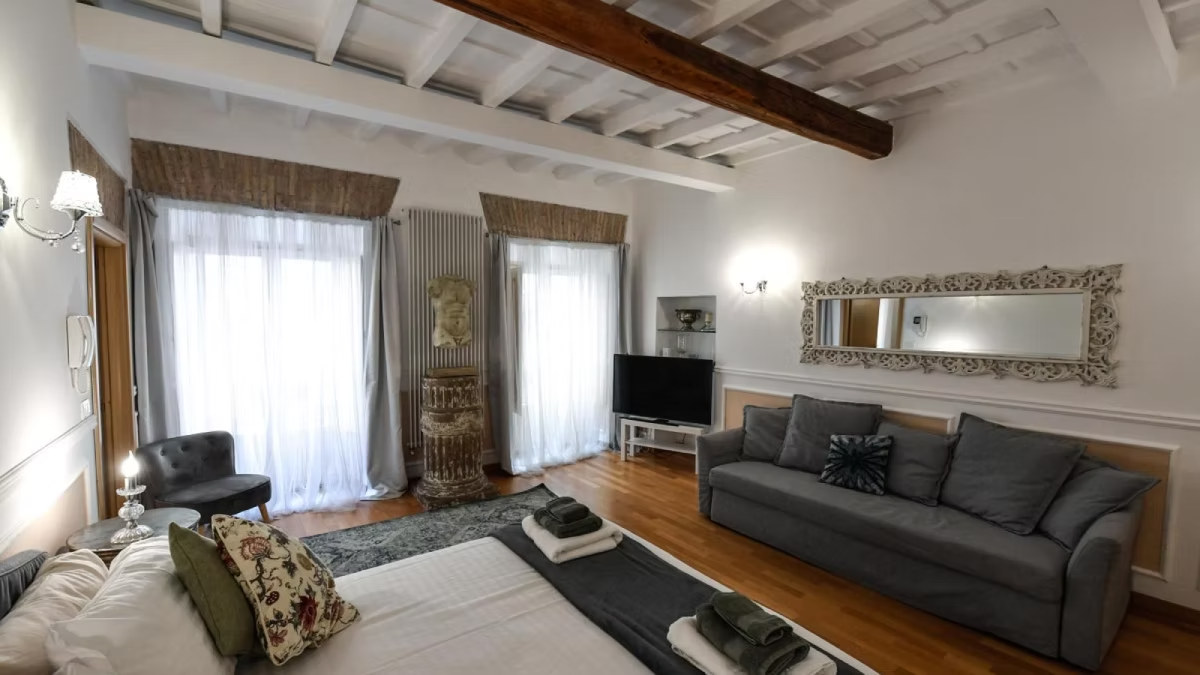
The two best bases near Castel Sant’Angelo are Borgo, the small, atmospheric quarter right beside the castle and St. Peter’s, and Prati, the elegant, well-connected residential district just north of it. Borgo suits travelers who want to walk to the Vatican and castle in minutes and don’t mind tourist-oriented streets; Prati suits those who want a quieter, more local feel with excellent food and shopping and easy Metro A access. First-timers focused on the Vatican area do well in either; those who want to be closer to the historic center’s other sights may prefer a base across the river instead.
Castel Sant’Angelo sits on the Vatican side of the Tiber, at the edge of two very different but equally convenient neighborhoods: Borgo, the tight medieval streets that lead straight to St. Peter’s Square, and Prati, the grid-planned, residential district to the north. Both put the castle within easy walking distance, but they offer noticeably different experiences once you step outside your hotel door.
This guide compares Borgo and Prati as bases — atmosphere, who each suits, transport links, noise and crowd levels, and rough price-tier guidance — and also looks at staying across the river in Rome’s historic center as a third option worth weighing.
Borgo: Steps From the Castle and the Vatican
Borgo is the small historic quarter wedged between Castel Sant’Angelo and St. Peter’s Square, and it’s the closest you can stay to both. It’s atmospheric and walkable, with a dense mix of small hotels, guesthouses, and a scattering of upscale properties, but its narrow streets can feel touristy and get crowded around major Vatican events.
Borgo takes its name from the medieval “borghi” — the fortified neighborhoods that grew up around St. Peter’s under papal protection — and its layout still shows it: short, narrow streets radiating out from the basilica, many of them now lined with hotels, souvenir shops, and trattorias aimed at visitors. Its single biggest advantage is proximity. From most addresses in Borgo you can walk to Castel Sant’Angelo, the Vatican Museums, and St. Peter’s Basilica in well under fifteen minutes, often much less.
Who it suits: Borgo works well for first-time visitors whose Rome trip centers on the Vatican and the castle, for travelers without a car who want to minimize walking and transit time to these two sights, and for anyone who values being able to return to their room mid-afternoon for a rest before an evening out. It’s also a reasonable choice for couples and solo travelers who enjoy an atmospheric, pedestrian-friendly setting.
Who it doesn’t suit as well: Families who want more breathing room, or travelers hoping for a quieter, more residential evening atmosphere, may find Borgo’s streets feel busy and tourist-oriented, especially near the Vatican’s main approaches. Because the quarter is compact, some properties are older buildings with smaller rooms, tighter stairs, or limited elevator access — worth checking before booking if mobility is a concern.
Noise and crowds: Borgo is busiest by day, when Vatican-bound crowds pass through on their way to St. Peter’s Square, and around papal audiences or major religious dates, when the whole area can feel packed. Evenings are generally calmer, since much of the neighborhood’s footfall is day-trip traffic rather than nightlife. It’s rarely a loud neighborhood after dark, but a room facing a busier street may pick up some daytime noise.
Getting around: Borgo has no metro stop of its own — the nearest Metro A stations, Ottaviano and Lepanto, are a walk of ten to fifteen minutes depending on where in Borgo you’re based — but its whole appeal is that you often won’t need transit at all for the Vatican and castle. Several bus routes run along the surrounding streets and the Tiber embankment toward the historic center.
Price tier: Borgo spans a wide range, from simple guesthouses and mid-range hotels to a handful of higher-end boutique properties closer to St. Peter’s Square, where proximity itself commands a premium. As a rule, the closer a property sits to the square, the higher its price tier tends to run; stepping a few streets back toward the castle or river usually brings more moderate options without losing much walkability.
Prati: Elegant, Residential, and Well-Connected
Prati is the grid-planned residential neighborhood just north and east of the Vatican, known for wide boulevards, upscale shopping, strong local dining, and a genuinely lived-in feel. It’s a short walk or one Metro A stop from Castel Sant’Angelo, generally quieter at night than Borgo, and offers a broader range of hotel styles and price points.
Prati developed after Rome became the capital of unified Italy, and it shows in its layout: broad, straight streets on a grid, handsome late-19th- and early-20th-century apartment buildings, and a genuinely residential character that contrasts with Borgo’s tighter, older lanes. It’s home to Romans as much as visitors, which gives it a different texture — real neighborhood bakeries, produce shops, and restaurants that aren’t primarily geared toward tourists, alongside well-regarded shopping streets like Via Cola di Rienzo.
Who it suits: Prati is a strong choice for families who want wider sidewalks and a calmer evening pace, for repeat visitors to Rome who’ve done the highlight-reel sights and want a more local base, and for travelers who plan to eat and shop as much as sightsee. It also suits anyone who wants a genuine range of options, from budget-friendly hotels to elegant higher-end stays, without being limited to a small tourist-district footprint. Luxury travelers are well served here too, with a number of refined, design-forward and classic properties along its main avenues.
Who it doesn’t suit as well: If your top priority is rolling out of bed and being at the castle or St. Peter’s Square in five minutes, Borgo will feel more convenient than most of Prati, where walks to the Vatican run closer to fifteen to twenty-five minutes depending on how far into the neighborhood you’re staying. Prati also has fewer late-night bars and a quieter after-dark scene than Rome’s centro storico, which suits some travelers and disappoints others.
Noise and crowds: Prati is noticeably calmer than Borgo, especially in the evening, since it’s a residential district first and a visitor destination second. Its main shopping streets get busy during the day and on weekends, but the side streets stay quiet, and it doesn’t see the same daily surge of Vatican-bound tour groups that passes through Borgo.
Getting around: This is Prati’s strongest practical advantage: Metro A runs through the neighborhood, with Lepanto and Ottaviano stations giving direct, fast access to central Rome, and Ottaviano sitting close enough to Castel Sant’Angelo and the Vatican to make transit largely optional for those sights too. Buses and trams supplement the metro, and the area is flat and easy to navigate on foot.
Price tier: Prati offers the broadest spread of any nearby base, from straightforward budget and mid-range hotels tucked on quieter streets to elegant boutique and luxury properties on and around its grander avenues. Because it’s larger and less singularly tourist-driven than Borgo, it’s often possible to find good mid-range value here without sacrificing much in location.
Staying Across the River in the Centro Storico
Rome’s historic center — the tangle of streets around Piazza Navona, the Pantheon, and Campo de’ Fiori — sits across the Tiber from Castel Sant’Angelo, reachable on foot in fifteen to twenty-five minutes via Ponte Sant’Angelo or nearby bridges. It trades a few minutes of extra walking to the castle for being in the middle of Rome’s densest concentration of sights, restaurants, and nightlife.
For travelers whose itinerary isn’t built entirely around the Vatican side of the river, the centro storico is worth serious consideration. It puts the Pantheon, Piazza Navona, Campo de’ Fiori, and the Trevi Fountain within easy walking range, along with Rome’s liveliest concentration of restaurants, wine bars, and evening activity — a different rhythm from the quieter, more Vatican-oriented streets of Borgo and Prati.
Who it suits: First-timers building a broad, sight-heavy itinerary that spans both banks of the river, travelers who want to be able to walk to dinner and nightlife without a taxi or metro ride, and anyone who prioritizes atmosphere and centrality over minimizing the walk to any single attraction. It’s also a natural fit for those pairing a castle visit with a full day exploring the historic center on foot, as covered in our guide to what to combine with a castle visit.
Who it doesn’t suit as well: If Castel Sant’Angelo and the Vatican are the clear centerpiece of your trip and you want minimal travel time to them, the centro storico adds a walk — typically fifteen to twenty-five minutes each way via Ponte Sant’Angelo, depending on exactly where you’re staying — that Borgo or Prati would eliminate. The area can also be considerably noisier at night, especially near its restaurant and bar clusters.
Noise and crowds: This is the tradeoff: the historic center is Rome’s most crowded and lively district by day and night, with narrow streets that can feel packed around major piazzas and restaurant zones well into the evening. It’s a livelier, louder choice than either Borgo or Prati, which some travelers actively want and others prefer to avoid.
Getting around: The centro storico is largely a walking neighborhood with limited metro coverage of its own — Rome’s historic core sits between Metro A and B lines rather than directly on either — but its central position makes buses, trams, and simply walking practical for most destinations, including the walk over Ponte Sant’Angelo to the castle itself.
Price tier: Like Borgo, the historic center spans budget to luxury, but its central location and popularity generally push the overall price tier higher than Prati, particularly for properties directly on or near its best-known piazzas.
Comparing the Three Areas
| Area | Distance to castle | Atmosphere | Best for | Transit |
|---|---|---|---|---|
| Borgo | Closest, often under 15 min walk | Historic, tourist-oriented, compact | First-timers focused on Vatican & castle | No direct metro; walkable |
| Prati | Short walk, 10–20 min | Elegant, residential, local | Families, repeat visitors, food & shopping | Metro A (Lepanto, Ottaviano) |
| Centro storico | 15–25 min walk across the river | Lively, dense, central | Sight-seeing across both riverbanks, nightlife | Mostly walking; limited metro |
None of these three areas is a wrong choice — they simply trade off differently between proximity to the castle, quiet versus liveliness, and how much of the rest of Rome you want within easy walking range. If you’re unsure, weigh it against how you plan to spend your days: heavy Vatican and castle focus points toward Borgo, a balance of relaxed local living and easy transit points toward Prati, and a broader sightseeing plan points toward the historic center.
Choosing a Price Tier
Rome’s lodging market near the Vatican runs the full range from simple budget guesthouses to five-star luxury, and all three areas covered here include options at multiple tiers rather than being uniformly expensive or cheap. As a general pattern, properties directly facing St. Peter’s Square or Rome’s grandest historic piazzas sit at the top of the price range regardless of neighborhood, while stepping a few streets back — deeper into Borgo, further into Prati, or off the main squares of the historic center — typically brings more moderate rates without a major loss of walkability. Because rates shift with season and demand, it’s worth comparing current listings on a booking platform for your specific travel dates rather than relying on general guidance, and checking cancellation terms carefully if you’re booking well in advance.
Practical Tips for Booking Near the Castle
Whichever neighborhood you choose, a few practical points apply across all three. Confirm walking distance to the castle in minutes, not just on a map, since Rome’s cobbled streets and occasional inclines can make a short distance feel longer. If you’re visiting in peak season, book your accommodation and your castle ticket separately in advance — a pre-booked entry ticket saves time regardless of where you’re staying. Finally, if elevators and stairs are a concern, ask directly, since many buildings in Borgo and the historic center are older structures with limited accessibility; our accessibility guide covers what to expect at the castle itself.
Frequently Asked Questions
Is Borgo or Prati better for staying near Castel Sant’Angelo?
Borgo is closer to the castle and St. Peter’s, often within a ten-minute walk, and suits travelers who want maximum convenience for Vatican-area sightseeing. Prati is a short walk or one metro stop further but offers a quieter, more residential feel, better food and shopping streets, and strong Metro A connections. Neither is objectively better; it depends on whether you prioritize proximity or atmosphere and transit links.
How far is Borgo from Castel Sant’Angelo?
Most of Borgo sits within a ten- to fifteen-minute walk of the castle, and some streets are just a few minutes away. It’s the closest of the neighborhoods covered here, which is its main appeal as a base.
How far is Prati from Castel Sant’Angelo?
Prati is generally a ten- to twenty-minute walk from the castle depending on exactly where you’re staying, and the Ottaviano metro stop puts much of the neighborhood within easy reach on foot or via one quick transit hop.
Is it worth staying in Rome’s historic center instead?
It can be, especially if your itinerary spans both sides of the river and you want to be close to the Pantheon, Piazza Navona, and Campo de’ Fiori as well as the castle. Expect a fifteen- to twenty-five-minute walk to Castel Sant’Angelo via Ponte Sant’Angelo, and a livelier, noisier evening atmosphere than Borgo or Prati.
Which area is best for families?
Prati tends to suit families well, thanks to its wider sidewalks, calmer evening pace, and genuinely residential feel, along with easy Metro A access for day trips elsewhere in Rome. Borgo can also work for families prioritizing minimal walking to the Vatican and castle, though its narrow streets get crowded by day.
Is Prati or Borgo noisy at night?
Both are generally quiet after dark compared with Rome’s historic center, since neither is primarily a nightlife district. Prati, being residential, tends to be the calmer of the two in the evening; Borgo is quiet at night but can still feel busy by day with Vatican-bound crowds.
Do I need a car to stay near Castel Sant’Angelo?
No — a car is unnecessary and often a liability, since parking is limited and traffic restrictions apply in much of central Rome. Borgo and much of Prati are very walkable, Prati has direct Metro A access, and buses and taxis cover the rest.
Are hotels near Castel Sant’Angelo expensive?
Prices vary widely by exact location and season rather than by neighborhood alone. Properties directly facing St. Peter’s Square or the grandest piazzas in the historic center sit at the top of the market, while options a few streets back in any of the three areas — Borgo, Prati, or the centro storico — tend to offer more moderate rates without losing much walkability.
Is Prati safe for tourists?
Yes. Prati is widely considered one of Rome’s safer, more orderly residential districts, with well-lit main streets and a strong daytime and evening presence of local residents. As anywhere in a major city, standard precautions around belongings apply, especially on public transit and in crowded tourist areas.
Can I walk from Prati or Borgo to the historic center?
Yes. Both neighborhoods connect to the historic center on foot via Ponte Sant’Angelo or nearby bridges, typically a fifteen- to twenty-five-minute walk depending on your exact starting point and destination within the center.
