Tosca at Castel Sant’Angelo: Puccini’s Third Act Explained

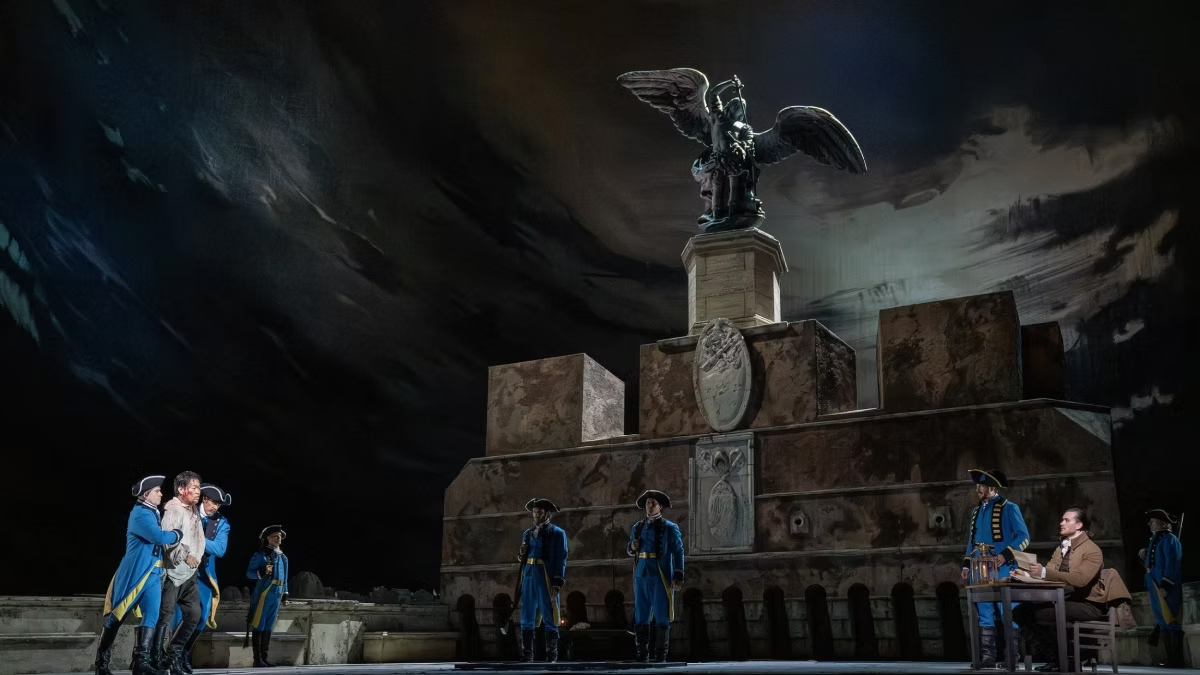
A dramatic opera stage production of Puccini's Tosca set atop a replica of Castel Sant'Angelo, with costumed performers in 18th-century military uniforms under a dark stormy sky backdrop and the bronze Archangel Michael statue illuminated above

Tosca at Castel Sant’Angelo: Puccini’s Third Act Explained Giacomo Puccini’s 1900 opera Tosca closes with Act 3 set on the roof of Castel Sant’Angelo at dawn, where the singer Floria Tosca leaps to her death from the ramparts after her lover, the painter Mario Cavaradossi, is executed. Puccini set all three acts in real Rome … Read more
Terrace of the Angel Castel Sant’Angelo: Rome’s Best View

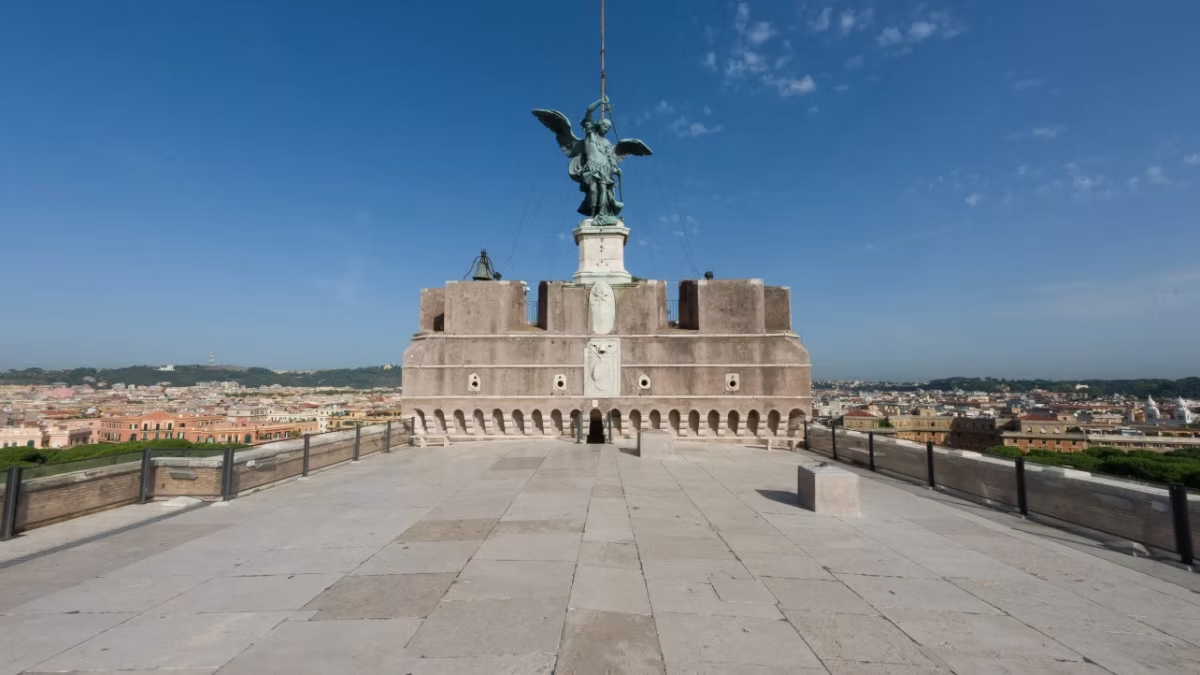
View from the rooftop terrace of Castel Sant'Angelo looking toward the bronze Archangel Michael statue atop its pedestal, with a sweeping panoramic view of Rome's cityscape stretching to the horizon under a clear blue sky

Terrace of the Angel Castel Sant’Angelo: Rome’s Best View The Terrace of the Angel is the open rooftop platform at the very top of Castel Sant’Angelo, crowned by a bronze statue of the Archangel Michael. It’s a full 360-degree viewpoint over Rome — St. Peter’s dome, the Tiber and its bridges, the historic center, and … Read more

Statue of Saint Michael: Why It’s Called Castel Sant’Angelo

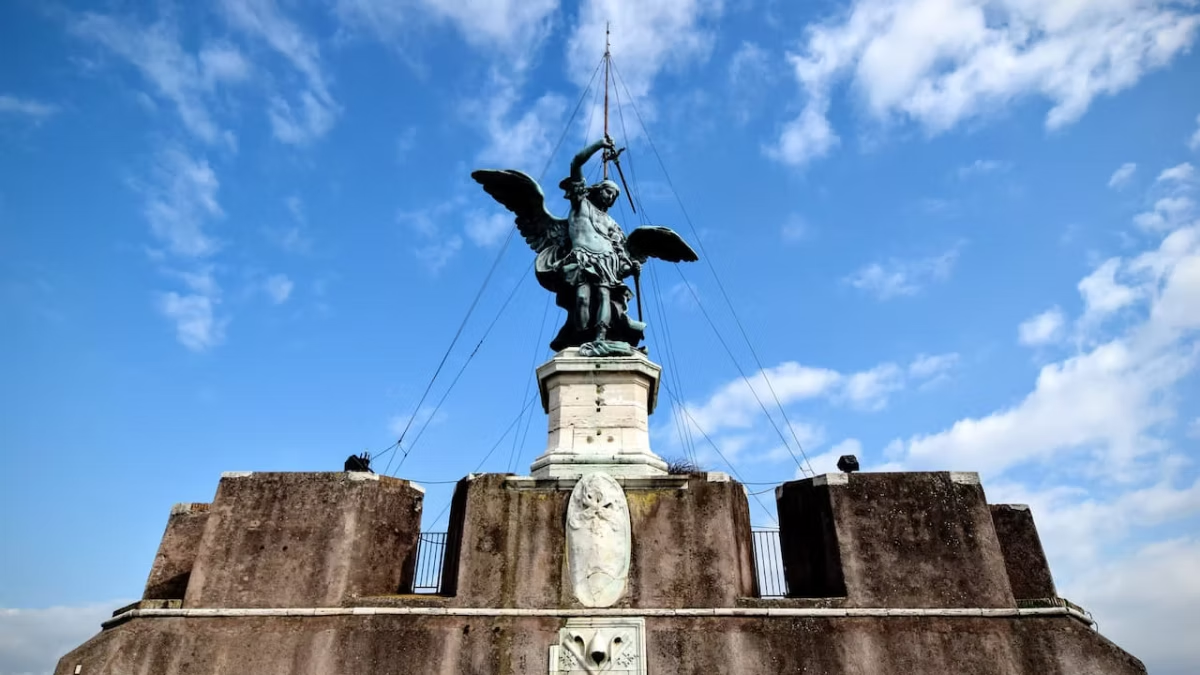
Low-angle close-up of the bronze Archangel Michael statue with outstretched wings sheathing his sword atop Castel Sant'Angelo's battlemented summit, set against a bright blue sky with wispy clouds

Statue of Saint Michael: Why It’s Called Castel Sant’Angelo Castel Sant’Angelo takes its name from a legend that in 590 AD, Pope Gregory the Great saw the Archangel Michael atop the old mausoleum sheathing his sword, signaling the end of a plague. A series of angel statues has marked the spot ever since; today a … Read more

The Prison Cells & Famous Prisoners of Castel Sant’Angelo

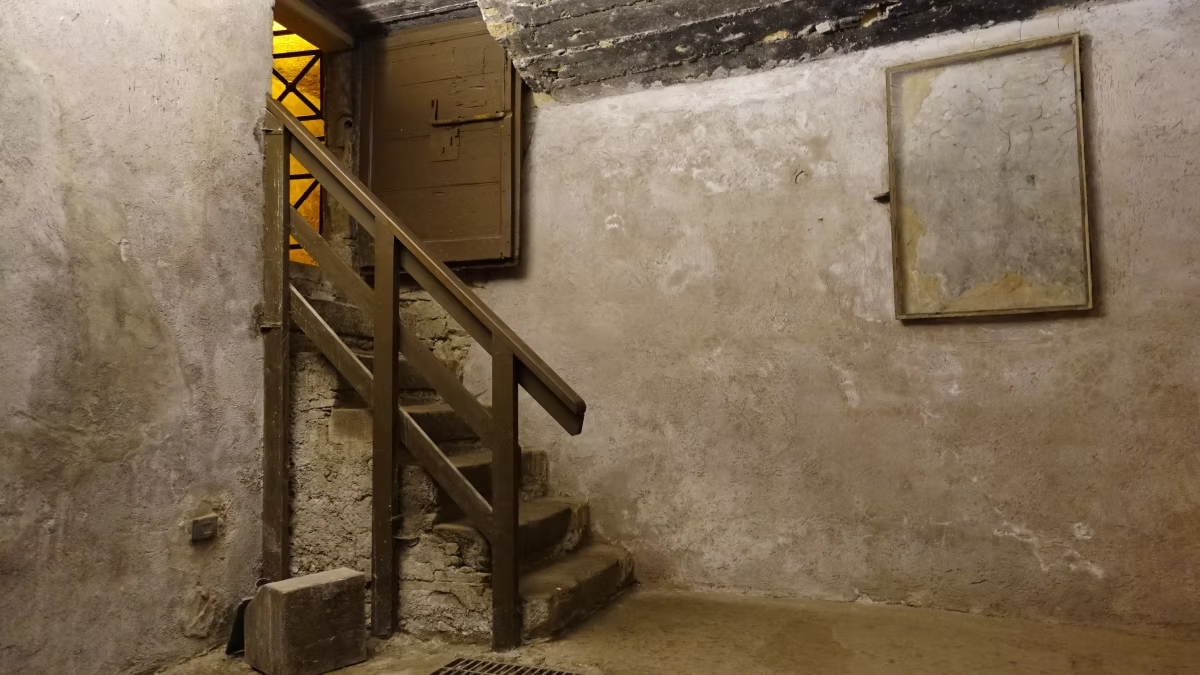
A dimly lit ancient prison cell interior inside Castel Sant'Angelo featuring worn stone steps with a metal railing leading to a heavy door with warm yellow light beyond, and bare weathered plaster walls with an empty frame

The Prison Cells & Famous Prisoners of Castel Sant’Angelo For roughly three centuries, Castel Sant’Angelo served the popes as a fortified prison, holding everyone from disgraced cardinals to condemned heretics in small, windowless cells cut into the ancient stone. Its best-known inmates include the goldsmith Benvenuto Cellini, who wrote a vivid account of his escape; … Read more

Ponte Sant’Angelo: Bernini’s Angels, History & Best Photos

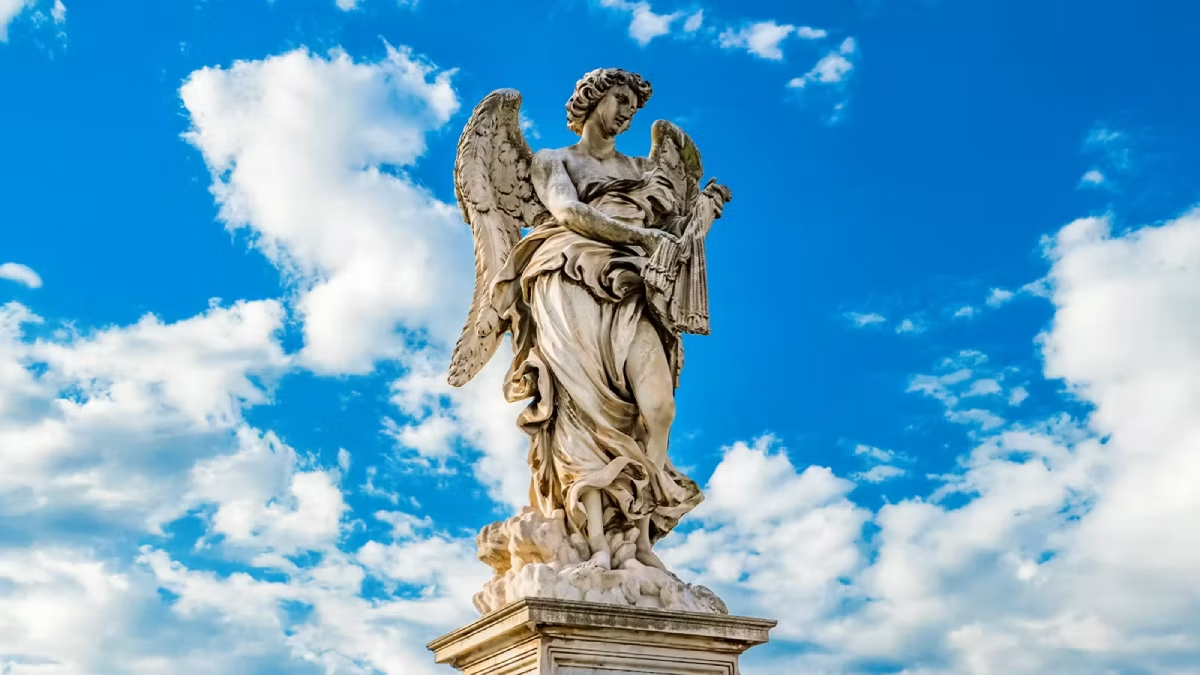
A close-up low-angle shot of a beautifully detailed Bernini marble angel statue on Ponte Sant'Angelo holding a instrument of the Passion, set against a vivid blue sky with fluffy white clouds

Ponte Sant’Angelo: Bernini’s Angels, History & Best Photos Ponte Sant’Angelo is the pedestrian bridge over the Tiber that leads straight to Castel Sant’Angelo, built by Emperor Hadrian in AD 134 and later lined with ten Baroque angel statues designed under Gian Lorenzo Bernini. It’s free, has no gates or opening hours, and is one of … Read more

Passetto di Borgo: Castel Sant’Angelo’s Papal Escape Route

Passetto di Borgo: Castel Sant’Angelo’s Papal Escape Route The Passetto di Borgo is an elevated, fortified corridor about 800 meters long that runs along the top of the old Leonine Walls, connecting Castel Sant’Angelo directly to the Vatican. Popes built and reinforced it as an emergency escape route, most famously used by Clement VII during … Read more

Papal Apartments at Castel Sant’Angelo: Sala Paolina Guide

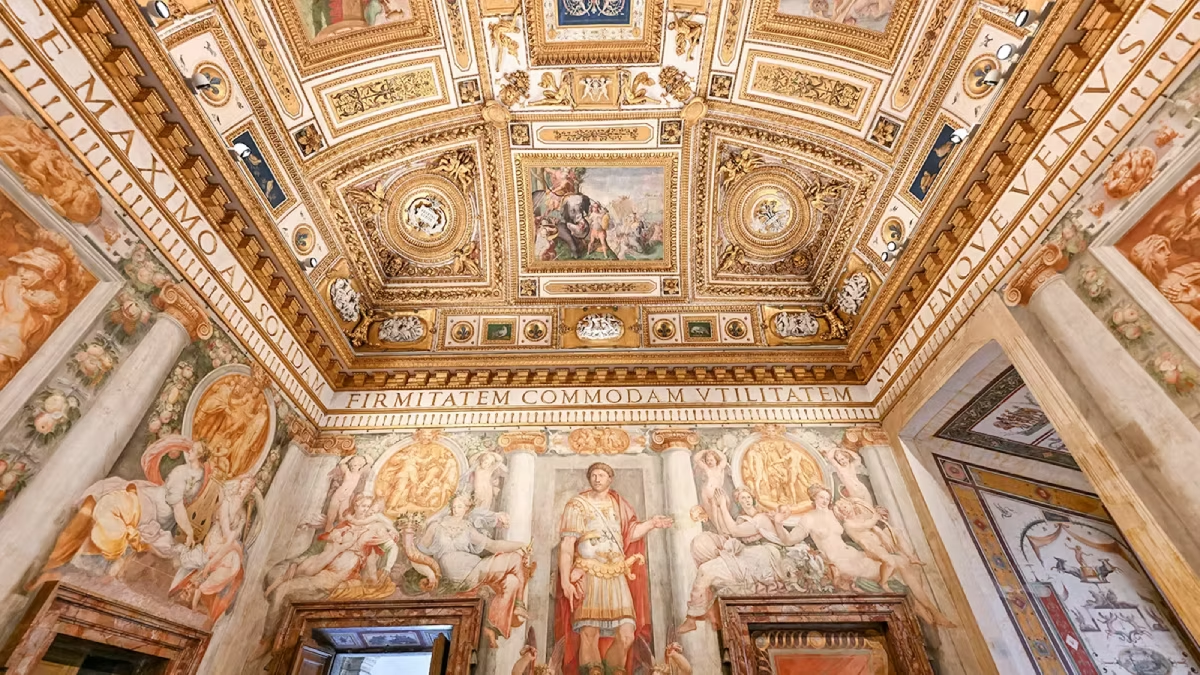
Upward view of the opulent Sala Paolina inside Castel Sant'Angelo, showcasing an elaborately gilded coffered ceiling with mythological fresco panels, Latin inscriptions along the cornice, and richly painted walls depicting Roman emperors and allegorical figures

Papal Apartments at Castel Sant’Angelo: Sala Paolina Guide The papal apartments are the Renaissance living quarters built into the upper levels of Castel Sant’Angelo, most lavishly under Pope Paul III Farnese in the 1540s. The highlight is the Sala Paolina, a grand frescoed hall painted by Perino del Vaga and his workshop, alongside the smaller … Read more

Inside Castel Sant’Angelo: A Full Floor-by-Floor Walkthrough

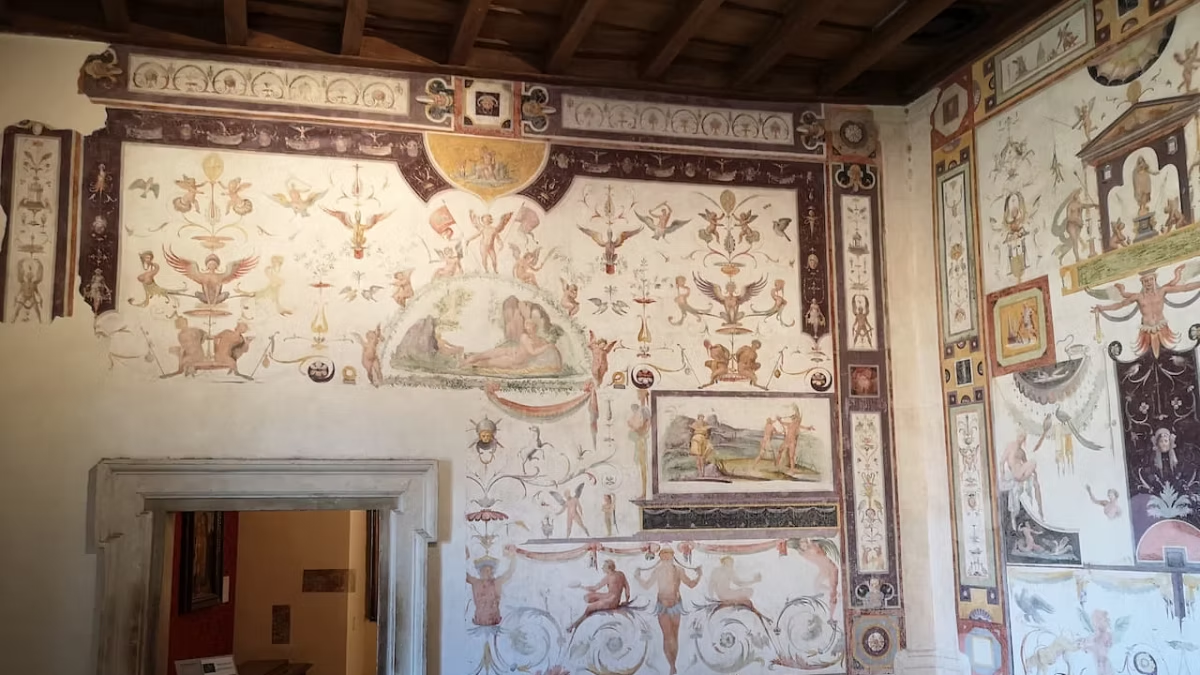
A richly decorated interior room of Castel Sant'Angelo featuring floor-to-ceiling Renaissance grotesque-style frescoes with mythological figures, cherubs, winged creatures, and ornamental motifs covering every wall surface beneath a wooden beam ceiling

Inside Castel Sant’Angelo: A Full Floor-by-Floor Walkthrough A visit to Castel Sant’Angelo climbs through roughly five levels, starting with Hadrian’s ancient spiral ramp, then the Renaissance Courtyard of the Angel, the armory and prison rooms, the frescoed papal apartments (Sala Paolina, Perseus room, Amore e Psiche room), the Treasury and library, and finally the rooftop … Read more

History of Castel Sant’Angelo — from AD 139 to today

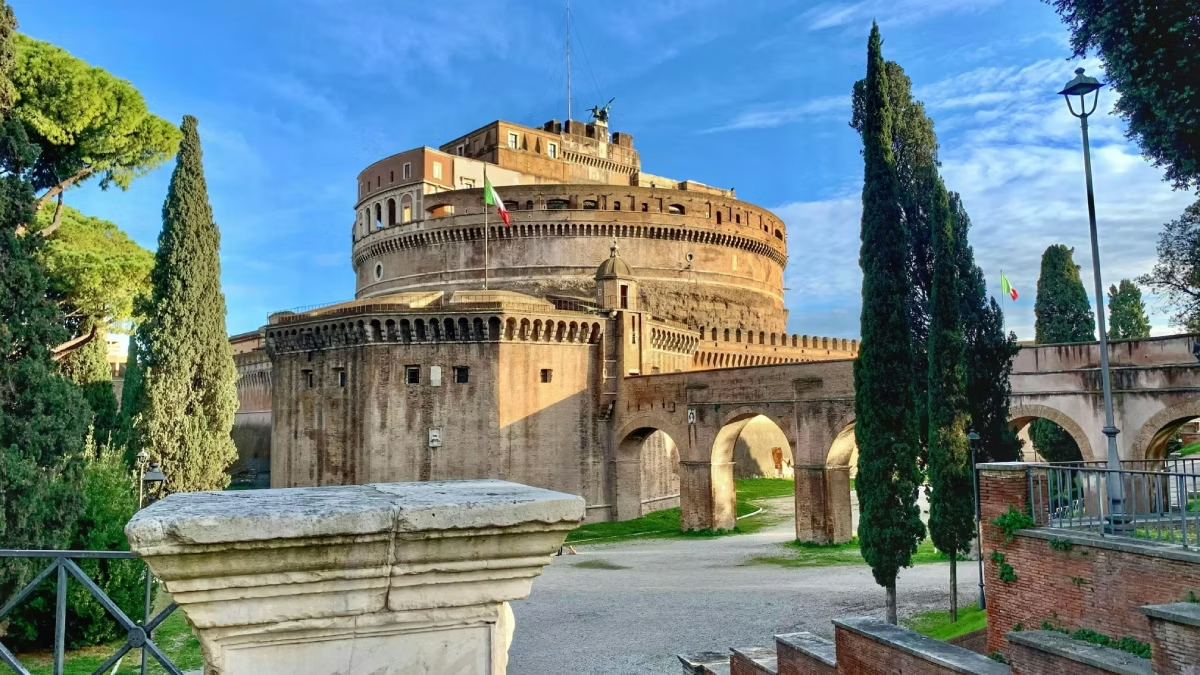
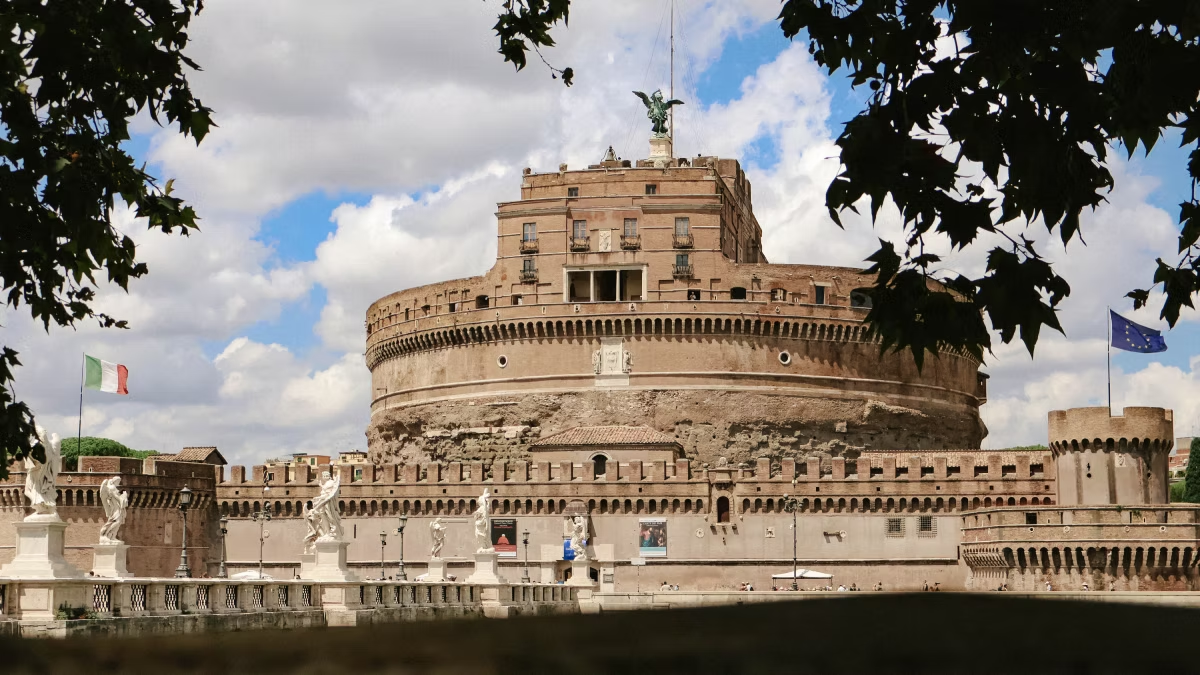
Castel Sant'Angelo viewed through overhanging tree branches from across the Tiber River, with Italian and European Union flags flying on opposite ends of the fortress, angel statues visible along Ponte Sant'Angelo, and a dramatic cloudy sky above

History of Castel Sant’Angelo — from AD 139 to today Castel Sant’Angelo began as Hadrian’s Mausoleum, built AD c.135–139 as an imperial tomb, and was later absorbed into Rome’s Aurelian Walls as a fortress. From the Middle Ages it served popes as a stronghold and refuge — most famously during the 1527 Sack of Rome … Read more

Hadrian’s Mausoleum: The Ancient Roots of Castel Sant’Angelo

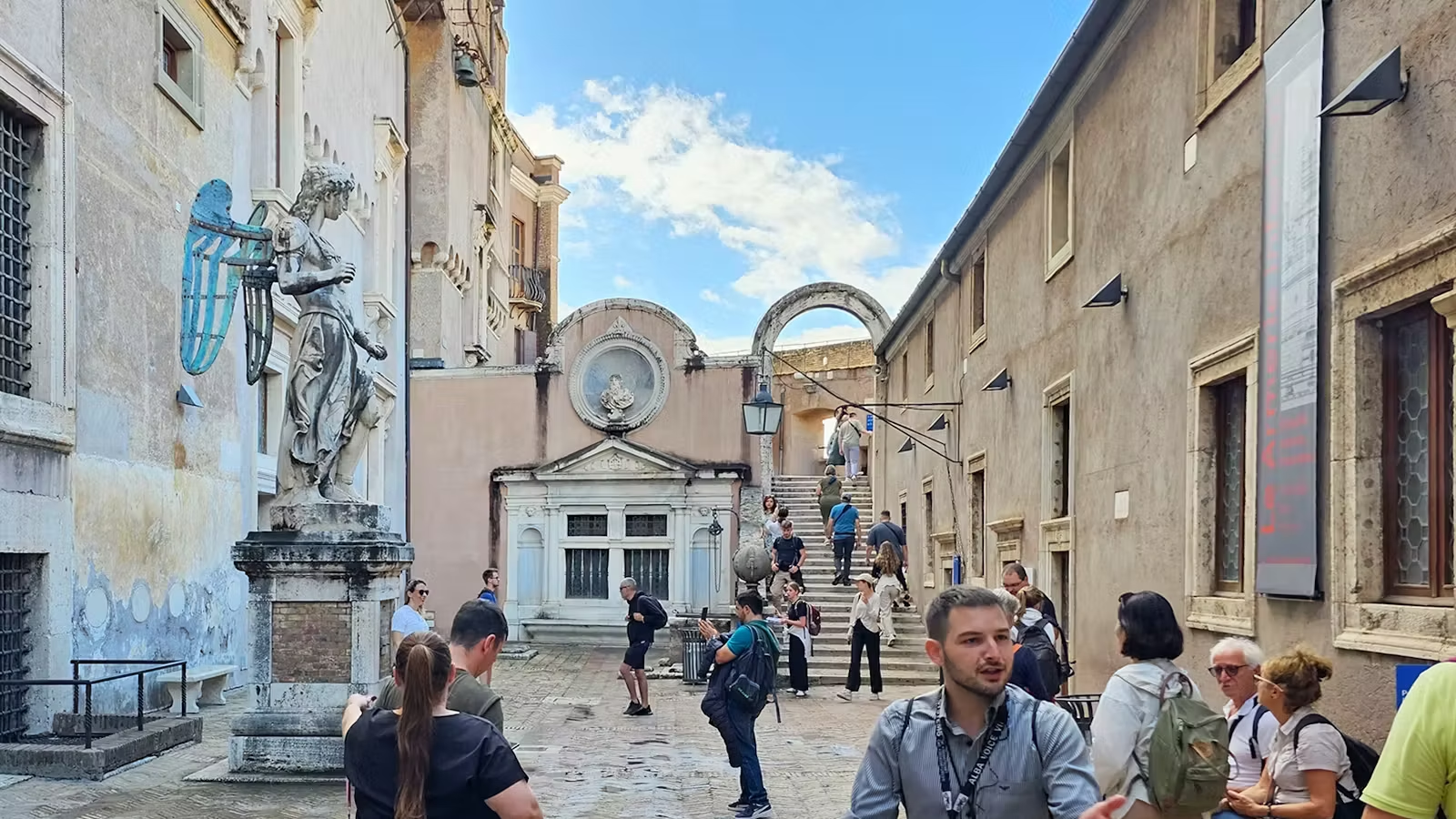
Tourists exploring the inner courtyard of Castel Sant'Angelo, with a marble angel statue on the left, a small ornate chapel facade with arched staircase leading upward, and historic stone buildings lining both sides under a partly cloudy sky

Hadrian’s Mausoleum: The Ancient Roots of Castel Sant’Angelo Castel Sant’Angelo began life as the Mausoleum of Hadrian, a monumental tomb the emperor commissioned for himself and his successors, completed in AD 139 under Antoninus Pius. Ancient emperors from Hadrian to Caracalla were entombed inside; the original cylindrical drum, a spiraling ramp, and traces of the … Read more