

Best Time to Visit Castel Sant’Angelo — Hour, Day & Month
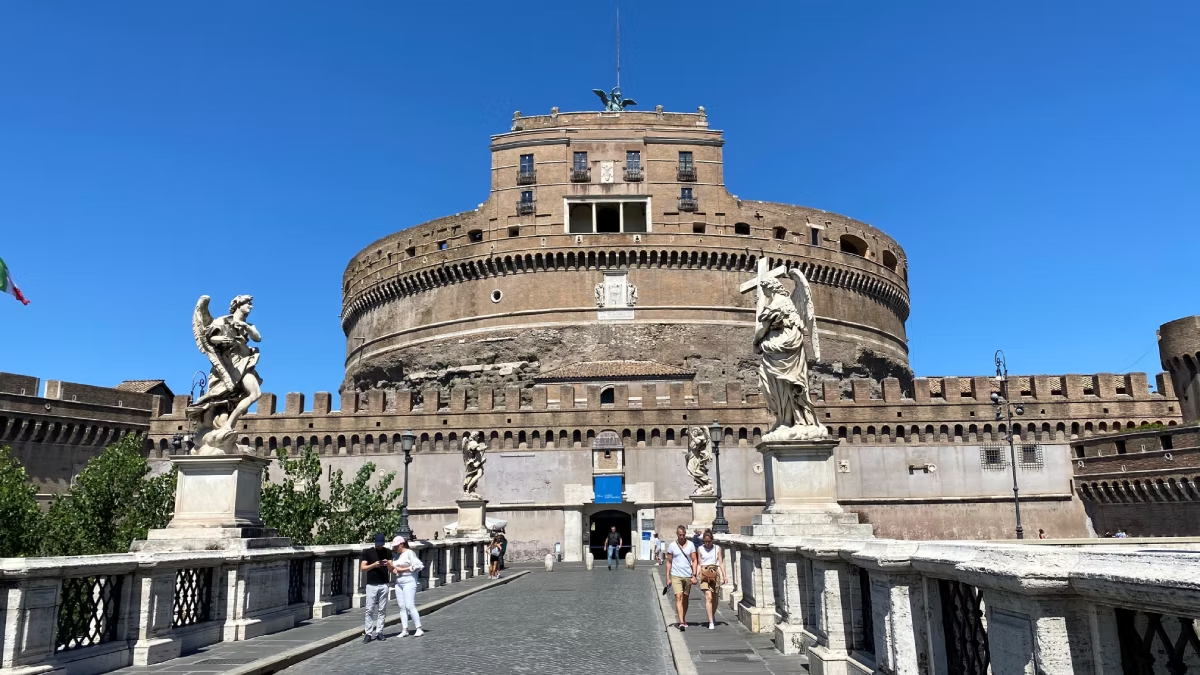
The best time to visit Castel Sant’Angelo is right at the 9:00 AM opening or in the last two hours before the 6:30 PM last entry, on a weekday rather than a weekend, in spring (April–May) or fall (late September–October) rather than summer. Avoid Mondays, when the castle is closed, and be aware that the free first Sunday of each month is the single busiest day.
Castel Sant’Angelo rewards visitors who think about timing almost as much as it rewards those who simply show up. The building itself doesn’t change — the same helical ramp, papal apartments, and rooftop terrace are there every open day — but the crowd on the stairs, the heat on the climb, and the light on the Terrace of the Angel vary enormously depending on the hour, the day of the week, and the season.
This guide breaks down the best hour to arrive, the best day to pick, and the best month to plan your Rome trip around, plus how weather, crowds, and sunset timing all factor in — and how to pair your visit with a walk across Ponte Sant’Angelo.
Best Time of Day: Opening Bell or Golden Hour
The two calmest windows are right at 9:00 AM opening and the last two hours before the 6:30 PM last admission. Midday, roughly 11:00 AM to 2:00 PM, is the busiest and often the hottest part of the day. Late afternoon adds the bonus of warm light on the terrace as the sun drops toward St. Peter’s.
Arriving for the 9:00 AM opening means you’re on the helical ramp before the tour groups and day-trippers arrive, and you can reach the Terrace of the Angel while it’s still relatively empty and the air is cool — a real advantage in summer. The trade-off is that you’re seeing Rome in flat morning light rather than the warmer tones later in the day.
The other quiet window is late afternoon, roughly from 4:30 PM to the 6:30 PM last-entry cutoff. Day-trippers on tight itineraries tend to clear out by mid-afternoon, and the light softens into what photographers call golden hour, gilding the dome of St. Peter’s and the Tiber below the terrace. The catch is that arriving right at 6:30 PM leaves you rushed — the visit climbs five levels, and staff begin moving people down from the top as the 7:30 PM close approaches. Aim to be inside by around 5:00 PM if you want the late-light benefit without feeling hurried; our guide on how long to spend at the castle lays out realistic timing.
Midday, by contrast, is when the ticket line is longest, the courtyards are fullest, and — in summer especially — the stone ramp and open-air terrace hold the most heat. If your schedule forces a midday visit, book a timed entry ticket in advance so you’re not also waiting to buy one.
Best Day of the Week: Weekdays Over Weekends
Tuesday through Thursday are the quietest days to visit; Saturdays and Sundays draw the biggest crowds, and the first Sunday of the month — when entry is free for everyone — is the busiest day of all. Monday is not an option, since the castle is closed all day.
Castel Sant’Angelo is closed every Monday, so it’s never actually “the best day” — it’s simply off the table. See our guide to Castel Sant’Angelo Opening Hours 2026 for the full weekly schedule and holiday closures.
Among the six open days, weekdays are noticeably calmer than weekends. Tuesday, Wednesday, and Thursday tend to see fewer coach tours and fewer families visiting on days off work or school, which means shorter ticket lines and a more comfortable pace on the ramp and in the smaller rooms like the armory and prison cells. Friday starts to pick up as weekend visitors arrive in Rome, and Saturday and Sunday are consistently the fullest days of the week.
The single busiest day of the entire month is the first Sunday, when Italy’s state-museum scheme makes admission free for everyone. It’s a genuinely good deal, but expect a long line at opening and a full terrace by mid-morning; if you go, arrive right at 9:00 AM rather than mid-morning. If a calm visit matters more to you than saving on admission, pick any other Sunday, or better yet, a weekday.
Best Month and Season: Spring and Fall Lead
Spring (April–May) and fall (late September–October) offer the best balance of mild weather, good light, and manageable crowds. Summer (June–August) is hot and the most crowded season by far. Winter (November–March, excluding major holidays) is the quietest and coolest time, with occasional rain but comfortable sightseeing conditions.
Spring. April and May bring mild daytime temperatures, long daylight hours, and Rome’s gardens and riverbanks in bloom — pleasant conditions for the open-air stretches of the visit, including the climb up the ramp and the time spent on the terrace. Crowds build through spring as the peak season approaches, so early April is calmer than late May.
Summer. June through August is Rome’s hottest and most crowded stretch. Midday heat on the exposed terrace and ramp can be genuinely uncomfortable, and the castle draws its largest daily crowds of the year alongside the rest of Rome’s major sights. If you’re visiting in summer, lean hard into the early-morning or late-afternoon strategy above, carry water, and expect the ticket line to be at its longest.
Fall. September and especially October are, for many visitors, the ideal season: the summer heat has broken, crowds thin out after the August peak, and the light in late afternoon is particularly good for photos from the terrace. Early September can still run warm and busy; by mid-to-late October, conditions are close to ideal.
Winter. November through March is the quietest season, with cooler temperatures, shorter days, and a real chance of rain — the terrace visit is less comfortable on a wet or windy day, and winter light fades earlier, so a late-afternoon visit has a tighter window before dusk. On the plus side, lines are short and the interior rooms are easy to enjoy at your own pace. The castle is generally closed on major holidays such as January 1 and December 25, so double-check dates if traveling over the winter holidays.
Weather Through the Year
Because a full visit involves climbing an open ramp and spending time on an unshaded rooftop terrace, weather matters more here than at many indoor museums. Summer heat is the main concern: by midday in July or August, the stone surfaces radiate heat and there’s little shade until you reach the upper rooms. Winter’s issue is the opposite — rain and wind make the open sections less pleasant, and a downpour can shorten how long you want to linger on the terrace. Spring and fall largely avoid both extremes, which is a big part of why they’re the recommended seasons. Whatever the month, a hat and water in summer, and a light rain layer in winter, make the visit noticeably more comfortable.
Crowds: What to Expect and When
Crowd levels at Castel Sant’Angelo follow a fairly predictable pattern shaped by three things: time of day, day of week, and season. The heaviest combination is a summer weekend around midday, when the ticket office line is longest, the ramp and courtyards are fullest, and the terrace can feel crowded even though it’s a large open space. The lightest combination is a fall or winter weekday first thing in the morning or in the last hour before last entry — you may share the terrace with only a handful of other visitors.
The free first Sunday of the month deserves a special note: it draws a larger crowd than any other single day, regardless of season, because the incentive brings in visitors who might otherwise skip the ticket line. If avoiding crowds is your priority, treat free Sundays as the day to avoid rather than the day to target.
A timed entry ticket booked in advance won’t shrink the crowd inside the castle, but it does let you skip the on-the-day ticket-office queue, which is where a busy day costs visitors the most time.
Sunset and the Terrace of the Angel
The Terrace of the Angel is the single best reason to time a visit around the light. In the hour or so before sunset, the terrace catches warm, low-angle sun over the dome of St. Peter’s and the bend of the Tiber, and the crowd thins as day-trippers head off to dinner. Exact sunset time shifts through the year — roughly 5:30 PM in December, closer to 8:30 PM at the height of summer — so “late afternoon” means something different in January than it does in July. Because last admission is 6:30 PM year-round, a true sunset-on-the-terrace visit is only possible in fall, winter, and early spring, when the sun sets before the castle closes; in summer, the sun is still well above the horizon at last entry, so aim instead for the softer, cooler light of early evening rather than the sunset itself. Note that the standard schedule doesn’t include after-dark opening hours — see our guide to sunset and night visits for how occasional evening events differ from the daily routine.
Combine It with a Stroll Across Ponte Sant’Angelo
Whatever time you visit the castle itself, build in a few extra minutes for Ponte Sant’Angelo, the pedestrian bridge just outside, lined with ten angel statues designed under Bernini. It’s free, it’s outdoors, and it pairs naturally with either end of your visit: cross it on the way in for the classic view of the castle framed by the bridge, or linger on it afterward, especially near sunset, when the statues and the castle’s round bulk both catch the evening light. Because the bridge has no opening hours of its own, it’s an easy add-on regardless of when you time the castle visit — useful if you arrive on a Monday and find the doors closed, or if you simply want a quieter, unticketed coda to the day.
Frequently Asked Questions
What is the single best time to visit Castel Sant’Angelo?
Right at the 9:00 AM opening or in the last two hours before the 6:30 PM last entry, on a weekday in spring or fall. Those windows combine the smallest crowds with comfortable temperatures and, in the late-afternoon slot, the best light on the terrace.
Is it better to visit in the morning or the afternoon?
Both have advantages: morning is cooler and quieter with flatter light, while late afternoon adds warm, golden light on the terrace but requires arriving with enough time before the 6:30 PM last entry. Midday, in between, is the busiest and often the hottest part of the day.
What day of the week has the smallest crowds?
Tuesday through Thursday are generally the calmest days, since they draw fewer weekend visitors and fewer coach tours. Saturdays and Sundays are busier, and the castle is closed entirely on Mondays.
Should I avoid the first Sunday of the month?
If avoiding crowds is your priority, yes — the first Sunday is free for everyone under Italy’s state-museum scheme, and it’s consistently the busiest day of the month. If saving on admission matters more, go, but arrive right at 9:00 AM opening.
What’s the best month to visit Castel Sant’Angelo?
Late September through October and April through early May offer the best mix of mild weather and moderate crowds. Peak summer (June–August) is hot and the most crowded time of year; winter is quiet but cooler and occasionally rainy.
Is Castel Sant’Angelo very hot in summer?
Yes. The climb up the exposed helical ramp and the time spent on the open rooftop terrace can feel genuinely hot at midday in June through August. Visiting at opening or in the last couple of hours before closing, and carrying water, makes a real difference.
Can I see sunset from the terrace?
Only when sunset falls before the 6:30 PM last-entry time, which is roughly fall through early spring; in peak summer the sun is still high at last entry. In any season, the hour or so before last admission offers the softest light and thinnest crowds, even if it isn’t a true sunset.
Is winter a bad time to visit?
Not at all — winter is the quietest season, with short lines and easy pacing through the interior rooms, though the open-air terrace and ramp are less pleasant on a rainy or windy day. Just confirm the schedule around January 1 and December 25, when the castle is typically closed.
Does the time of day affect ticket prices?
No, admission pricing doesn’t change by time of day; what changes is availability of timed-entry slots and how long you’ll wait in the on-the-day ticket line. A pre-booked ticket secures your preferred slot regardless of when you plan to go.
How does timing affect how long I should budget for the visit?
Quiet windows like early morning or late afternoon let you move through the five levels at a comfortable pace, while a busy midday or free Sunday visit can add real time to queues and to moving through crowded rooms. Plan on roughly 1.5 to 2 hours for a full visit to the top, more if you’re visiting during a crowded window.
