

How Long to Spend at Castel Sant’Angelo: Time Budget Guide
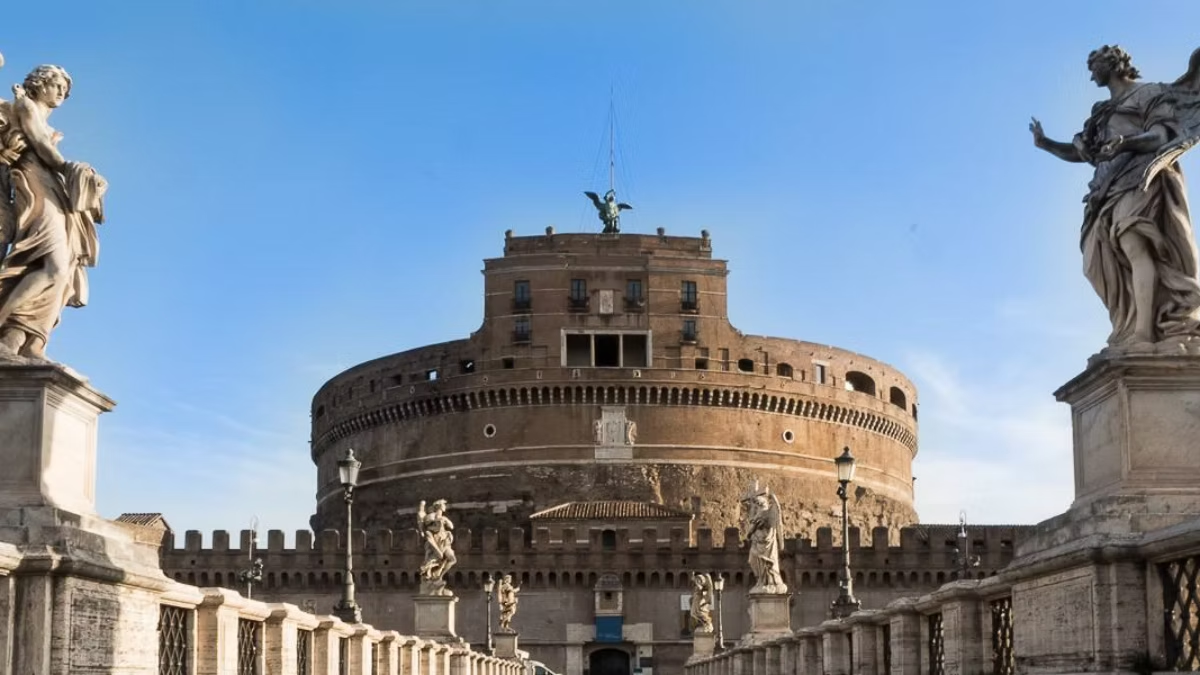
Plan on 1.5 to 2 hours for a typical, unhurried visit to Castel Sant’Angelo. A fast pass through the highlights can be done in 45–60 minutes, while a thorough visit with a guide or the audio app, plus time on the terrace, can run 2.5–3 hours. Add extra time in peak season, since queues and a crowded terrace can slow you down.
Castel Sant’Angelo is compact compared to a place like the Vatican Museums, but it is not a quick photo stop — the visit is a continuous climb through five distinct levels, from Hadrian’s ancient spiral ramp at the base to the open-air terrace at the top. How long you need depends on how much you want to read, how many rooms you linger in, and whether you are chasing a connecting train, a Vatican reservation, or the sunset.
This guide breaks the visit down level by level, compares a fast version against a thorough one, and explains how queues, crowds, and the Passetto di Borgo (when it’s open) can add to your time.
Typical Visit: 1.5–2 Hours
For most visitors, 1.5 to 2 hours is the right amount of time — enough to walk the ramp, see the main courtyards and papal apartments, pass through the prison rooms and small museum spaces, and spend a proper 15–20 minutes on the terrace without rushing.
This is the pace that fits comfortably into a morning or afternoon in Rome without eating up the whole day. It allows for a few minutes of reading the information panels, a pause in the Sala Paolina to take in the frescoes, and enough time on the Terrace of the Angel to actually enjoy the view over St. Peter’s and the Tiber rather than snapping one photo and moving on. If you are combining the castle with other sights the same day, this middle-ground pace is the one to plan around.
Level-by-Level Time Budget
Budget roughly 10–15 minutes for the ramp, 15–20 minutes for the courtyards, 30–40 minutes for the papal apartments, 15–20 minutes for the prison rooms and small museum, and 15–20 minutes on the terrace — the backbone of a 1.5–2 hour visit.
The castle’s five levels are climbed in sequence, so it helps to know roughly where the time goes:
- Hadrian’s spiral ramp (10–15 minutes): The atmospheric stone ramp that once let Roman funeral processions carry urns up into the mausoleum. It’s a straightforward, gently rising walk — most visitors move through it fairly quickly, though it’s worth pausing to picture the space as it was nearly 1,900 years ago.
- Renaissance courtyards (15–20 minutes): The Cortile dell’Angelo (Courtyard of the Angel) and neighboring courtyards hold the original marble angel statue, cannonballs, and architectural fragments. Plenty of visitors treat this level as a photo stop and a breather before the next climb.
- Papal apartments (30–40 minutes): The richest and slowest part of the visit. The Sala Paolina’s frescoes, the Amore e Psiche room, and the Perseus room reward unhurried looking, and this is where most people spend the bulk of their time indoors.
- Prison rooms and small museum (15–20 minutes): Narrow cells, the armory, and smaller exhibition rooms fill out the historical picture of the castle as fortress and prison. It’s a quicker pass for most visitors than the apartments above.
- Terrace of the Angel (15–20 minutes, more at sunset): The payoff for the climb — a rooftop panorama over Rome with St. Peter’s dome close at hand. Give this level real time rather than rushing it; it’s the view most people remember.
Add these together and a careful but not lingering pace lands right around 1.5–2 hours, matching the typical-visit estimate above.
The Fast Version: 45–60 Minutes
If you’re pressed for time, 45–60 minutes is enough to walk the ramp, glance through the courtyards, pass through the Sala Paolina, and reach the terrace for a shorter but genuine view. You’ll skip most of the smaller rooms and detailed reading.
A fast visit means moving with purpose: walk the ramp without lingering, take a quick look at the courtyards, pause only briefly in the papal apartments (the Sala Paolina is worth the two minutes even on a fast pass), skip most of the prison and small museum rooms, and head straight for the terrace. This works for travelers squeezing the castle into a tight layover, a short gap between other bookings, or a stop on the way to or from the Vatican. It’s a real visit, just a compressed one — you won’t read every panel, but you’ll see the highlights and get the view.
The Thorough Version: 2.5–3 Hours
History buffs, photographers, and anyone using a guide or the audio app should budget 2.5 to 3 hours. That’s enough time to read most of the information panels, follow a guided tour or app narration room by room, and spend a longer, unhurried stretch on the terrace.
A guided tour or the audio-app version of the entry ticket naturally slows the pace, since you’re stopping to listen at each key point rather than skimming past. This is the better choice if Hadrian’s Mausoleum, the papal history, or the 1527 Sack of Rome and the Passetto’s role in it genuinely interest you — the extra time goes into context that a fast pass through the rooms simply doesn’t give you. It’s also the right budget for photographers who want the terrace at a specific light, or for anyone visiting with kids who want to explore the prison cells and armory at a slower pace.
How Queues and Crowds Add Time
A pre-booked timed-entry ticket avoids the ticket-office line, which can run 20–40 minutes or longer in peak season. Crowds also slow the pace inside, especially in the papal apartments and on the terrace during midday and the free first Sunday of the month.
None of the estimates above include the ticket line. On busy days — peak summer, weekends, and especially the first Sunday of each month when entry is free for everyone — the on-the-day ticket-office queue can add a significant chunk of time before you’re even through the door. A timed-entry ticket booked in advance sidesteps this almost entirely; you arrive close to your slot and walk in. Once inside, crowding also affects pacing: the papal apartments and the terrace are the two spots where a full castle means more shuffling and waiting for a clear photo, so add 15–20 minutes to any of the estimates above if you’re visiting at a peak time. Early morning, right at the 9:00 AM opening, and the last couple of hours before the 6:30 PM last admission are the calmest windows — see our guide to opening hours for the full daily schedule.
The Passetto di Borgo: If It’s Open
When the Passetto di Borgo is open and included in your visit, add 20–30 minutes to walk the elevated corridor and see it properly. It runs on its own seasonal schedule and is sometimes separately ticketed, so don’t assume it’s part of a standard visit.
The Passetto di Borgo is the roughly 800-meter fortified corridor linking the castle to the Vatican — the papal escape route famously used by Clement VII during the 1527 Sack of Rome. It’s a genuinely memorable addition to the visit when accessible, but it opens only on a seasonal basis and isn’t guaranteed to be included in every ticket. If your ticket or tour does cover it, plan for an extra 20–30 minutes to walk it at a reasonable pace and take in the views along the way. Check the official site or your ticket details before counting on it, and don’t build your schedule around it unless it’s confirmed for your date.
Fitting It Into a Half-Day or Evening
Castel Sant’Angelo pairs naturally with a Vatican half-day — visit the castle first thing at 9:00 AM for about two hours, then walk over to St. Peter’s, or reverse the order and end at the castle for sunset on the terrace. Either way, allow a buffer for the ticket line and the walk between sights.
Because the castle sits just across the river from the Vatican, it slots naturally into a half-day itinerary. Two common approaches work well:
- Castle first, Vatican after: Arrive at opening, spend 1.5–2 hours at the castle while it’s quietest, then walk roughly 15–20 minutes to St. Peter’s Basilica or your timed Vatican Museums slot. This front-loads the castle before the day’s crowds build.
- Vatican first, castle for sunset: Finish at the Vatican, then head to the castle in the late afternoon. The terrace is at its best in the last couple of hours before the 6:30 PM last admission, with warm light over St. Peter’s and the Tiber. Our guide to sunset and night visits covers what to expect at that time of day.
Either plan should include a walking buffer — the two sights are close but not adjacent — and it’s worth checking the opening hours for both before locking in a schedule, since Vatican Museums hours don’t always match the castle’s.
Practical Pacing Advice
A few habits make any of the time budgets above work better in practice. Book a timed-entry ticket rather than planning to buy on arrival, especially in peak season — it removes the least predictable part of your schedule. Climb at your own pace rather than trying to keep up with a tour group passing through; the ramp and stairs are not strenuous, but there’s no elevator, and rushing past the papal apartments is the most common regret visitors report. Save extra time for the terrace specifically, since it’s the one level where lingering pays off the most. And if you’re combining the visit with the Vatican or another Rome sight the same day, build in a real buffer rather than back-to-back timed slots — queues, a slow-moving group ahead of you, or simply wanting five more minutes on the terrace can easily push a visit past your original estimate.
Frequently Asked Questions
How long does it take to visit Castel Sant’Angelo?
Most visitors spend 1.5 to 2 hours for a comfortable, unhurried visit. A fast pass through the highlights can be done in 45–60 minutes, while a thorough visit with a guide or audio app, including a longer stop on the terrace, can run 2.5–3 hours.
Is one hour enough for Castel Sant’Angelo?
One hour is tight but workable if you move efficiently: walk the ramp, glance through the courtyards, pause briefly in the Sala Paolina, and head to the terrace. You’ll skip most of the smaller rooms and detailed reading, so it suits a short layover more than a first, unhurried visit.
How long is the walk up to the terrace?
The climb itself, moving steadily without stopping to read or linger, takes about 20–30 minutes across the ramp, courtyards, and stairs to reach the Terrace of the Angel. Most visitors take considerably longer because they stop in the papal apartments and prison rooms along the way.
Do I need more time if I book a guided tour?
Yes. A guided tour typically runs 1.5–2 hours on its own, since the guide stops to explain each level in detail rather than letting you move at a self-paced walk-through speed. Build your schedule around 2–2.5 hours total when a guide is involved.
Does the audio app add time to the visit?
It generally does, since you’re pausing to listen at marked points rather than skimming past them. Expect a visit with the audio app to run closer to 2–2.5 hours rather than the faster end of the typical range.
How much time should I add for queues?
If you buy a ticket on arrival in peak season, the ticket-office line can add 20–40 minutes or more, especially on the free first Sunday of the month. A pre-booked timed-entry ticket avoids this almost entirely, so it’s worth the small extra planning.
Is the Passetto di Borgo included in the standard visit time?
Not automatically. The Passetto di Borgo opens on its own seasonal schedule and is sometimes separately ticketed, so it isn’t part of every visit. When it is open and included, add 20–30 minutes to walk it properly.
Can I visit Castel Sant’Angelo and the Vatican in the same half-day?
Yes, they pair naturally since they’re a short walk apart. A common approach is the castle at opening for about two hours, then the Vatican Museums or St. Peter’s, or the reverse with the castle saved for sunset on the terrace. Either way, allow a walking buffer between the two.
Is Castel Sant’Angelo worth a full day?
No — it’s a half-day sight at most. Even the thorough 2.5–3 hour version leaves time in the day for the Vatican, a walk across Ponte Sant’Angelo, or the surrounding Borgo and Prati neighborhoods.
What’s the best time of day to avoid a rushed visit?
Right at the 9:00 AM opening or in the two hours before the 6:30 PM last admission are the calmest windows, which also make it easier to move at your own pace rather than through a crowd. Midday and the free first Sunday of the month are the busiest and most likely to slow you down.
