

Castel Sant’Angelo Accessibility Guide: Wheelchair Access
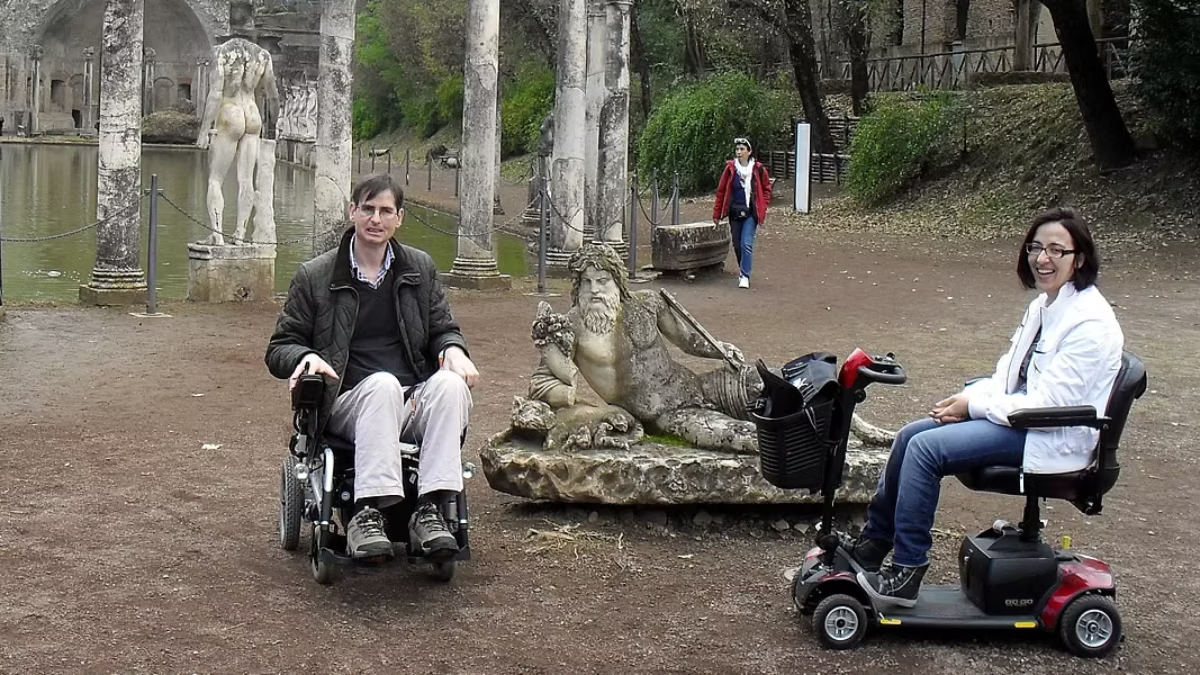
Castel Sant’Angelo is partially accessible. An elevator reaches some of the lower and mid-level floors, but the museum is built around Hadrian’s ancient helical ramp and several flights of stairs, and the final stretch up to the rooftop Terrace of the Angel is stairs only. Wheelchair and limited-mobility visitors can see a meaningful part of the castle, but not the whole thing, so plan ahead and confirm current arrangements with the museum before you go.
Castel Sant’Angelo began life almost 1,900 years ago as Hadrian’s Mausoleum, and much of what makes it fascinating — the spiral stone ramp cut into the ancient core, the narrow stair turrets added by the popes, the climb to the open-air terrace — is exactly what makes it a genuinely difficult building for wheelchair users, visitors with limited mobility, and anyone who struggles with stairs. This is not a site where full step-free access is possible today.
This guide sets out, honestly, which levels are reachable, what the elevator covers, whether the terrace is realistic, and what to expect for restrooms, strollers, resting points, and reduced or free entry.
How Accessible Is Castel Sant’Angelo, Really?
Access is partial, not full. An elevator serves some of the castle’s levels, letting wheelchair users and visitors with limited mobility reach a real portion of the museum, including some courtyards and interior rooms. But the building’s oldest core is a spiral ramp and stone stairs, and the last climb to the open-air terrace at the top is stairs only, so the summit view is not currently reachable for wheelchair users.
Castel Sant’Angelo was never designed for step-free movement — it is a 2nd-century Roman tomb repurposed as a medieval and Renaissance fortress, and its “layout” is really a continuous upward route: Hadrian’s helical ramp at the base, then courtyards, then a sequence of papal apartments and museum rooms, then narrower stairs, then the terrace. An elevator installed for visitor access covers part of this route, which means many of the castle’s most interesting rooms — including sections of the papal apartments — are within reach for wheelchair users and people who cannot manage long staircases. The upper stretch to the terrace, however, is original stonework that has not been retrofitted with a lift, so reaching the very top currently requires climbing stairs.
Because the exact floors served by the elevator can be adjusted for maintenance or during exhibitions, and because staff can sometimes offer additional help on request, it is worth calling or emailing the museum a few days before your visit to confirm what is currently open to you and to ask about any assistance available on the day.
Wheelchair and Mobility Access by Level
The ground-level entrance, ticket area, and the ancient helical ramp are on a gentle, walkable incline that many wheelchair users and visitors with limited mobility can manage with assistance. From there, an elevator helps bridge some of the climb to the courtyards and papal apartment rooms. The final run of stairs to the rooftop terrace is the one section that is not currently accessible by lift.
Entrance and helical ramp. The base of the castle — Hadrian’s original spiral ramp, cut through the ancient mausoleum core — has a surprisingly gentle gradient by design, since it was built for foot and cart traffic in Roman times. This is one of the more manageable stretches of the visit, though the surface is old stone and can be uneven and dim, so a companion pushing a manual wheelchair should expect to need some help on the incline.
Courtyards and papal apartments. From the ramp, the route opens into the Renaissance courtyards, including the Cortile dell’Angelo, and then the papal apartments with the Sala Paolina and other frescoed rooms. This is the level where the elevator is most useful, and it is generally the deepest that wheelchair users can expect to explore in reasonable comfort.
Upper floors and prison cells. Some of the smaller museum rooms, the armory, and the old prison cells sit on floors connected by narrower stairs and are harder or impossible to reach without walking.
Terrace of the Angel. The rooftop terrace, with its panoramic view over Rome and the statue of Saint Michael overhead, is reached by a final flight of stairs. As things stand, this is the one part of the castle that wheelchair users and many visitors with significant mobility limitations should not expect to reach. If the terrace is the main reason for your visit, it is worth weighing that honestly before you book — our guide to the Terrace of the Angel describes what you would be missing, and the best views in Rome guide lists some step-free alternatives elsewhere in the city.
Is the Terrace Reachable by Wheelchair?
Realistically, no — not with a standard visit today. The Terrace of the Angel sits at the top of the castle’s original stone stairwells, and there is no elevator or ramp covering that final section. Visitors who use a wheelchair or cannot climb multiple flights of stairs should plan the visit around the levels the elevator does serve — the courtyards and papal apartments — rather than counting on reaching the summit. If accessing the terrace matters a great deal to your visit, contact the museum directly before booking to ask whether any assisted-access option exists on your travel dates, since policies and available help can change.
Restrooms, Strollers, and Resting Points
Restrooms are available on-site, though they are not on every level, so it is sensible to use them near the entrance before beginning the climb. Strollers can be brought in, but the ramp’s stone surface and the narrower stairs and doorways higher up make a compact, foldable stroller far more practical than a large one, and parents should be ready to carry a stroller up short flights in places. Benches and shaded resting spots appear at a few points along the route, particularly in the courtyards, which is useful for anyone who needs to pace the climb — our guide on how long to spend at the castle can help you build in that extra time.
Reduced and Free Entry for Disabled Visitors
Italy’s state museums, including Castel Sant’Angelo, typically offer free admission for visitors with a recognized disability, along with a free ticket for one accompanying companion or caregiver. Requirements and documentation can vary, so bring proof of disability status if you have it and ask at the ticket desk on arrival. This is separate from the general reduced rate for EU citizens aged 18–24 and the free entry for under-18s; our guide to free entry days and reduced tickets covers the full picture of who qualifies for what. Because policies can be updated, confirm the current disability-access terms on the official museum site or by phone before your visit.
Tips for Visitors With Accessibility Needs
- Visit off-peak. Arriving close to the 9:00 AM opening or in the last couple of hours before last admission means thinner crowds on the ramp and in the narrower rooms, giving you more room to move at your own pace. Our guide to opening hours and last entry has the current schedule.
- Allow extra time. A visit that takes an able-bodied traveler 90 minutes can easily take twice as long if you’re navigating the ramp and stairs carefully or resting along the way. Build in a buffer rather than rushing.
- Bring a companion. Even where the elevator helps, some doorways, thresholds, and short step-ups remain, so a second person to assist is genuinely useful here, not just a formality.
- Call ahead. Museum staff can tell you, for your specific dates, which floors the elevator currently serves and whether any additional assistance is available — this is worth doing before you buy a ticket, especially if you are traveling a long way specifically for the visit.
- Consider the exterior and bridge. Even visitors who decide the interior climb isn’t manageable can still enjoy the castle’s exterior, the Tiber-side views, and a walk across Ponte Sant’Angelo with its Bernini angel statues, all of which are step-free.
Frequently Asked Questions
Is Castel Sant’Angelo wheelchair accessible?
Partially. An elevator serves some of the lower and mid-level floors, including access toward the courtyards and papal apartments, but the ancient helical ramp area needs assistance on an uneven stone surface, and the final stairs to the rooftop terrace are not currently served by a lift.
Can a wheelchair user reach the Terrace of the Angel?
Not with a standard visit today. The terrace sits at the top of the castle’s original stone stairwells with no elevator covering that last stretch, so wheelchair users should expect the elevator-served floors below to be the practical limit of the visit.
Does Castel Sant’Angelo have an elevator?
Yes, an elevator serves part of the museum route, helping visitors with mobility limitations reach some interior levels without climbing the full stair sequence. It does not cover every floor, and the exact floors it serves can be confirmed with the museum before your visit.
Are there accessible restrooms at the castle?
Restrooms are available on-site but are not located on every level, so it’s best to use one near the entrance before starting the climb. Ask staff on arrival for the nearest accessible facility to your planned route.
Is there free or reduced entry for disabled visitors?
Italy’s state museums typically offer free admission for visitors with a recognized disability plus one accompanying companion, though documentation requirements can vary. Confirm the current policy with the museum before you arrive.
Can I bring a wheelchair or mobility scooter inside?
Manual and standard wheelchairs can generally navigate the elevator-served levels with some assistance, but the ramp’s stone surface, narrow doorways, and stair sections make the visit challenging for larger mobility scooters. If you use a scooter, contact the museum in advance to discuss what’s realistic for your visit.
Is the helical ramp at the base difficult to walk?
The ramp has a gentle, gradual incline by ancient design, which makes it more manageable than the stairs elsewhere in the castle, but the stone surface is old, uneven in places, and dimly lit, so visitors with balance or mobility difficulties should take it slowly and with support.
Can strollers be brought into the castle?
Yes, strollers are allowed, but a compact, foldable one is far more practical than a large stroller, since some doorways and short stair sections higher up may require carrying it briefly. Parents should be prepared for that possibility.
Should I book a guided tour if I have accessibility needs?
A guided tour can be helpful because the guide can pace the visit, point out resting spots, and clarify which rooms are realistically reachable, but it does not change the castle’s physical layout. Whether you visit independently or with a guide, contacting the museum ahead of time about your specific needs is the most reliable step.
Who should I contact to confirm accessibility arrangements before visiting?
The museum’s official ticket office and website are the best source for current, date-specific accessibility information, since elevator coverage and available assistance can change for maintenance or exhibitions. It’s worth reaching out a few days before your visit, particularly if you’re planning your trip around this one site.
