

Rome Ghosts & Legends Night Tour: Castel Sant’Angelo Walk
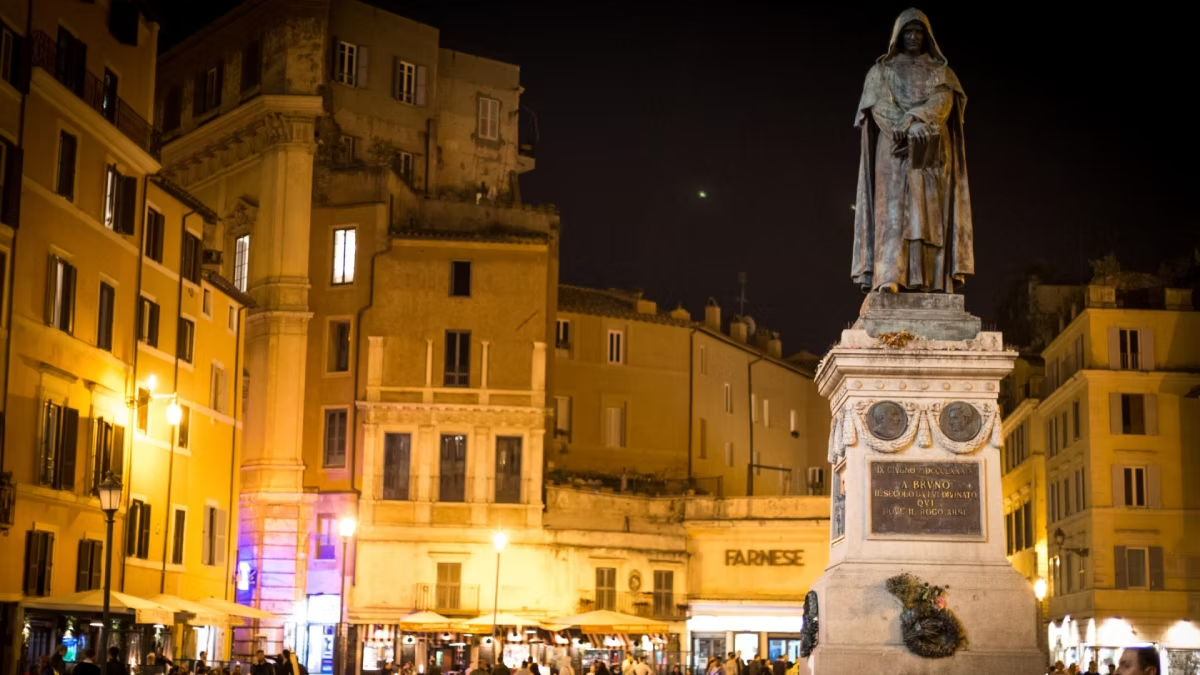
This is a 2-hour, small-group evening walking tour through Rome’s darker history — executions, cursed corners, and hidden legends — starting at Campo de’ Fiori and finishing at Castel Sant’Angelo. It is an outdoor storytelling walk that passes and ends at the castle, telling its execution history and the Beatrice Cenci legend from outside; it does not include interior admission to the castle’s rooms, prison cells, or terrace.
If you already know Castel Sant’Angelo as a museum you climb through by day, this tour shows a different side of it: the fortress as the backdrop to some of Rome’s grimmest stories. A local guide walks a small group through Campo de’ Fiori, past Palazzo Farnese and Via Giulia, into a hidden corner most day-trippers never see, before ending at the castle walls as darkness falls. It is a storytelling walk, not a haunted-house act — no costumes or jump scares — and it complements rather than replaces a proper interior visit.
What This Tour Actually Is
This is a Rome-wide evening walking tour focused on dark history and local legend, run in small groups with a live guide. It is not a Castel Sant’Angelo interior ticket — the castle is the tour’s dramatic endpoint, seen and discussed from the outside, not a room-by-room visit inside the museum.
Be clear-eyed about what you are booking. This product is a general Rome ghost-and-legends walk that happens to route past several of the city’s most storied sites and to finish at Castel Sant’Angelo, using the fortress’s own grim history as a closing chapter. It is a genuinely good way to hear the castle’s darker stories — the executions carried out below its walls, the prisoners who never left, the legend of Beatrice Cenci — but you will be standing outside looking up at the fortress, not walking its ramp or climbing to the terrace. If you want to go inside, you need a separate admission — an entry ticket or a guided tour of the interior.
Route and Themes
The walk starts at Campo de’ Fiori, then moves past the Monument to Giordano Bruno, Palazzo Farnese, and Ponte Sisto, down atmospheric Via Giulia, into a lesser-known “hidden gem” stop, and finally to Castel Sant’Angelo, where the guide closes with the castle’s own dark history.
The tour opens in Campo de’ Fiori beneath the statue of Giordano Bruno, the philosopher burned at the stake there in 1600 for heresy — as grim an opening scene as Rome offers. From there the group moves through streets that look ordinary by day but carry centuries of rumor after dark: the imposing Farnese Palace, the older Ponte Sisto bridge over the Tiber, and the narrow, atmospheric stretch of Via Giulia, once lined with palaces and, in local lore, unluckier addresses than most guidebooks mention. There is an optional stop at a local bar partway through (drinks at your own expense, and entirely optional), followed by a short visit to a “hidden gem” location the guide keeps a bit of a secret until you arrive, lasting around 20 minutes. The walk then heads toward the river one final time and ends beneath Castel Sant’Angelo, where the guide ties the evening together with the fortress’s own history as a papal prison and execution site.
Castel Sant’Angelo’s Dark History, Told on the Walk
The tour uses Castel Sant’Angelo’s real past as its closing story: the castle held condemned prisoners for centuries, the legend of Beatrice Cenci is tied to its walls, and its terrace inspired the finale of Puccini’s opera Tosca — all told from outside, since the tour does not enter the museum.
Castel Sant’Angelo’s history gives a night-tour guide plenty to work with, even without going inside. Built as Hadrian’s Mausoleum in the 2nd century AD, the fortress spent centuries afterward as a papal stronghold and, notoriously, a prison. Its cells held political prisoners and enemies of the popes, some of whom were executed within its walls or nearby along the Tiber — the kind of history a dark-legends walk is built to tell. The most famous name tied to the castle’s grim reputation is Beatrice Cenci, the young Roman noblewoman executed in 1599 for the murder of her abusive father; her story, and the ghost stories that grew up around it in the centuries since, is a natural fit for a tour that has already walked past Giordano Bruno’s execution site earlier in the evening. Guides on this route often also mention the castle’s connection to Puccini’s opera Tosca, whose heroine leaps from the terrace in the final act — a fictional death, but one that has attached itself permanently to the real building. Hearing these stories at night, from the riverbank looking up at the fortress silhouette, is a different experience than reading a museum panel in daylight, and it is exactly what this tour is selling.
What is included: A 2-hour small-group guided walking tour of Rome’s dark history and legends, with professional storytelling (no costumes or theatrical scares), visiting execution sites, reputedly cursed corners, and historically significant churches and streets, ending at Castel Sant’Angelo
Duration: 2 hours
Cancellation: Free cancellation up to 24 hours before the tour starts, for a full refund
Languages: English
Best for: Evening visitors, couples, and older kids or teens (rather than young children) who enjoy storytelling and a moderate walk, and who want to hear the castle’s dark legends as part of a broader Rome night walk
Book This TourFood, drinks, and transport to and from the meeting point are not included, and the tour does not enter any underground sites or crypts — it stays at street level throughout, including at Castel Sant’Angelo itself. Groups are capped at a maximum of 15 participants, which keeps the storytelling audible and the pace comfortable even on narrow Roman streets after dark.
Meeting Point and Practical Details
The tour meets at Campo de’ Fiori, in front of the central statue, under a sign for “Rome’s Dark Side – Ghosts & Legends.” Arrive 10 minutes early, since the walk starts promptly and there is no interior admission to purchase or collect on site.
Plan to arrive at Campo de’ Fiori with a few minutes to spare so you can find the guide’s sign before the group sets off. Because the tour is entirely outdoors and on foot, comfortable walking shoes matter more than what you wear otherwise — cobblestones are uneven in several stretches, especially along Via Giulia and near the river. Evenings in Rome cool down even in summer, so bring a light layer, and check the forecast in shoulder seasons when a wrap or umbrella can make the difference between an enjoyable walk and a miserable one. Because the walk finishes at Castel Sant’Angelo rather than back at Campo de’ Fiori, think about how you will get home from the Vatican side of the river — a short walk over Ponte Sant’Angelo back into the historic center, or a taxi from nearby, both work well.
Pairing This Walk With a Daytime Castle Visit
Because this tour only reaches the outside of Castel Sant’Angelo, pairing it with a separate daytime interior visit gives you the full picture — the legends heard at night gain real weight once you have stood in the actual prison cells and terrace the guide was describing.
The two experiences work best as a pair rather than a substitute for one another. A daytime visit with the entry ticket lets you climb Hadrian’s original spiral ramp, walk through the frescoed papal apartments, see the prison rooms where real prisoners were held, and stand on the Terrace of the Angel where Tosca‘s final act unfolds. Doing that first, or on a different day, means the ghost tour’s stories land with more context — you already know what the rooms behind those walls look like. Visitors who prefer a single expert-led visit inside the museum itself, rather than an outdoor evening walk, should look instead at the guided tour or private tour options, which go into the building.
Who This Tour Suits
This works well for adults, couples, and older kids or teens who enjoy history and storytelling and are comfortable with an evening walk of roughly two hours. It is a less natural fit for very young children, anyone who struggles with an extended walk after dark, or visitors expecting a theatrical “haunted house” experience.
The tour is built around narration rather than spectacle, so it suits people who like a good story told well more than people looking for scares or special effects. Because it runs in the evening and covers real distance on foot, including some uneven pavement, it is more comfortable for older kids, teenagers, and adults than for toddlers or visitors with limited mobility. It is a pleasant option for couples or small groups of friends looking for something different from a standard daytime sightseeing itinerary, and it fits naturally at the end of a day that included the Vatican or the historic center, since it finishes near both.
Frequently Asked Questions
Does this tour let you go inside Castel Sant’Angelo?
No. The tour is an outdoor walking experience that ends at the castle and covers its dark history from outside, including the Beatrice Cenci legend and its past as a papal prison. To go inside the museum, book a separate entry ticket or guided tour.
How long does the tour last?
The tour runs about 2 hours, covering the full walking route from Campo de’ Fiori to Castel Sant’Angelo, including a short stop at a hidden location partway through.
Where does the tour start and end?
It starts at Campo de’ Fiori, in front of the statue at the center of the square, and ends at Castel Sant’Angelo on the far side of the Tiber. Look for a sign reading “Rome’s Dark Side – Ghosts & Legends” at the meeting point, and arrive about 10 minutes early.
What language is the tour given in?
The tour is conducted in English.
Is this a scary, theatrical “ghost tour” with actors or jump scares?
No. The tour is built on professional storytelling and real history and legend, without costumes, actors, or staged scares. It is closer to an atmospheric history walk than a haunted attraction.
Can I cancel if my plans change?
Yes. The tour offers free cancellation up to 24 hours before the start time, with a full refund.
Is food or drink included?
No. There is an optional stop at a local bar partway through the walk, but any food or drinks purchased there are at your own expense and are not part of the tour price.
Is the walk suitable for young children?
It can work for older kids and teens who enjoy history and storytelling, but the evening timing, roughly two-hour duration, and uneven cobblestone streets make it a better fit for adults and older children than for toddlers or young kids.
Does the tour go underground or into any crypts?
No. The walk stays at street level throughout, including at Castel Sant’Angelo, and does not enter any underground sites or crypts.
Should I also book a daytime visit to Castel Sant’Angelo?
If you want to see the castle’s interior — the spiral ramp, papal apartments, prison cells, and terrace — yes, a separate daytime visit is worthwhile. This tour tells the stories; a daytime entry ticket or guided tour lets you see the rooms those stories describe.
