

Where to Eat Near Castel Sant’Angelo: Borgo, Prati & More
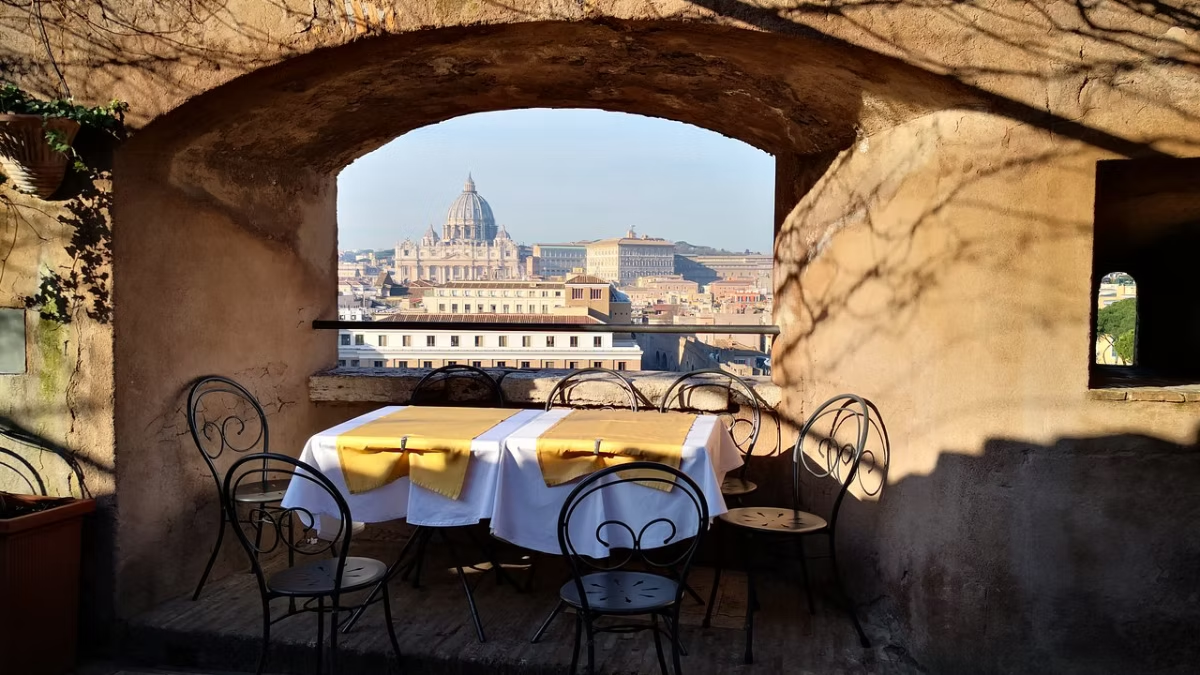
The streets directly facing the castle are convenient but skew toward tourist-menu pricing; better value is a five- to ten-minute walk away in Borgo (toward the Vatican) or across Via Crescenzio in Prati, a quieter residential district known for excellent gelato, pizza al taglio, and solid trattorias. Crossing Ponte Sant’Angelo into the historic center opens up more options again, from casual pizzerias to sit-down Roman restaurants. As with most spots beside a major attraction, the rule of thumb is simple: the further you walk from the entrance, the better the food-to-price ratio tends to get.
Castel Sant’Angelo sits in a part of Rome with genuinely good eating within easy walking distance, but it also sits at the edge of two of the most tourist-heavy zones in the city — the Vatican and the riverside approach to the historic center. That combination means the blocks immediately around the castle include some of the least memorable meals you’ll find in Rome, alongside some perfectly good ones just a short walk further on.
This guide breaks down the dining options by area — Borgo, Prati, and across the river — along with what kind of food to expect where, how to budget, and how to sidestep the overpriced spots that cluster around any famous entrance.
What to Expect Near a Major Attraction
Restaurants with a direct view of the castle or Ponte Sant’Angelo tend to charge a premium for that view, often with menus translated into several languages, photos of the dishes, and a cover charge that adds up. Walking just two or three streets back — into Borgo’s side lanes or into Prati — usually means lower prices, more locals in the room, and food that’s cooked with more care because the owners rely on repeat neighborhood customers rather than one-time tourist traffic.
This pattern isn’t unique to Castel Sant’Angelo; it holds true around the Trevi Fountain, the Pantheon, and the Colosseum too. The businesses facing the monument itself are paying premium rent for foot traffic that rarely comes back, so there’s less incentive to keep prices sharp or quality consistent. A few practical signs of a place aimed squarely at passersby: a multilingual laminated menu with photos, staff standing outside trying to wave people in, a fixed “tourist menu” at a round number, and a total absence of Italian being spoken at the tables around you. None of these guarantee a bad meal, but they’re worth noticing before you sit down.
A simple habit solves most of this: before ordering, walk one more block than you planned to. Rome’s attraction-adjacent streets almost always improve in value within a five-minute radius, and Castel Sant’Angelo is no exception.
Borgo: Closest to the Castle and the Vatican
Borgo is the small, historic district squeezed between Castel Sant’Angelo and St. Peter’s Square, and it’s the most convenient area for a meal right before or after a castle visit. The streets nearest the castle and Via della Conciliazione lean toward tourist-oriented spots, but the narrower side lanes just off the main axis hold better-value trattorias, wine bars, and simple lunch counters.
Borgo is genuinely historic — its layout predates the broad, ceremonial Via della Conciliazione that Mussolini-era planners cut through it toward St. Peter’s — and pockets of that older character survive on the smaller cross streets. Because so much foot traffic funnels between the Vatican and the castle, the main thoroughfares are lined with restaurants set up to catch pilgrims and sightseers moving between the two: multilingual menus, outdoor seating angled toward the view, and pricing to match the location. That’s fine if convenience matters more than the meal itself, and a quick, unremarkable lunch here isn’t a disaster on a tight schedule.
For something better, turn off the main axis. Borgo’s side streets — narrower, quieter, with fewer people stopping to photograph the menu board — are where you’ll find trattorias that lean more on regular customers than one-time tourist traffic. Expect Roman staples done straightforwardly: pasta dishes like carbonara, cacio e pepe, and amatriciana, simple grilled or roasted meats, and house wine by the carafe rather than an extensive bottle list. Portions and pacing tend to feel more like a neighborhood meal than a production for visitors. A short stroll of even two or three minutes off the busiest lanes usually makes a real difference in both price and quality.
Prati: The Residential Neighborhood to the North
Prati is the orderly, residential district north of the castle and Vatican, built up mostly after Italian unification, and it’s popular with Romans who actually live and eat in the area — which shows in the food. It’s known for excellent gelato, good pizza al taglio (pizza by the slice) for a quick bite, and a solid range of quality sit-down restaurants a bit removed from the tourist crush.
Prati’s grid of wide, tree-lined streets feels different from the tight lanes of Borgo — more residential, more everyday Rome, less built around a single monument. That’s exactly why it’s worth the walk: the restaurants here answer to neighbors who eat out regularly, not to a one-time crowd passing the castle gates, so there’s a stronger incentive to keep quality up and prices reasonable. Via Cola di Rienzo and the streets around it are a reliable hub, with everything from bakeries and delis to proper restaurants.
Prati is particularly worth knowing about for two specific things. First, gelato: the neighborhood has long had a reputation among Romans for gelaterie that make their own product rather than buying it in, and the difference in texture and flavor from a mass-produced tub is usually obvious at a glance — natural colors rather than neon ones, and a slightly icy shine rather than an overly smooth, whipped-looking scoop. Second, pizza al taglio — rectangular pizza baked in trays and sold by weight — which makes for a fast, cheap, genuinely good lunch you can eat standing up or take to a bench. Between meals at the castle and a visit to the Vatican, Prati’s mix of quick bites and proper restaurants makes it a practical home base for eating.
Across the River: Toward the Historic Center
Crossing Ponte Sant’Angelo into the historic center opens up Rome’s densest concentration of restaurants, from quick pizza-by-the-slice counters to full sit-down trattorias, with the same rule applying: the closest streets to the bridge and the busiest piazzas cost more than the quieter lanes just behind them.
Once you cross the bridge and its row of Bernini-designed angel statues, you’re moving into the maze of streets that lead toward Piazza Navona and, further on, the Pantheon — one of the most walkable, restaurant-dense parts of the city. It’s a good option if you want more variety than Borgo or Prati offer, or if your day is combining the castle with sightseeing further into the center. The same pattern applies here as everywhere near a landmark: restaurants directly on Piazza Navona or lining the most obvious tourist routes charge accordingly, while side streets a block or two away tend to serve the same category of food — pizza, pasta, grilled meats, gelato — at noticeably better value. If you’re making a full afternoon of it, pairing the castle with a walk across the bridge toward the center is a natural way to string together sightseeing and a proper meal.
Types of Food to Expect
This part of Rome offers the full range of typical Roman dining: classic trattoria pasta and meat dishes, pizza both sit-down (Neapolitan-style, thin Roman-style) and by the slice, gelato, and the early-evening aperitivo ritual of a drink with light snacks. None of these require an expensive restaurant — some of the best versions are the simplest and cheapest.
Roman cuisine leans on a handful of dishes you’ll see repeated on menus across Borgo, Prati, and the center: cacio e pepe, carbonara, amatriciana, and gricia for pasta; saltimbocca alla romana, abbacchio (Roman-style lamb), and simple grilled vegetables for mains; supplì (fried rice croquettes) as a starter or snack. Pizza comes in two very different forms worth knowing apart — round, sit-down pizza (often thin and crisp in the Roman style) versus pizza al taglio, the by-the-slice version sold from a counter and priced by weight, which is one of the best low-cost, no-reservation options in the city. Gelato is everywhere, with quality varying enormously; look for the same signs mentioned above — natural-looking colors, shallow rather than mounded trays, and flavors that change seasonally. In the early evening, aperitivo — a drink accompanied by snacks or a light buffet, typically from around 6 to 8 PM — is a good way to eat lightly and cheaply before or after a visit, and it’s common in both Prati and the center.
Budget Tips and Avoiding Overpriced Spots
The most reliable budget move is walking a few extra minutes away from the castle entrance and the bridge before choosing where to eat. Beyond that, watch for cover charges (coperto) on the bill, favor places with menus in Italian first, eat pizza al taglio or a bar lunch for a cheap midday option, and treat a restaurant’s proximity to the monument as a warning sign on price rather than a mark of quality.
A few habits go a long way here. A cover charge, or coperto, is standard and legal at most Roman restaurants — usually a small per-person fee for bread and table service — but it tends to be higher at the most tourist-facing spots, so it’s worth glancing at before you sit. Lunch is generally cheaper than dinner at the same restaurant, and a fixed lunch menu (menu del giorno) can be a good value option if you’re eating near the castle in the middle of the day. Bars (in the Italian sense — a coffee-and-pastry counter, not a nightlife venue) are a cheap, fast option for a coffee and something small standing at the counter, which is also typically less expensive than sitting at a table. And if a restaurant’s outdoor seating directly faces the castle walls or the bridge, assume you’re paying partly for that view; if the food itself is the priority, that’s your cue to walk on.
Finally, don’t assume good food only exists a great distance away — plenty of solid options sit within ten minutes of the entrance once you’re off the most obvious tourist lanes. The goal isn’t to trek across Rome for lunch; it’s simply to avoid the handful of streets doing the least effort for the most footfall.
Frequently Asked Questions
Where’s the best place to eat right after visiting Castel Sant’Angelo?
For convenience, Borgo’s side streets just off the main route toward St. Peter’s are the closest option with reasonable value. If you don’t mind a short walk, Prati to the north or across Ponte Sant’Angelo into the historic center generally offer better food for the price.
Are the restaurants directly facing the castle worth it?
They’re convenient and fine for a quick, unremarkable meal, but they typically charge more for the view and foot traffic rather than for exceptional food. Walking a few minutes further in almost any direction usually improves the value noticeably.
What’s the difference between Borgo and Prati for dining?
Borgo is the small historic district squeezed between the castle and the Vatican, dense with foot traffic and correspondingly tourist-oriented on its main streets. Prati is a larger, quieter, more residential neighborhood to the north with a strong local dining scene, known especially for gelato and pizza al taglio.
Is pizza al taglio a good option for a quick meal?
Yes. Pizza al taglio is rectangular pizza sold by weight from a counter, and it’s one of the fastest, cheapest, and most reliably good options in the area, ideal for eating between sightseeing stops rather than sitting down for a full meal.
How can I tell if a restaurant is a tourist trap before sitting down?
Common signs include a laminated multilingual menu with photos, a host actively trying to pull people in off the street, a fixed-price “tourist menu,” and few or no Italian speakers at the surrounding tables. None of these alone means the food will be bad, but together they’re a reasonable warning sign.
What is the coperto and should I expect it?
Coperto is a standard per-person cover charge at most Roman restaurants, covering bread and table service, and it’s separate from a tip. It’s legal and normal, but it tends to run higher at restaurants aimed squarely at tourists, so it’s worth checking the menu or bill.
Is there good gelato near Castel Sant’Angelo?
Prati, just north of the castle, has a strong reputation among Romans for gelaterie making their own product rather than buying it pre-made. Look for natural-looking colors and shallow trays rather than tall, artificially bright mounds as a general guide to quality.
Should I eat before or after visiting the castle?
Either works, but arriving with a light meal or coffee rather than a heavy lunch makes the climb through the castle’s levels to the terrace more comfortable. Save a fuller meal for after, when you can relax without a timed ticket to think about.
Is aperitivo available near the castle?
Yes, particularly in Prati and across the river toward the center, where the early-evening aperitivo of a drink with snacks or a light buffet is common from around 6 to 8 PM. It’s a good lower-cost way to eat lightly before or after an evening visit.
Do I need a reservation for dinner near Castel Sant’Angelo?
It depends on the restaurant and season, but the more tourist-facing spots directly near the castle rarely require one since they’re set up for walk-in traffic. Smaller trattorias in Borgo or Prati that are popular with locals can fill up on weekend evenings, so a reservation is a safe habit in peak season.
