

Castel Sant’Angelo with Kids: Family-Friendly Visit Guide
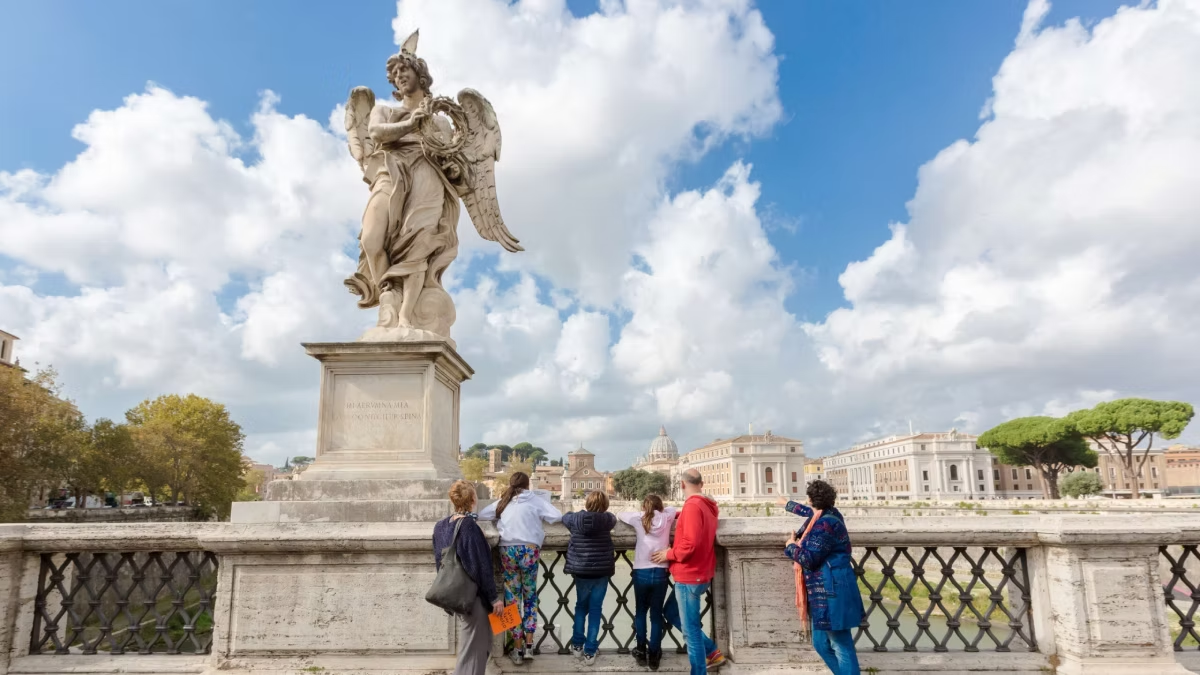
Castel Sant’Angelo works well for families — it’s a real fortress with ramps, cannonballs, battlements, and dungeon stories that tend to grab kids more than a gallery of paintings would. Entry is free for everyone under 18, and the ancient spiral ramp is stroller-friendly, though a set of stairs near the top is not. Budget 1–1.5 hours for most families, aim for a quieter morning or early-evening slot, and keep a close hand on children on the open terrace.
Castel Sant’Angelo has a real advantage over a lot of Rome’s museums when it comes to kids: it’s a fortress, not a picture gallery. There are ramps to run up, thick stone walls to touch, a rooftop with cannon and cannonballs, and stories about popes hiding from armies and prisoners locked in cells. Children who might tune out at a painting-heavy museum tend to stay interested here, at least for a while.
That said, it’s an honest guide, so this covers the practical side too — the stairs that a stroller can’t manage, how long young legs realistically hold up, and the parts of the terrace where you’ll want to keep a hand on your kids.
Why Kids Often Enjoy Castel Sant’Angelo
Kids tend to like Castel Sant’Angelo because it feels like an actual castle rather than a museum — there’s a ramp to climb, cannonballs and battlements to see, a dungeon with prisoner stories, and a rooftop view that makes the climb feel worth it.
A lot of what makes this place work for children is that it doesn’t feel staged for them — it’s simply a genuine 1,900-year-old fortress that happens to have kid-friendly features built in. Hadrian’s original helical ramp, which spirals up through the base of the building, is dim, echoey, and fun to walk or run through. Higher up, the open-air passages have real cannon and stacked cannonballs, plus battlements and lookout points that spark an obvious “what would you do if you were defending this castle?” conversation. The bronze angel statue crowning the roofline gives the whole building a clear reason for its name, and most kids like hearing the legend behind it (more on that below).
The castle’s darker history helps rather than hurts here. The lower levels held prison cells, and guides and panels tell stories of real prisoners — the kind of detail that keeps older kids and tweens engaged in a way that Renaissance frescoes alone might not. There’s also the Passetto di Borgo, the elevated secret corridor that once let popes escape to the Vatican during an attack — when it’s open, walking part of an actual escape route is a strong hook for imaginative kids. Finally, the Terrace of the Angel at the top rewards the climb with one of the best panoramic views in Rome, over the Tiber to St. Peter’s dome, which even restless children usually pause for.
Is Entry Free for Children?
Yes — admission is free for everyone under 18, regardless of nationality, so a family only pays for the adults. There’s no separate child ticket to buy; you’ll typically need to show ID or a passport for kids at the ticket office or gate if asked. Our guide to free entry days and reduced tickets covers the under-18 policy alongside the reduced rate for EU citizens aged 18–24 and the free first Sunday of the month.
Strollers, Carriers, and the Climb
The base of the castle is reached via Hadrian’s ancient spiral ramp, which a stroller can manage, but the route to the upper floors and the terrace includes stairs that strollers cannot climb, so a baby carrier is the more practical option for infants and toddlers.
The famous helical ramp at the entrance is stone-paved and gently sloped, and most standard strollers can be pushed up it without much trouble, though the surface is uneven in places. The trouble starts higher up: the papal apartments, museum rooms, and the final approach to the Terrace of the Angel are connected by staircases, some narrow and worn smooth by centuries of use, with no elevator covering the full route. A stroller effectively has to be parked or carried at that point, which isn’t practical for most parents on their own.
If you’re traveling with an infant or toddler, a soft-structured carrier or baby wrap is the more realistic option for the full visit — it frees your hands for the stairs and lets you keep your child close on the open terrace. Families who do bring a stroller for younger siblings should be prepared to take turns, with one adult staying at a lower level while the other carries a toddler up. Our accessibility guide goes into more detail on the stairs, uneven surfaces, and what limited step-free access exists.
How Long Kids Last
Most families spend around 1 to 1.5 hours inside with children, shorter than the 2 to 3 hours a history-focused adult visitor might want. Young kids (roughly under 6) tend to enjoy the ramp and the terrace most and can lose interest in the museum rooms and papal apartments fairly quickly; older kids and tweens generally have the attention span for the prison cells, armory, and the full climb. Building in a short break — water, a snack, a rest on a bench in one of the courtyards — goes a long way toward avoiding a mid-visit meltdown. Our guide to how long to spend at Castel Sant’Angelo covers pacing in more depth for visitors of all ages.
Keeping It Engaging
A simple self-made scavenger hunt — spotting the angel statue, counting cannonballs, finding the ramp’s turns, or looking for prison cell doors — tends to hold kids’ attention better than reading wall text, and the Saint Michael legend and Tosca’s story can both be told in a few age-appropriate sentences.
A little structure makes a big difference with children. A rough, self-made treasure-hunt or checklist works well without any special app or planning: have kids spot the bronze angel on the roof, count the cannonballs on the upper terraces, find the marble angel in the courtyard, keep track of how many turns the spiral ramp takes, or look out for the small barred windows of the prison cells. The entry ticket with an audio app can also help older kids follow along at their own pace with a phone or tablet, rather than trailing behind adults reading captions.
The Saint Michael legend is an easy, kid-friendly story to tell on the spot: in the year 590, during a terrible plague, the pope reportedly saw the Archangel Michael appear above the fortress, sheathing his sword to signal the plague was ending — which is why the castle is named “Castle of the Holy Angel” and why an angel statue sits on top. It’s a short, clear story that explains the whole building’s name and gives kids something to look for as soon as they arrive.
Tosca, the opera whose final act is set on this terrace, is trickier — the plot involves a real death — but it can be shared in an age-appropriate, PG way for older kids: a heroine named Tosca, cornered on the roof of this very castle, chooses to jump rather than be captured. You don’t need to dwell on it, but pointing out that “an opera ends right here, on this rooftop” tends to land well with kids who like drama or theater.
Facilities for Families
The castle has restrooms available across several levels, so you’re not stuck waiting until the exit. There’s a small bookshop and gift area near the end of the route where kids can pick out a postcard or souvenir. Beyond that, don’t expect a dedicated children’s play area, nursing room, or on-site café — for a proper meal or feeding break, plan around the restaurants and cafés in the nearby Borgo and Prati neighborhoods before or after your visit, or bring snacks and water for inside.
Best Times to Avoid Crowds and Heat
Go right at the 9:00 AM opening or in the last couple of hours before the 6:30 PM last entry to avoid the busiest crowds, and favor morning or early-evening slots in summer, when the exposed ramp and terrace can get uncomfortably hot for young kids by midday.
Midday in the warmer months is the hardest stretch for families — the upper terraces and much of the ramp are exposed to direct sun, and a hot, cranky child rarely makes for a good visit. Early morning, right at opening, tends to be both cooler and calmer, with shorter lines and a quieter terrace for kids to explore. An early-evening slot before the 6:30 PM last admission is the other good window, with softer light and thinner crowds, though you’ll want to leave enough time to reach the top before staff start clearing the upper levels. Our guide to the best time to visit covers seasonal crowd and weather patterns in more detail, and pairing your visit with a pre-booked timed ticket avoids a long, restless wait in line with kids.
Safety on the Terrace and Ramparts
The Terrace of the Angel and the upper ramparts are open-air with sections of low parapet and uneven stone underfoot, so young children should be kept within reach at all times, and non-slip shoes are worth prioritizing given the worn, sometimes slick stone surfaces throughout the castle.
The terrace is the highlight of the visit, but it’s also the point that calls for the most attention. Parapet walls in places are lower than a modern safety barrier, the stone floor is uneven and can be slippery, especially after rain, and the terrace gets crowded enough that a small child can slip out of sight quickly. Hold hands or keep toddlers in a carrier on the Terrace of the Angel and along any open ramparts, and remind older kids not to climb on walls or cannon for photos. The ramp and stairways are similarly worn smooth by centuries of foot traffic, so sturdy, closed shoes with grip serve everyone in the family better than sandals or flip-flops.
Frequently Asked Questions
Is Castel Sant’Angelo good for kids?
Yes, generally. Its ramps, cannon, battlements, prison cells, and rooftop views tend to hold children’s attention better than a typical art museum, and free entry for under-18s makes it an easy addition to a family Rome itinerary. The main caveats are the stairs (not stroller-friendly) and the open terrace, which needs supervision.
Is entry free for children at Castel Sant’Angelo?
Yes. Everyone under 18 enters free, regardless of nationality, though you may need to show ID or a passport for kids if asked at the ticket office or gate. Only accompanying adults need a paid ticket.
Can I bring a stroller into Castel Sant’Angelo?
You can get a stroller up the ancient spiral ramp at the base without much trouble, but staircases higher up leading to the papal apartments and the terrace are not stroller-accessible. Most families with infants or toddlers find a baby carrier more practical for the full visit.
How long should we plan for with kids?
Most families with children spend around 1 to 1.5 hours inside, shorter than a typical adult visit. Younger kids tend to enjoy the ramp and terrace most and can lose interest in the museum rooms sooner, so building in a short break helps the visit go smoothly.
What’s the best age for kids to visit?
There’s no strict minimum age, and infants in carriers do fine, but children old enough to walk the ramp and stairs on their own (roughly 5 and up) and appreciate the castle-and-legend angle tend to get the most out of it. Tweens and older kids usually engage well with the prison and history stories.
Is the Passetto di Borgo open for kids to walk?
The Passetto, the elevated escape corridor to the Vatican, opens only on its own seasonal schedule and is sometimes separately ticketed, so it isn’t guaranteed to be part of every visit. When it is open, it’s a memorable stop for kids who like the “secret passage” idea; check the official site or our Passetto di Borgo guide for current opening dates.
Are there restrooms and places to eat for families?
Restrooms are available on several levels inside the castle, and there’s a small bookshop near the exit. There isn’t a café or dedicated children’s area inside, so plan a meal or snack break in the nearby Borgo or Prati neighborhoods before or after your visit.
Is the terrace safe for young children?
The Terrace of the Angel is open-air with sections of lower parapet and uneven stone, so young children need to be kept close and supervised at all times. It’s not unsafe with reasonable care, but it isn’t a place to let kids run ahead unsupervised.
What should kids wear or bring?
Closed, sturdy shoes with good grip matter more than anything else, given the worn stone ramp and stairs. Bring water, a light layer for the open terrace, and sun protection in warmer months, since much of the route is outdoors and exposed.
Should we book tickets in advance for a family visit?
Booking a timed entry ticket in advance is worth it for families, since it avoids a long wait in line with restless kids, especially in peak season. It also lets you plan around nap times or meal breaks with more certainty than an on-the-day queue allows.
