

Castel Sant’Angelo Rules & What to Know Before Your Visit
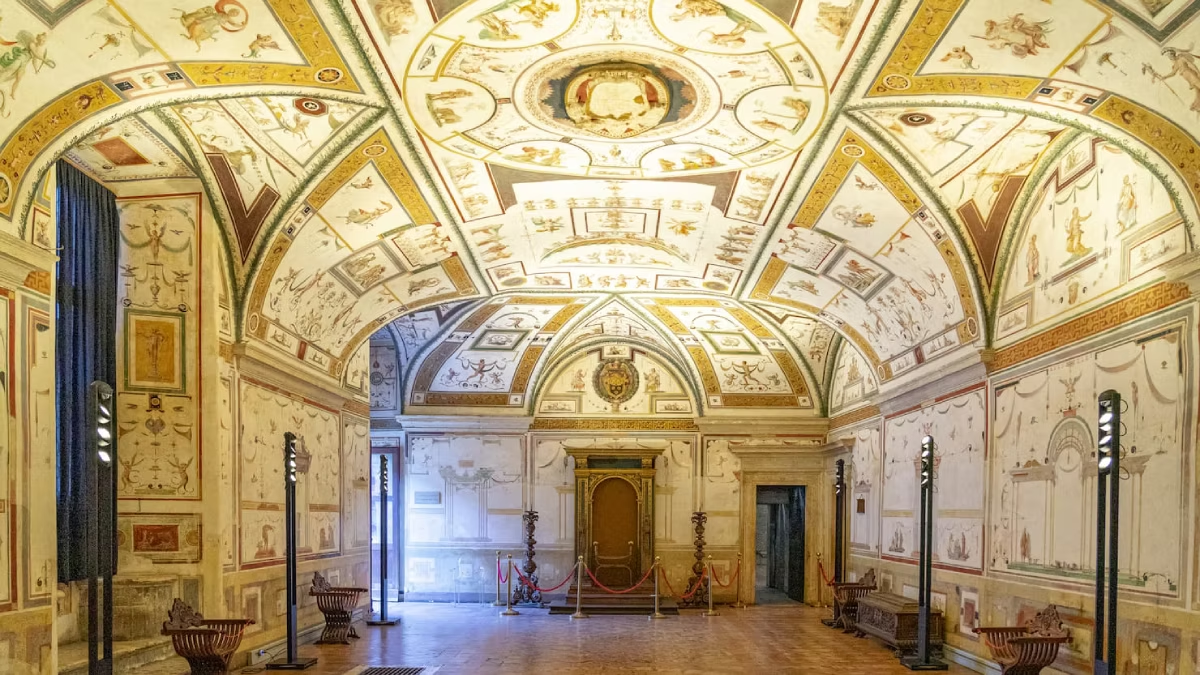
Castel Sant’Angelo has airport-style security screening and bag checks at the entrance, and large suitcases and bulky backpacks are not allowed inside. Photography without flash or tripods is generally fine, food and drink are limited to designated areas, and comfortable shoes matter because the visit climbs a spiral ramp and several flights of stairs to an open-air terrace. Arrive with time to spare for your timed slot and the security line, and check the practical points below before you go.
Castel Sant’Angelo is a working museum inside a nearly 1,900-year-old fortress, so a few practical rules shape how the visit actually feels. None of them are unusual for a major monument in Rome, but knowing them in advance saves you from surprises at the door — a bag you have to check, a bottle you can’t bring past security, or shoes that aren’t right for a long stone ramp.
This guide walks through security and bag checks, what you can and can’t bring in, photography rules, food and drink, what to wear, how timed entry works, the ticket types on offer, accessibility, restrooms, and general etiquette — finishing with a short checklist to run through before you leave your hotel.
Security Screening and Bag Checks
Every visitor passes through a security checkpoint at the entrance, similar to airport-style screening, with bags checked and metal detectors in use. Arrive a few minutes early for your timed slot to allow for this, especially in peak season when the line can move slowly.
As at most major Italian monuments, Castel Sant’Angelo screens visitors on entry. Expect to walk through a metal detector and have bags checked or X-rayed, and be ready to open a bag if asked. This adds a few minutes to your arrival, so build it into your schedule rather than cutting your timed slot close. Sharp objects, tools, and anything that could be read as a weapon are not permitted and will be refused at the checkpoint.
Bag and Backpack Size, and Cloakroom
Large suitcases, oversized backpacks, and bulky luggage are not allowed inside the museum — the stairways, the spiral ramp, and the narrow passages simply were not built for wheeled bags or hiking-size packs, and staff will stop you before you reach security. A day bag, small backpack, or purse is fine. If you arrive with something larger, ask at the entrance about cloakroom or storage options; availability can be limited, so it is far simpler to leave large luggage at your hotel before you come. If you’re arriving straight from the airport or a train station, plan your route with this in mind — see our guide on how to get to Castel Sant’Angelo for the practical options.
Photography Rules
Photography is generally allowed throughout the castle, including in the papal apartments and on the terrace, and it’s one of the best places in Rome for a photo over the Tiber and St. Peter’s. The usual restrictions apply: no flash, since it can damage frescoes and painted surfaces, and no tripods or monopods, which slow down foot traffic in the narrow rooms and stairwells. Some temporary exhibition spaces may post their own photography restrictions, so watch for signage as you go. A phone or small camera works well for most of the visit.
No Large Luggage — Plan Ahead
This is worth repeating on its own: do not plan to arrive at Castel Sant’Angelo with a full-size suitcase, whether you’re between hotels or heading to the airport later. There is no reliable large-luggage storage at the site, and dragging a bag up the ramp and stairs is neither permitted nor practical. Drop bags at your accommodation, a train station locker, or a luggage-storage service before you visit.
Food, Drink, and Rest Stops
Eating and drinking inside the museum rooms and along the historic ramp is not permitted, both to protect the interiors and to keep passageways clear. Water is generally fine to carry, especially useful on a warm day and a long climb, but save snacks and meals for outside the entrance or any designated café/terrace area if one is open during your visit. There isn’t a full restaurant inside, so eat before you come or plan a stop nearby afterward — the Borgo and Prati neighborhoods around the castle have plenty of options.
What to Wear: Shoes and Sun Protection
Wear comfortable, closed-toe walking shoes — the visit follows Hadrian’s ancient spiral ramp and several flights of stone stairs up to the terrace, and the surfaces can be uneven and occasionally slippery. The rooftop Terrace of the Angel is fully open to the sky, so bring sun protection and water in warmer months.
Castel Sant’Angelo is not a flat museum stroll. The route climbs through the original Roman ramp, Renaissance staircases, and narrow passages before reaching the open-air terrace at the top, so flip-flops or dress shoes make for a harder visit than sneakers or walking shoes. The terrace itself has no shade, so in spring and summer a hat, sunscreen, and a bottle of water are worth packing, and in cooler months a layer helps since it can be breezy up top. Because the climb takes real time and effort, it’s also worth reading our guide on how long to spend at Castel Sant’Angelo so you don’t feel rushed on the way up.
Timed Entry and Arriving on Time
Castel Sant’Angelo uses timed-entry slots, particularly for pre-booked tickets, so it pays to arrive at or shortly before your booked time rather than early or late. Being early doesn’t guarantee a faster entry if the slot ahead of you is still being processed, and arriving late risks losing your place in a busy queue. Give yourself extra buffer for the security check described above, and remember that last admission is well before the closing time — see our guide to opening hours for the current schedule and last-entry cutoff.
Ticket Types at a Glance
There are a few ways to visit, and picking the right one shapes your day as much as any of the rules above:
| Ticket type | Best for |
|---|---|
| Standard entry ticket | Self-guided visitors who want flexibility and a timed slot |
| Guided tour | Visitors who want the history explained on-site by a guide |
| Combined tickets (e.g., with Vatican-area sights) | Visitors packing multiple nearby attractions into one day |
| Roma Pass | Visitors also planning other Rome museums and public transport |
Whichever you choose, book your specific time slot in advance in peak season to avoid a long ticket-office line; our guide on which ticket to choose breaks down the differences in more detail.
Accessibility
The castle’s core structure — an ancient mausoleum converted into a fortress over centuries — includes ramps, stairs, and uneven historic surfaces that are not fully step-free, and the terrace at the top is reached only after a long climb. Some lower areas and courtyards are more accessible than the upper floors. If mobility is a concern, it’s worth contacting the museum or checking the official site in advance to confirm current provisions, such as any available lift access, before you plan your route through the site.
Restrooms
Public restrooms are available on-site, typically near the entrance/ground-floor area rather than scattered across every level, so it’s sensible to use them before you start the long climb up through the ramp and stairs. There isn’t a restroom on the terrace itself, so plan accordingly if you’re visiting with kids or anticipate a long stay at the top.
Visitor Etiquette
Castel Sant’Angelo is both a historic monument and an active museum with fragile frescoed rooms, so the usual courtesies apply: keep voices low in the smaller rooms, don’t touch painted surfaces or artifacts, stay within roped-off areas, and give other visitors room on narrow staircases and the ramp, especially when passing in opposite directions. On the terrace, be mindful near the edges and railings, particularly with children. Following posted signage for one-way routes during busy periods keeps the flow of visitors manageable for everyone.
Before You Go: Quick Checklist
- Book a timed-entry ticket in advance for peak season
- Arrive early enough for security screening plus your entry slot
- Leave large suitcases and bulky backpacks at your hotel
- Wear comfortable, closed-toe shoes for the ramp and stairs
- Pack sun protection and water for the open-air terrace
- Skip flash and tripods when taking photos inside
- Save food and drink for before or after your visit
- Use the restroom near the entrance before the climb up
- Check accessibility provisions ahead of time if needed
- Keep your phone or ticket confirmation handy at the gate
Frequently Asked Questions
Is there security screening at Castel Sant’Angelo?
Yes. All visitors go through airport-style security screening at the entrance, including a metal detector and a bag check. Arrive a few minutes before your timed slot to allow for this, especially during busy periods.
Can I bring a backpack into Castel Sant’Angelo?
A small to medium day bag or backpack is generally fine, but large backpacks, suitcases, and bulky luggage are not permitted inside. If you arrive with something oversized, ask about cloakroom or storage options at the entrance, though availability can be limited.
Is photography allowed inside the castle?
Yes, photography is allowed in most areas, including the papal apartments and the terrace. Flash photography and tripods or monopods are generally not permitted, both to protect the frescoes and to keep passageways clear.
Can I bring food and drinks inside?
Eating is not permitted inside the museum rooms or along the historic ramp. Water is generally fine to carry, especially on a warm day, but plan to eat before you arrive or afterward at one of the cafés and restaurants nearby.
What shoes should I wear to visit Castel Sant’Angelo?
Wear comfortable, closed-toe walking shoes. The visit follows a spiral ramp and several flights of stone stairs up to the terrace, and the surfaces can be uneven, so sandals or dress shoes make the climb harder than it needs to be.
Is Castel Sant’Angelo accessible for visitors with mobility issues?
Parts of the site are more accessible than others, but the historic ramps, stairs, and uneven surfaces mean it is not fully step-free, and the terrace requires a long climb. Contact the museum or check the official site in advance to confirm current accessibility provisions before your visit.
Do I need to arrive early for my timed entry slot?
Arrive at or shortly before your booked time rather than significantly early or late. Build in extra time for the security check at the entrance so you don’t lose part of your visit window waiting in line.
Are large suitcases allowed inside Castel Sant’Angelo?
No. Large suitcases and bulky luggage are not allowed inside, and there is no reliable large-luggage storage on-site. Leave big bags at your hotel, a station locker, or a luggage-storage service before you visit.
Are there restrooms inside Castel Sant’Angelo?
Yes, public restrooms are available on-site, generally near the entrance rather than on every level. There isn’t a restroom on the terrace itself, so it’s best to use the facilities before starting the climb.
What ticket type should I choose for my visit?
A standard timed-entry ticket suits self-guided visitors who want flexibility, while a guided tour is a good choice if you want the history explained on-site. Travelers combining several Rome sights may prefer a combined ticket or the Roma Pass; our guide to choosing a ticket compares the options.
