

Is Castel Sant’Angelo Worth Visiting in Rome? Honest Take
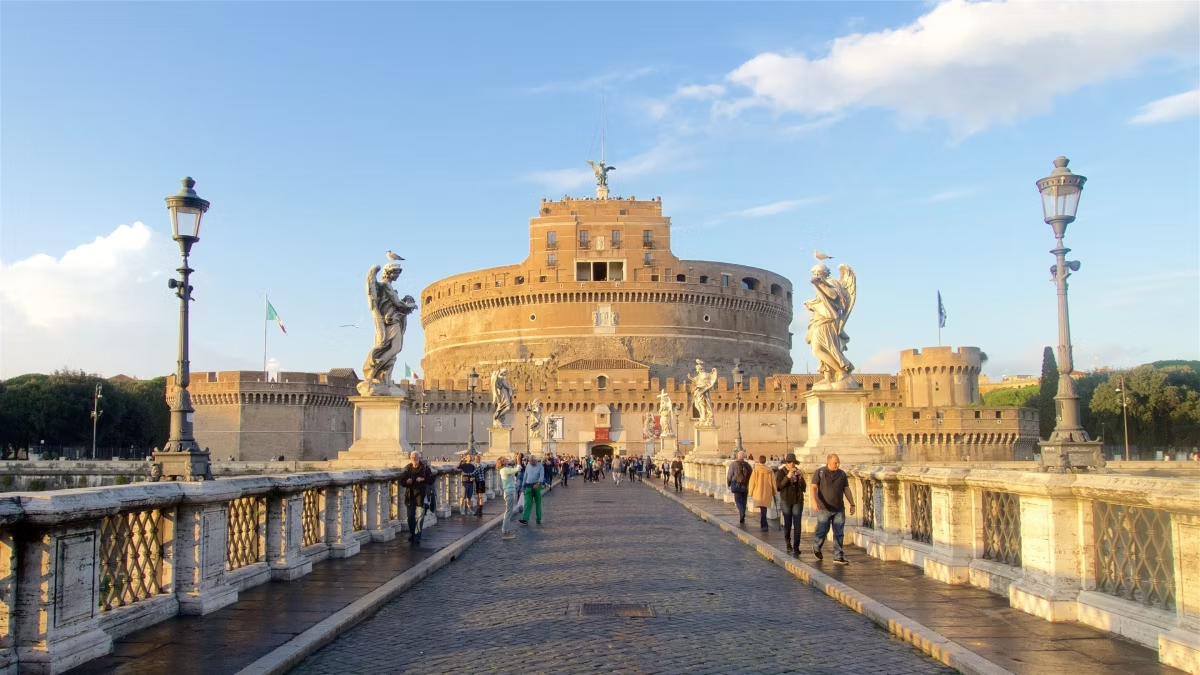
Yes, for most visitors — Castel Sant’Angelo packs nearly 2,000 years of history into one climb, ends at one of the best panoramas in Rome, and costs around €16, all with noticeably shorter lines than the Vatican next door. The honest caveats are that it involves stairs and a ramp, some rooms are sparse compared to a full-blown art museum, and it can get crowded at midday — plan around those and it’s an easy yes.
Not every landmark in Rome earns its ticket price, and it’s fair to ask before you commit an afternoon and €16 to a fortress on the Tiber. This guide weighs the genuine strengths of Castel Sant’Angelo against its real downsides, tells you who tends to love it and who might reasonably skip it, and puts it in context against the Vatican, the Colosseum, and Rome’s other major sights — so you can decide with your eyes open.
The Case For Visiting
Castel Sant’Angelo’s strongest arguments are layered history spanning from Emperor Hadrian to the modern era, one of Rome’s best rooftop views, thinner crowds than the Vatican, genuine legend attached to the Passetto and Tosca, and a ticket price that’s modest by Rome standards.
Nearly 2,000 years of layered history in one building. Few sites in Rome let you walk through so many eras under one roof. The castle began as Hadrian’s mausoleum, built around AD 135–139 as a tomb for the emperor and his successors through Caracalla. Over the following centuries it became a fortress, a papal stronghold and refuge, and a prison, and today it operates as a national museum. That single continuous structure — Roman core, medieval and Renaissance additions, papal apartments — is a rare, tangible way to see how Rome itself evolved, layer over layer, rather than reading about it in a book.
The terrace panorama. The climb ends at the rooftop Terrace of the Angel, with an open view over the rooftops of Rome, the Tiber, and St. Peter’s Basilica across the river. It’s one of the more rewarding viewpoints in the city, especially in the late afternoon when the light warms up over the dome. For many visitors, this view alone justifies the visit.
Fewer crowds than the Vatican. Castel Sant’Angelo draws real crowds, but they’re a fraction of what the Vatican Museums and St. Peter’s Basilica handle on a given day. You can generally move through the rooms and courtyards at your own pace, without the shuffling, elbow-to-elbow lines that define a Vatican Museums visit in peak season.
The Passetto and the Tosca connection. The Passetto di Borgo, the elevated fortified corridor linking the castle to the Vatican, is a genuinely dramatic piece of history — Pope Clement VII used it to flee to the castle during the 1527 Sack of Rome. It doesn’t open year-round and is sometimes ticketed separately, but even seeing the corridor from below adds real texture to a visit. Culturally, the Terrace of the Angel is also where the final act of Puccini’s opera Tosca is set, and opera fans in particular tend to enjoy standing where the heroine’s fictional leap takes place.
Good value at around €16. A full ticket runs about €16, noticeably less than the Vatican Museums and in the same range as many single Rome attractions, yet it delivers ancient ruins, Renaissance frescoed rooms, a museum collection, and a panoramic terrace in one admission. Reduced and free-entry categories (EU citizens 18–24, under-18s, and the first Sunday of each month) make it even more accessible; see our entry ticket guide for current pricing details.
The Honest Caveats
The realistic downsides are that the visit is a genuine climb with no elevator through most of the route, some rooms and floors are sparsely furnished compared to a dedicated art museum, the overall collection isn’t as deep as the Vatican’s, and midday hours can feel crowded and hot.
It’s a climb. The route follows Hadrian’s original spiral ramp and a series of stairs up through five levels to the terrace. There’s no way around most of it, and it isn’t especially elevator-friendly for visitors with mobility limitations. If stairs are a real concern, it’s worth checking accessibility details with the official site before booking.
Some rooms are sparse. Not every room is a showstopper. Certain floors — particularly the smaller museum rooms and former storage or prison areas — are relatively bare compared to the frescoed papal apartments, and can feel like transitional spaces rather than destinations in themselves. Visitors expecting wall-to-wall art in every room may be mildly disappointed by these stretches.
It’s not as art-packed as the Vatican. If your main interest is masterpiece painting and sculpture at the density of the Sistine Chapel or the Vatican Museums, Castel Sant’Angelo won’t match that. Its strength is architecture, atmosphere, and layered history rather than a concentrated fine-art collection — a different, complementary experience rather than a substitute.
Midday can get busy. Late morning through early afternoon is the castle’s busiest stretch, especially in high season and on the free first Sunday of each month, when the ticket line and terrace both fill up. Our opening hours guide has the full daily schedule if you want to time around the crowds.
Who Will Love It
History enthusiasts who enjoy seeing how a single building can serve as tomb, fortress, palace, and prison across two millennia will find plenty to hold their attention here. Photographers and view-chasers will value the terrace panorama, particularly near sunset. Visitors who want a satisfying half-day sight without Vatican-scale crowds and lines appreciate the more relaxed pace. Opera fans and anyone drawn to papal intrigue — the Sack of Rome, the Passetto escape route, the Tosca connection — tend to find the lore genuinely rewarding rather than a footnote.
Who Might Skip It
Visitors with limited mobility who can’t manage sustained stairs and ramps, and for whom the terrace view isn’t essential, may reasonably prioritize flatter, more accessible sights instead. Travelers on a very tight one- or two-day Rome itinerary who must choose between Castel Sant’Angelo and the Vatican or Colosseum should generally prioritize those larger, must-see sites first — Castel Sant’Angelo pairs well as an addition once the essentials are covered, given how close it sits to the Vatican across the river. Visitors solely chasing an intensive fine-art collection, rather than architecture and history, may find better value at the Vatican Museums or the Galleria Borghese.
How It Compares to Other Rome Sights
Against the Vatican Museums and St. Peter’s Basilica, Castel Sant’Angelo is smaller in scale and far less crowded, with a lower ticket price, but a thinner art collection — many visitors treat it as a satisfying companion visit rather than a replacement, especially since it sits an easy walk from Vatican City; our Vatican combo guide covers how the two pair together. Against the Colosseum and Roman Forum, it offers a comparable sense of ancient Rome but with far shorter queues and a more manageable visit length. Against smaller Rome museums and churches, it stands out for the terrace view and the sheer physical presence of the building, which few other sights can match. In short, it rarely wins a head-to-head against the Colosseum or the Vatican for a first-time visitor with only a day or two, but it holds up well as one of the better half-day additions to a longer Rome itinerary.
The Verdict
Castel Sant’Angelo is worth visiting for the large majority of travelers to Rome. The combination of layered ancient-to-papal history, a genuinely excellent terrace view, a manageable crowd level, and a fair ticket price around €16 outweighs the honest downsides of a climb and a few sparser rooms. It isn’t a substitute for the Vatican Museums if deep fine art is your priority, and it isn’t ideal for visitors who can’t manage stairs, but for nearly everyone else — especially those staying near the Vatican or crossing Ponte Sant’Angelo on foot — it earns its place on the itinerary. Budget a couple of hours, go early or late to avoid the midday crush, and it’s an easy recommendation.
Frequently Asked Questions
Is Castel Sant’Angelo worth visiting if I only have one day in Rome?
If you have only one day, prioritize the Colosseum, Roman Forum, and the Vatican first, since they’re Rome’s essential sights. Castel Sant’Angelo is still worth an add-on if your schedule allows a couple of spare hours, particularly in the late afternoon near the Vatican, but it shouldn’t bump the essentials off a single-day plan.
Is Castel Sant’Angelo better than the Vatican Museums?
They’re not really comparable — the Vatican Museums offer a far deeper concentration of art and the Sistine Chapel, while Castel Sant’Angelo offers architecture, layered history, and a terrace view with much shorter lines. Most visitors see both rather than choosing one over the other.
How much does it cost to visit Castel Sant’Angelo?
A full ticket costs about €16, with reduced pricing of around €2 for EU citizens aged 18–24 and free entry for under-18s. The first Sunday of each month is free for everyone. See our entry ticket guide for current details.
Is Castel Sant’Angelo good for kids or families?
Yes, generally. Children tend to enjoy the fortress feel, the winding ramp, and the armory and prison rooms, and under-18s get in free. The main consideration is the climb and stairs, so it works best for kids who can manage a sustained walk upward.
Is the climb up Castel Sant’Angelo hard?
It’s a moderate climb through five levels via a spiral ramp and stairs, with no significant elevator access through most of the route. Most visitors in reasonable fitness manage it comfortably over an hour or two, but it isn’t well suited to those with mobility limitations.
Is Castel Sant’Angelo crowded?
It gets busy at midday and on the free first Sunday of each month, but it’s consistently less crowded than the Vatican Museums or the Colosseum. Arriving near opening or in the last couple of hours before closing gives a noticeably calmer visit; see our opening hours guide for the daily schedule.
How long should I spend at Castel Sant’Angelo?
Most visitors spend one and a half to two hours seeing the papal apartments, museum rooms, and terrace at a comfortable pace. History enthusiasts or those lingering on the terrace for photos and views may want closer to two and a half hours.
What’s the best time to visit to avoid crowds?
Early morning right at opening or the final couple of hours before last admission are the quietest windows, and late afternoon also offers the best light for terrace photos. Midday, weekends, and the free first Sunday of the month are the busiest times.
Is Castel Sant’Angelo worth it if I’ve already seen the Colosseum?
Yes — the two sights offer different experiences. The Colosseum focuses on ancient spectacle and engineering, while Castel Sant’Angelo adds papal history, a fortress atmosphere, and a rooftop panorama, so seeing both rounds out a fuller picture of Rome across different eras.
Does the Passetto make Castel Sant’Angelo more worth visiting?
The Passetto di Borgo, the elevated escape corridor to the Vatican, adds genuine historical texture, especially the story of Clement VII’s flight during the 1527 Sack of Rome. It only opens on a seasonal schedule and is sometimes ticketed separately, so it’s a bonus rather than a reason to visit on its own, but it deepens an already worthwhile trip.
