

Statue of Saint Michael: Why It’s Called Castel Sant’Angelo
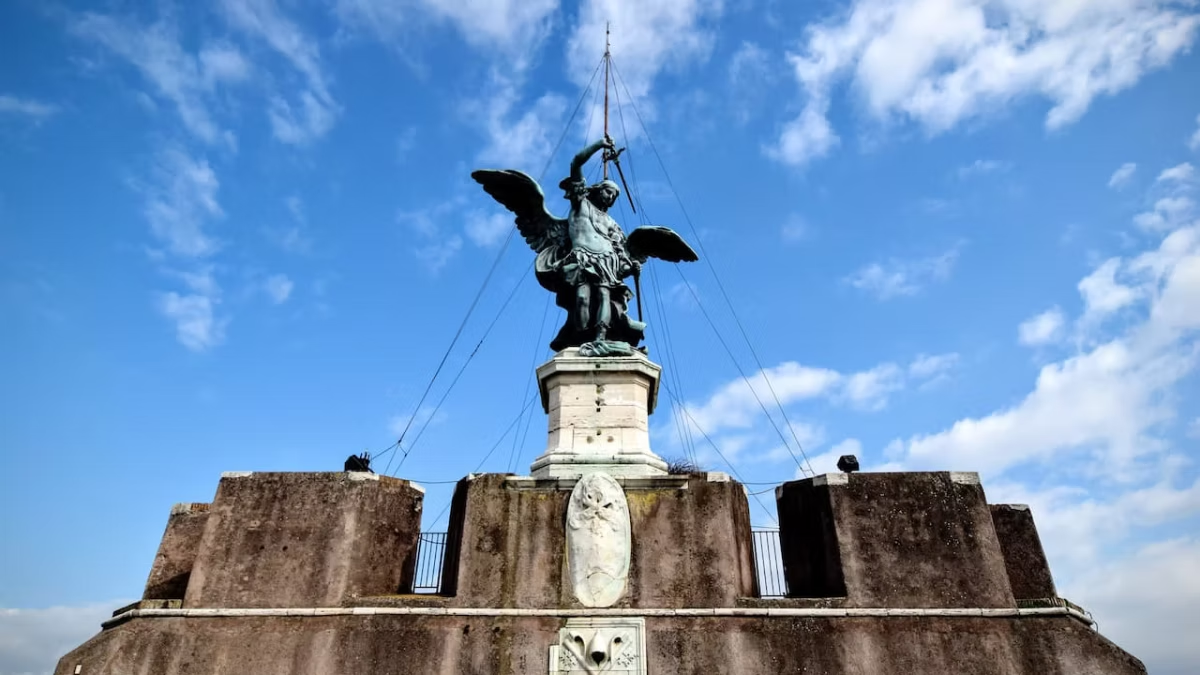
Castel Sant’Angelo takes its name from a legend that in 590 AD, Pope Gregory the Great saw the Archangel Michael atop the old mausoleum sheathing his sword, signaling the end of a plague. A series of angel statues has marked the spot ever since; today a bronze angel by Peter Anton von Verschaffelt (1752) stands on the rooftop terrace, and an earlier marble angel by Raffaello da Montelupo is displayed in the Courtyard of the Angel below.
Every visitor eventually asks the same question: why is a Roman emperor’s tomb called the “Castle of the Holy Angel”? The answer stands right on the roofline — a winged bronze figure sheathing a sword, visible from across the Tiber and from much of central Rome. That statue, and the legend behind it, is the reason the building carries the name it does rather than simply “Hadrian’s Mausoleum.”
This guide covers the 590 AD legend of Pope Gregory the Great and the Archangel Michael, the succession of angel statues that have stood on the building over the centuries, the bronze angel you see today, the earlier marble angel now preserved at ground level, and where to find each one during your visit.
The Legend: Pope Gregory and the Plague of 590 AD
According to tradition, Pope Gregory the Great led a penitential procession through Rome in 590 AD to pray for an end to a devastating plague. Passing the ancient mausoleum on the Tiber’s bank, he reportedly saw a vision of the Archangel Michael on its summit, sheathing his sword — a sign that the plague was ending. The building was renamed in the angel’s honor.
Rome in 590 AD was a city in crisis. Plague was sweeping through the population, and the newly elected Pope Gregory the Great — later canonized and remembered as one of the most influential popes in Church history — called for a citywide procession of prayer and penance. As the procession made its way along the Tiber, passing beneath the towering drum of what had been Emperor Hadrian’s mausoleum for more than four centuries, Gregory is said to have looked up and seen the Archangel Michael standing atop the structure, sheathing his sword.
In Christian tradition, a sheathed sword is a gesture of mercy — the end of divine punishment rather than its continuation. The vision was read as a sign that the plague would soon lift, and, as the story goes, it did. Whether the epidemic actually ended because of the vision or simply ran its course is not something history can settle; what matters for the building’s story is what happened next. The mausoleum, already centuries removed from its original purpose as an imperial tomb, began to be known as the Castle of the Holy Angel — Castel Sant’Angelo — and an angel statue was raised on the summit to commemorate the vision.
It’s worth being honest about the sourcing here: the episode is recorded in medieval hagiography rather than a contemporary eyewitness account, and later writers embellished it over the centuries. That doesn’t make it any less central to the building’s identity — the legend has shaped the site’s name, its statues, and its meaning for well over a thousand years, and it’s the reason a Roman emperor’s tomb is, to this day, more commonly known by the name of an angel than by the name of Hadrian.
A Succession of Angels: Wood, Marble, Bronze
The angel statue on the summit has been replaced several times since the legend took hold, moving from an early wooden figure through at least one marble version to the bronze statue that stands there today. Each replacement reflected both wear on the earlier statue and changing tastes in how the angel should be depicted.
The angel you see on the terrace today is not the first, nor even the second. Historical accounts describe a sequence of statues raised on the summit over the centuries following the legend, starting with a comparatively simple wooden or marble figure in the early medieval period and continuing through further commissions as earlier statues weathered, were damaged, or were judged no longer fitting for a building that had, by the Renaissance, become a fortified papal residence as well as a monument to the vision.
The best-documented of these earlier angels is the marble statue carved in the 1540s by the Florentine sculptor Raffaello da Montelupo, a pupil of Michelangelo who worked extensively on the papal fortifications. His angel — sword raised rather than sheathed in some readings, though the sheathing gesture is the traditional one associated with the legend — crowned the castle for roughly two centuries before it, too, was retired in favor of a new commission. Rather than being discarded, Montelupo’s angel was preserved, and it remains one of the most tangible physical links visitors can see today to the centuries before the current bronze statue went up.
Verschaffelt’s Bronze Angel of 1752
The bronze angel now standing on the Terrace of the Angel was cast in 1752 by the Flemish sculptor Peter Anton von Verschaffelt, commissioned to replace the aging marble statue. It depicts the Archangel Michael with wings spread, sword sheathed, in the gesture that recalls Pope Gregory’s vision, and it remains the defining silhouette of Castel Sant’Angelo today.
The statue that visitors photograph today dates to 1752, the work of the Flemish sculptor Peter Anton von Verschaffelt (sometimes rendered Pieter Anton Verschaffelt). Cast in bronze rather than carved in stone — a more durable choice for a monument exposed to Rome’s weather at height, above the Tiber — Verschaffelt’s angel shows Michael with wings outstretched, standing in a contrapposto pose, sword returned to its scabbard. It is a calmer, more restrained image than some of the era’s more dramatic religious sculpture, fitting for a figure meant to represent mercy rather than combat.
Verschaffelt’s angel stands on the Terrace of the Angel, the castle’s uppermost open-air level, where it has watched over Rome for more than two and a half centuries. It is visible from a considerable distance — from Ponte Sant’Angelo, from the riverside embankments, and from many points across the historic center — which is part of why the castle’s silhouette is so immediately recognizable. Up close, on the terrace itself, the statue’s scale becomes clearer: it is a substantial figure, not a small decorative addition, and it sits at the highest point of a building that already dominates its stretch of the Tiber.
Raffaello da Montelupo’s Marble Angel in the Courtyard
The marble angel carved by Raffaello da Montelupo in the 1540s, once the statue on the summit, is now displayed at ground level in the Courtyard of the Angel (Cortile dell’Angelo), one of the Renaissance courtyards inside the castle. Seeing it up close, rather than silhouetted against the sky, is one of the more rewarding small details of a visit.
When Verschaffelt’s bronze took its place on the terrace in the 1750s, Montelupo’s marble angel was not lost — it was brought down and installed in what is now known as the Courtyard of the Angel (Cortile dell’Angelo), one of the Renaissance-era courtyards visitors pass through partway along the route up through the castle. Displayed at eye level rather than silhouetted two hundred feet above the Tiber, the marble angel offers a different kind of encounter: you can see the carving detail, the texture of the wings and drapery, and the individual character of a nearly five-hundred-year-old sculpture in a way that’s simply not possible with the bronze figure on the roofline.
It’s a detail easy to walk past if you don’t know to look for it, since the courtyard is primarily a passage point on the way to the upper floors rather than a dedicated gallery. But pausing here connects the legend to its physical history in a way the rooftop statue alone can’t — this is the actual angel Pope Gregory’s story inspired centuries of pilgrims and visitors to look up at, before it was replaced and brought back down to earth.
Symbolism and What the Angel Represents
The angel’s sheathed sword is the statue’s central symbol — a gesture of mercy and the end of suffering, tied directly to the 590 AD plague legend. Beyond that specific story, the statue also marks the building’s transformation from a pagan imperial tomb into a Christian monument, a shift that shaped nearly every later chapter of its history as a papal fortress and refuge.
The sheathed sword is the detail that carries the statue’s meaning. Where a raised or drawn sword signals threat or ongoing conflict, a sheathed one signals that the danger has passed — precisely the message Gregory’s vision was said to convey to a city suffering under plague. That symbolism is why the angel has always been shown in this pose rather than in a more overtly militant stance, even as the specific statue changed hands from wood to marble to bronze over the centuries.
There’s a second layer of meaning worth noting: the angel also marks the moment the building’s identity shifted from pagan to Christian. Hadrian’s Mausoleum had spent over four centuries as an imperial tomb before Gregory’s vision; the legend, and the statues that followed it, effectively rebranded the structure for the next 1,400 years and counting. Everything that came after — its use as a papal fortress, the Passetto di Borgo linking it to the Vatican, its role as a refuge during the 1527 Sack of Rome — happened under a building known first and foremost by the angel’s name.
Where to See Each Angel Today
If you want to see both statues during your visit, plan for two separate stops on the route through the castle. Montelupo’s marble angel is at ground level, in the Courtyard of the Angel, reached fairly early in the walk up through the Renaissance sections of the building — our guide to what’s inside Castel Sant’Angelo lays out the floor-by-floor route so you know where the courtyard falls. Verschaffelt’s bronze angel is the last thing you’ll reach, standing on the Terrace of the Angel at the top of the climb, where it shares the rooftop with sweeping views over Rome and St. Peter’s.
For photographs of the bronze angel from outside the castle, the best vantage points are across the Tiber and along Ponte Sant’Angelo, where the statue is framed against the sky above the building’s drum. From the terrace itself, you’re standing right beside it, close enough to appreciate the scale that gets lost at a distance.
Frequently Asked Questions
Why is Castel Sant’Angelo called the “Castle of the Holy Angel”?
The name comes from a 590 AD legend in which Pope Gregory the Great saw the Archangel Michael on top of the building, sheathing his sword as a sign that a plague afflicting Rome was ending. The building, originally Hadrian’s Mausoleum, was renamed in the angel’s honor and has carried the name Castel Sant’Angelo ever since.
Who made the statue of Saint Michael on top of Castel Sant’Angelo?
The bronze angel currently on the terrace was made in 1752 by the Flemish sculptor Peter Anton von Verschaffelt. It replaced an earlier marble angel carved in the 1540s by Raffaello da Montelupo, which had itself replaced even earlier statues dating back to the medieval period.
What happened to the earlier marble angel?
Raffaello da Montelupo’s 16th-century marble angel was taken down from the summit when Verschaffelt’s bronze statue was installed in 1752, but it wasn’t destroyed. It was moved to the Courtyard of the Angel (Cortile dell’Angelo) inside the castle, where it’s displayed today and visible to visitors on the way up through the building.
Where is the Courtyard of the Angel?
The Courtyard of the Angel is one of the Renaissance courtyards inside Castel Sant’Angelo, reached as visitors move up through the building from the base toward the papal apartments and upper floors. It’s a passage point along the route rather than a separate ticketed area, so it’s included with standard admission.
Is the statue on the terrace the original angel from the legend?
No single statue on the summit dates back to 590 AD itself. The angel has been replaced multiple times over the centuries — through wood, marble, and finally bronze — as earlier statues weathered or were judged due for replacement. The current bronze angel by Verschaffelt has stood since 1752, making it by far the longest-serving of the angel statues.
Why does the angel have a sheathed sword?
A sheathed sword symbolizes mercy and the end of danger rather than ongoing conflict, matching the legend’s message that the Archangel Michael’s appearance signaled the plague’s end. That symbolism is why the angel has consistently been shown sheathing rather than drawing the sword across its various versions.
Can I see the statue of Saint Michael from outside the castle?
Yes. The bronze angel on the terrace is visible from a considerable distance, including from across the Tiber, along Ponte Sant’Angelo, and from many points in the surrounding historic center, since it sits at the highest point of the building. Seeing it up close requires visiting the Terrace of the Angel inside the castle.
Is the story of Pope Gregory and the Archangel Michael historically confirmed?
The episode comes from medieval hagiographic accounts rather than a contemporary eyewitness record, and later retellings added detail over the centuries. Historians treat it as a foundational legend rather than a verified event, but it has shaped the building’s name, statues, and identity for well over a thousand years regardless.
Does the statue relate to the name “Hadrian’s Mausoleum”?
Indirectly. Hadrian’s Mausoleum was the building’s original identity, built in the 2nd century AD as an imperial tomb, and it functioned that way for centuries before the 590 AD legend. The angel statue and the name Castel Sant’Angelo mark the moment the building’s identity shifted from a pagan tomb to a Christian monument, a change that shaped nearly everything that followed in its history.
How long has an angel statue stood on top of the castle?
Some form of angel statue has marked the summit since at least the medieval period following the 590 AD legend, meaning the tradition is well over a thousand years old even though the specific statue has changed several times. The current bronze angel has been in place since 1752, over 270 years.
