

Best Photo Spots for Castel Sant’Angelo: Best Views & Light
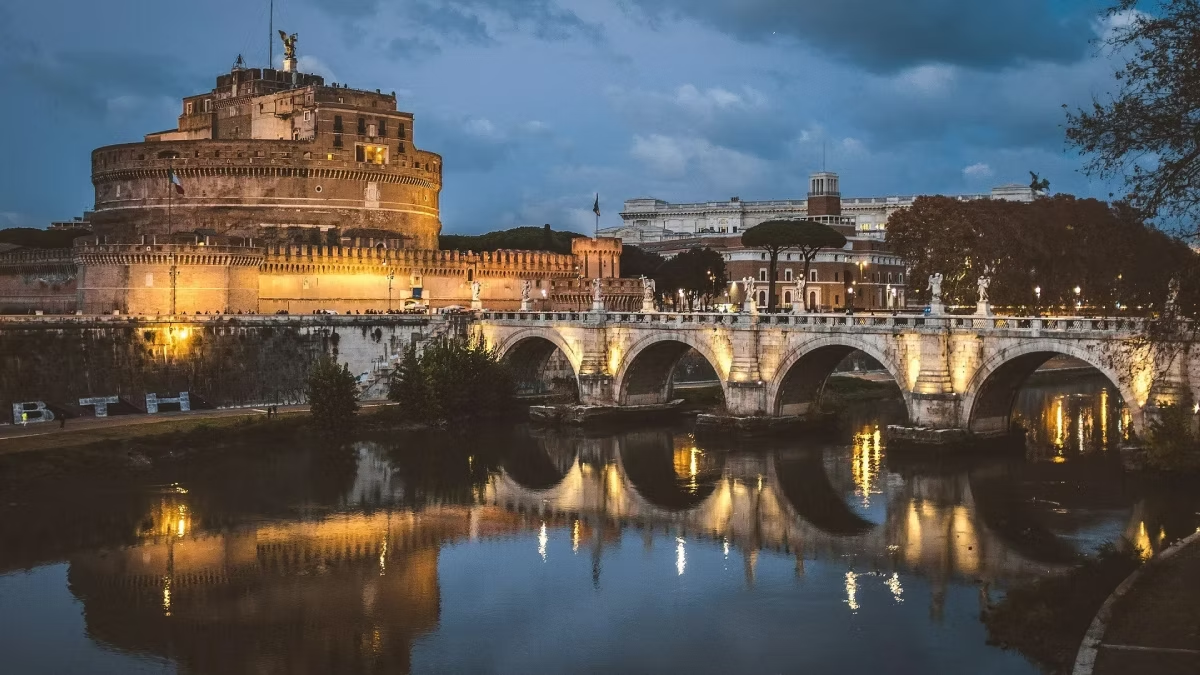
The classic shot is from Ponte Sant’Angelo, with Bernini’s angel statues lining the foreground and the castle behind them. For a postcard reflection, go to Ponte Umberto I at sunset or blue hour, when the Tiber mirrors the illuminated dome and walls. From inside, the Terrace of the Angel gives sweeping views of St. Peter’s dome and Rome’s rooftops, best in the last hour before closing when the light turns golden.
Castel Sant’Angelo is one of the most photographed buildings in Rome, and for good reason: it sits on a bend of the Tiber with two of the city’s most photogenic bridges on either side, and its own rooftop terrace hands you a panorama over St. Peter’s that few other viewpoints can match. Getting a great shot is less about equipment and more about knowing which spot, which bridge, and which hour to use.
This guide covers every angle worth chasing — from the two bridges and the riverbanks below, to the Vatican side of the river, and finally from the terrace itself — plus the light, seasons, and a few practical rules that will save you a wasted trip.
Ponte Sant’Angelo: The Classic Bridge Shot
Ponte Sant’Angelo is the single best-known photo spot: the pedestrian bridge lined with Bernini-workshop angel statues leads the eye straight to the castle. Shoot from the bridge deck between the statues, or step back to the riverbank to fit both the angels and the full castle in one frame.
Ponte Sant’Angelo is the bridge that gives the castle its instantly recognizable postcard look, and it’s the spot most first-time visitors head for. The bridge is lined with ten marble angels, each carrying an instrument of the Passion, added under Bernini’s direction in the 1660s and nicknamed the “Breezy Maniacs” for their windswept drapery. Walking the bridge on foot, you can frame a single angel in the foreground with the castle’s drum and the Angel statue on top filling the background — a tight, dramatic composition that works well with a standard 35mm or 50mm lens.
If you want the whole castle in frame rather than a single statue, back off to either end of the bridge or drop down to the riverside path just before it. From there a wider lens (24mm or the wide end of a kit zoom) captures the full mausoleum silhouette with two or three angels leading toward it — the most reproduced version of this view. Midday sun is harsh and flat here since the bridge faces roughly north-south, so this spot rewards early morning or late afternoon light more than a straight-overhead noon shot.
Ponte Umberto I: The Postcard Reflection
Ponte Umberto I, one bridge upstream, gives the classic reflection shot — the castle and its warm illumination mirrored in the Tiber. It’s best at sunset or blue hour, once the castle’s floodlights come on but there’s still color left in the sky.
Ponte Umberto I sits a short walk upriver and offers a different, arguably more dramatic view: a broadside angle on the castle with the Tiber running in front of it. When the water is calm, the castle’s floodlit walls and the sky’s last color reflect together on the surface, producing the symmetrical, glowing image that circulates most often on travel accounts. This is a blue-hour shot more than a daytime one — arrive twenty to thirty minutes after sunset, once the artificial lighting has kicked in but the sky still holds deep blue rather than full black, for the best balance between the two light sources.
A tripod (or a steady surface, since handheld tripods aren’t always practical on a public bridge — see the practical tips below) helps a great deal here, since you’re shooting into low light and want a slower shutter speed for a smooth reflection without noise. Try both a wide shot that includes the full bridge parapet and river, and a tighter crop centered on the castle and its mirror image. The Tiber’s water level and clarity vary with the season and rainfall, so the reflection is sharper on calm, low-wind evenings than after a windy or high-water day.
The Tiber Embankments
The lungotevere paths on both banks — Lungotevere Castello on the castle side and Lungotevere in Sassia opposite — give lower, more intimate angles than the bridges, including views of the castle’s stone drum reflected in the river without a bridge parapet cutting the frame.
Rome’s riverside walkways (the “lungotevere” paths that run along both banks) drop you closer to the water and give you a cleaner sightline than shooting from a bridge deck, since there’s no railing or passing traffic in the foreground. Walking a few minutes downstream or upstream from either bridge, you can find spots where the castle’s circular base and grassy earthworks sit low in the frame with the sky and river filling the rest — a good option if you want to isolate the building’s shape rather than pair it with a bridge.
These embankment paths sit below street level and can be quieter than the bridges, especially in the early morning, which makes them worth a look if the bridges are crowded with other photographers at sunset. They also offer a genuinely different angle: standing at river level rather than bridge height changes the proportions of the castle against the sky, often making it look taller and more fortress-like.
The Vatican Side
Crossing to the Vatican-side bank (Borgo, near Via della Conciliazione) puts the castle in the middle distance with the Passetto di Borgo corridor and the neighborhood rooftops in frame, useful for a shot that connects the castle visually to St. Peter’s.
Because Castel Sant’Angelo sits on the same side of the river as the Vatican, walking a few streets toward Borgo or Via della Conciliazione gives you a vantage point that places the castle in context with its neighborhood rather than isolated against the river. This is a useful angle for showing the Passetto di Borgo, the elevated fortified corridor that once let popes escape from the Vatican to the castle, since parts of it are visible running along the street from certain angles on this side. It’s a less obvious shot than the bridge views, better suited to a photo essay of the area than a single hero image, but worth the short detour if you’re staying or eating in Borgo or Prati.
From the Terrace: St. Peter’s Dome and Rome’s Rooftops
The Terrace of the Angel, at the top of the visit, gives a 360-degree panorama over Rome, with St. Peter’s dome the standout view to the west. It’s the best vantage point in the area for a genuine skyline shot, especially in the hour before the 6:30 PM last admission.
The rooftop terrace is the payoff for the climb through the castle’s five levels, and it’s a different kind of photo spot from everything else on this list: instead of shooting the castle, you’re shooting from it. The view west takes in St. Peter’s dome rising over the rooftops of Borgo, close enough to fill a mid-range telephoto frame; turning around gives a sweep over central Rome’s domes and terracotta roofs, with the river curving below. Because the terrace is fully open-air and unobstructed on most sides, it rewards a range of focal lengths — wide for the full panorama, longer for a compressed shot isolating the dome.
Since last admission is 6:30 PM (with the castle closing at 7:30 PM), the final hour before last entry is genuinely the best light of the day up here: the sun is low, the stone warms up, and St. Peter’s dome catches direct light rather than being backlit, which it often is at midday from this angle. Our guide on Castel Sant’Angelo opening hours has the full daily schedule and last-entry cut-off, and it’s worth timing your ticket around this rather than treating the terrace as an early-visit stop.
Best Light and Time of Day
Golden hour (the hour before sunset) gives the warmest light on the castle’s stone and the terrace view; blue hour (roughly 20–40 minutes after sunset) is best for the illuminated castle and its river reflection; and full night gives a dramatic, high-contrast floodlit look once the sky is dark.
Three distinct windows produce three different results, and it’s worth planning around whichever one matches the shot you actually want:
- Golden hour (roughly the hour before sunset): the warmest, most flattering light for the castle’s travertine and brick, and the best time to be up on the terrace, since the low sun rakes across the rooftops and lights St. Peter’s dome from the side rather than behind it.
- Blue hour (about 20 to 40 minutes after sunset, before the sky goes fully dark): the sweet spot for exterior shots from Ponte Umberto I and Ponte Sant’Angelo, when the castle’s floodlights are on but there’s still enough ambient light in the sky to keep detail in the clouds and a rich blue rather than black background.
- Night: once the sky is fully dark, the castle’s illumination creates strong contrast against black — dramatic, but flatter and less nuanced than blue hour, and harder to balance with a reflection shot since there’s no sky color to work with.
Midday sun, by contrast, is the least flattering window for exterior shots: it’s high and flat, throws hard shadows under the castle’s cornices, and tends to wash out the warm stone tones that make the golden-hour shots stand out. If midday is your only option, favor the terrace view (where the panorama matters more than raking light) over the bridge shots.
Seasonal Notes
Spring and fall give the clearest air and the most comfortable golden-hour timing; summer’s later sunset means a long wait for blue hour but very warm evening light; winter’s early sunset makes blue-hour shots easy to catch even on a short day trip, though the terrace can be cold and windy.
Rome’s seasons change both the light and the logistics:
- Spring (March–May) and fall (September–November) tend to have the clearest skies and mildest temperatures, making them the most reliable seasons for a clean golden-hour and blue-hour session without haze or summer crowds at their peak.
- Summer (June–August) pushes sunset late, often past 8:00 PM, which means golden hour and blue hour fall after the castle has closed for the day — fine for the bridge and riverside shots, but it rules out catching sunset from the terrace itself. Summer light is intense at midday and hazy in the afternoon heat, so mornings are the better window for exterior shots.
- Winter (December–February) has an early sunset, often around 4:30–5:00 PM, which conveniently falls well within opening hours — a genuine advantage for photographers who want the terrace at golden hour without cutting it close to last entry. The trade-off is a colder, sometimes windy terrace and shorter daylight overall for scouting.
- Rainy or overcast days, common in Rome’s shoulder and winter months, actually help the Ponte Umberto I reflection shot, since a wet stone embankment and still air after rain often give a cleaner mirror image than a breezy clear evening.
Practical Tips: Lenses, Angles, and Avoiding Crowds
A wide-to-standard zoom (roughly 16–50mm equivalent) covers most of the shots on this list; a short telephoto helps isolate details from the terrace. Arrive at the bridges at least 30 minutes before sunset to claim a spot, and expect other photographers at blue hour on both bridges.
A few points that make a real difference to the results, beyond just showing up:
- Lenses: a wide-angle to standard zoom (roughly 16–35mm and 24–70mm full-frame equivalents, or the kit zoom on most mirrorless and phone cameras) covers the bridge, embankment, and terrace panorama shots. A short telephoto (70–200mm equivalent) is useful from the terrace for isolating St. Peter’s dome or picking out architectural detail on the castle itself from across the river.
- Angles: don’t shoot every frame dead-center on the bridge. Moving a few meters left or right changes which angel statues frame the castle and how much of the Angel statue on the roofline is visible above the drum — worth a few minutes of testing before settling on a spot.
- Crowds: both bridges attract other photographers at blue hour, especially in peak season (roughly May through September) and on weekends. Arriving 30 minutes before sunset secures a good spot at the parapet; arriving right at blue hour often means shooting around other tripods and phones. The embankment paths below the bridges are a reliable fallback if the bridge itself is packed.
- Phone photography: modern phone cameras handle the bridge and terrace shots well, particularly with night mode for blue hour; a small phone tripod or a flat surface (a wall, the bridge parapet) steadies the shot enough for a clean low-light exposure.
- Weather and timing: check sunset time and cloud forecast the day before — a mostly clear sky with a few clouds gives the most color at blue hour, while a fully overcast evening mutes the sky and favors an earlier, golden-hour shot instead.
Tripod Rules Inside the Castle
Full-size tripods are generally not permitted inside Castel Sant’Angelo’s museum rooms and on the terrace, both for crowd-flow and preservation reasons; a monopod or handheld shooting is the safe assumption, and flash is typically restricted in the frescoed papal apartments.
Once you’re inside the museum, treat it as a no-tripod environment unless you’ve confirmed otherwise with staff on the day — the rule is common at Italian state museums and exists partly to keep walkways clear in the narrow spiral ramp and stairwells, and partly to protect the frescoed rooms like the Sala Paolina. A small tabletop tripod or a monopod is usually a safer bet if you want extra stability on the terrace, but check with the ticket desk or a guard rather than assuming. Flash photography is also commonly restricted around the papal apartments’ frescoes, so plan to shoot handheld at a higher ISO in those rooms rather than relying on flash. None of this applies to the exterior bridge and riverside shots, where a full tripod is fine as long as you’re not blocking pedestrian traffic on a public bridge.
Frequently Asked Questions
What is the single best photo spot for Castel Sant’Angelo?
Ponte Sant’Angelo is the most iconic and most photographed spot, since its Bernini-workshop angel statues lead the eye directly to the castle. For a different, arguably more striking image, Ponte Umberto I at blue hour gives the classic reflection shot. Both are within a few minutes’ walk of each other, so many visitors do both in one evening.
When is the best time of day for photos?
Golden hour, the hour before sunset, gives the warmest light on the castle’s stone and the best conditions on the terrace. Blue hour, roughly 20 to 40 minutes after sunset, is best for the illuminated exterior and river reflection shots from the two bridges. Midday sun is the least flattering option for exterior shots.
Can I take photos from the terrace?
Yes, photography is allowed on the Terrace of the Angel, and it’s one of the best viewpoints in Rome for a shot of St. Peter’s dome and the surrounding rooftops. The final hour before the 6:30 PM last admission generally has the best light, since the sun is low rather than overhead.
Are tripods allowed inside the castle?
Full-size tripods are generally not permitted in the museum rooms or on the terrace, largely to keep walkways clear and protect the frescoed papal apartments. A monopod or handheld shooting with a higher ISO is the safer approach inside; confirm the current policy with staff on arrival if you’re planning to bring one.
What’s the best spot for a reflection photo?
Ponte Umberto I, one bridge upstream from Ponte Sant’Angelo, gives the clearest reflection of the illuminated castle in the Tiber. Shoot at blue hour on a calm evening, once the floodlights are on but the sky still holds some color, for the strongest mirror effect.
Is it better to shoot from the bridge or the riverbank?
Both work, but they give different results. The bridges put Bernini’s angel statues in the foreground, while the lungotevere riverbank paths below give a cleaner, lower angle without a parapet in the frame. If a bridge is crowded, the riverbank is a reliable fallback.
Do I need a professional camera, or does a phone work?
A modern phone camera handles the daytime and blue-hour shots well, especially with night mode, and a small tripod or steady surface helps with low-light stability. A dedicated camera with a wide-to-standard zoom lens gives more flexibility for the terrace panorama and telephoto detail shots, but it isn’t required for a good result.
What time does the castle’s night illumination turn on?
The castle’s floodlighting typically switches on around dusk, shortly after sunset, which is also the start of the blue-hour window that photographers favor. Exact timing shifts with the season since sunset itself moves throughout the year, so check that day’s sunset time rather than assuming a fixed hour.
Is summer or winter better for photography?
Winter has the practical advantage of an early sunset, often around 4:30–5:00 PM, which falls within opening hours and lets you catch golden hour on the terrace itself. Summer’s late sunset, often past 8:00 PM, pushes golden and blue hour past closing time, so summer photography is better suited to the bridges and riverbank rather than the terrace at sunset.
Does rain ruin the photos, or can it help?
Overcast and even light rain days can actually help the Ponte Umberto I reflection shot, since calmer air and wet stone after rain often give a cleaner mirror image than a breezy clear evening. A fully gray sky does mute the color at blue hour, so if you have flexibility, a partly cloudy evening tends to give the best combination of color and reflection.
