

Castel Sant’Angelo Free Entry Days & Reduced Tickets 2026
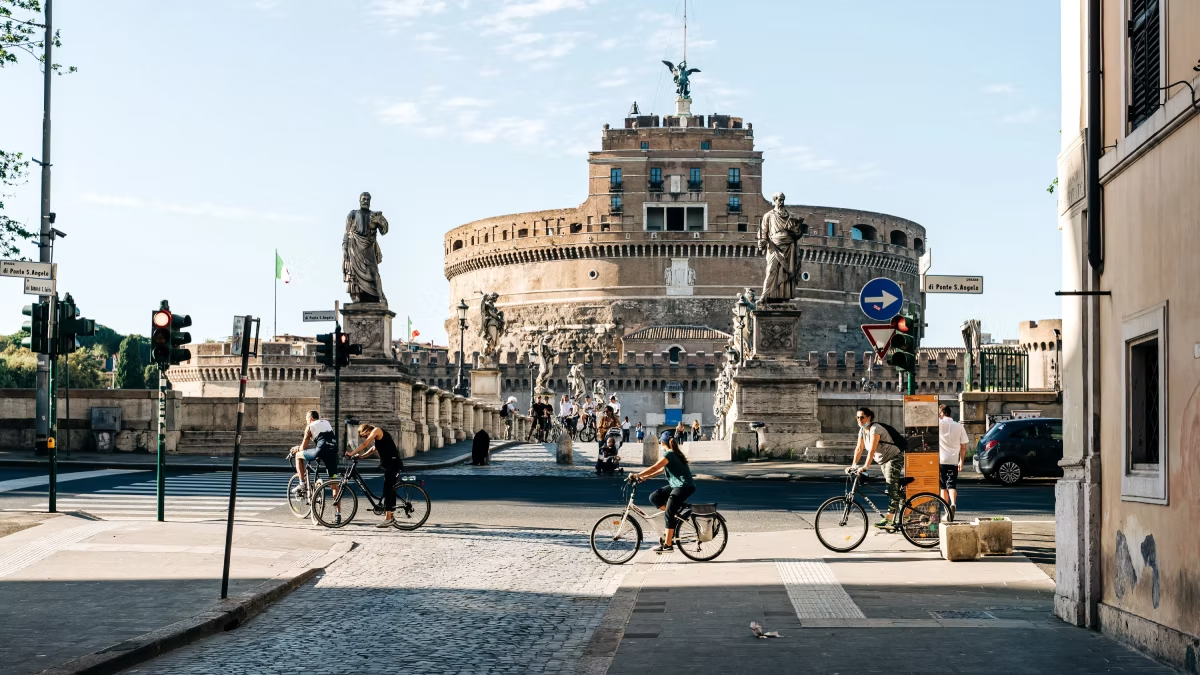
Castel Sant’Angelo is free for everyone on the first Sunday of each month under Italy’s state-museum scheme, with no booking required for the base admission. Under-18s of any nationality are always free, and EU citizens aged 18–24 pay a reduced rate of around €2 with valid ID. Occasional culture-week or Night of Museums dates can also bring free or discounted entry, though these are not fixed annual events, so confirm on the official site before you plan around one.
Castel Sant’Angelo is one of Rome’s more generous sights when it comes to free and reduced admission — but the free days are also the busiest, and it helps to know exactly what they cover before you build a visit around one. This guide walks through the recurring first-Sunday scheme, the occasional special free dates, who qualifies for a discount the rest of the month, and how to avoid spending your free day standing in line.
Free and Reduced Entry at a Glance
| Category | Cost | Notes |
|---|---|---|
| First Sunday of the month | Free for everyone | No booking needed for base admission; expect crowds |
| Special culture dates (e.g., culture week, Night of Museums) | Sometimes free or reduced | Occasional, not fixed annually — check official dates |
| Under 18 | Free | Applies regardless of nationality |
| EU citizens 18–24 | ~€2 | Valid ID required at entry |
| Everyone else, standard days | ~€16 | Can rise with a temporary exhibition |
Prices and free dates are set by the museum and can change, so treat the figures above as a solid planning guide and confirm the specifics for your travel dates on the official site.
The First Sunday of the Month
Under a long-running Italian Ministry of Culture scheme, state museums and archaeological sites — Castel Sant’Angelo included — are free to enter on the first Sunday of every month. The offer applies to all visitors, regardless of age or nationality, and normally does not require advance booking for the standard admission. It is also, predictably, the most crowded day of the month to visit.
This is the most reliable free-entry opportunity at Castel Sant’Angelo, and it runs every month of the year rather than being a one-off promotion. It covers the full standard visit — the spiral ramp, courtyards, papal apartments, and the Terrace of the Angel — at no charge, in exactly the same way a paid ticket would. The trade-off is popularity: because the offer is well known among both residents and visitors, the ticket line and the rooms themselves are noticeably fuller than on an ordinary day. If your travel dates happen to land on a first Sunday and you would rather have a calmer visit than a free one, it is worth considering a different day and paying the standard price instead.
Special Free Days Beyond the Monthly Sunday
Italy occasionally runs additional free or reduced-price cultural dates outside the monthly scheme — a European-wide Night of Museums each spring, and sometimes a dedicated “settimana della cultura” (culture week) with free admission to state sites for several consecutive days. These events are not guaranteed to happen every year, and their dates move, so this guide will not promise a fixed calendar of them. If you are planning a trip around a special free date, check the official Castel Sant’Angelo or Italian Ministry of Culture site close to your travel dates rather than relying on a date you saw somewhere else, since last year’s schedule does not necessarily repeat.
Who Gets In Free or Reduced Every Day of the Year
Two concessions apply year-round, not just on free days. Anyone under 18 enters free regardless of nationality, and EU citizens aged 18–24 pay a reduced rate of about €2 with valid photo ID. A handful of other categories — such as certain disabled visitors and an accompanying companion, and some school and teacher groups — typically qualify for free or reduced entry under Italy’s standard state-museum concession rules, though it’s worth confirming your specific category on the official site.
Unlike the monthly free Sunday, these concessions are available on any open day, which makes them useful if your dates don’t line up with a free date or if you’d simply rather skip the free-Sunday crowds. Under-18s need no documentation beyond confirming their age if asked, while the 18–24 EU reduction requires a passport or national ID card showing citizenship and date of birth — bring it with you, since staff can and do ask to see it. Other standard Italian state-museum concessions, including for visitors with disabilities and their companions, generally apply here too, though the exact list of qualifying categories is set by the ministry rather than by the castle itself, so check the official site if you think you qualify for one.
How to Plan Around the Busy Free Days
If you visit on the first Sunday of the month or another free date, arrive right at the 9:00 AM opening — the line grows quickly through the morning and stays long into the afternoon. Base admission on free days typically doesn’t require advance booking, but that also means there’s no way to guarantee a shorter wait once you arrive, so getting there early is the single best strategy.
Free days reward early risers. The ticket office and entrance line build steadily from opening, and by mid-morning the wait can stretch well beyond what you’d face on a paid day. Because free-day admission is normally first-come, first-served rather than timed, there’s no booking to fall back on if you arrive late — you simply join the line that’s already there. Once inside, the upper levels and the Terrace of the Angel also fill up more than usual, so pace yourself and expect a fuller, slower-moving visit than on a typical Tuesday or Wednesday. If a calm, unhurried visit matters more to you than saving the ticket price, our guide to the best time to visit can help you pick a quieter day instead, and a pre-booked entry ticket is the more predictable option any other day of the week.
What Free Days Do Not Cover
Free-entry dates apply to the base museum admission only. They do not cover guided tours, reseller ticket bundles that include a timed slot and audio app, and — depending on the year — sometimes not special ticketed exhibitions held inside the castle. If you want a guide, a guaranteed time slot, or access to a paid exhibition, expect to pay for that separately even on a free day.
It’s a common mix-up: a “free” museum day does not make every product related to that museum free. A guided tour still costs its normal price on a free-entry date, because you’re paying for the guide’s time and expertise, not the door admission. Reseller tickets that bundle a timed-entry slot with a smartphone audio app are also unaffected — if you buy one of those for a free Sunday, you’re paying for the convenience and the guide, not for entry itself, so it may not be the best value that day. And some temporary exhibitions inside the castle are ticketed on top of the standard admission and can be excluded from the free-day offer entirely. If your main goal is simply to see the castle without spending anything, stick to the plain base admission on a free date and skip the add-ons.
Frequently Asked Questions
Is Castel Sant’Angelo free to visit?
Yes, on the first Sunday of every month, under Italy’s state-museum free-entry scheme. Outside that day, under-18s are always free and EU citizens aged 18–24 pay a reduced rate of about €2. On all other days and for all other visitors, the standard admission price applies.
Do I need to book a ticket for the free Sunday?
Generally no — base admission on the free first Sunday doesn’t require advance booking. That also means there’s no way to guarantee a short wait, so arriving at opening is the best way to avoid the longest lines.
Are children free at Castel Sant’Angelo?
Yes. Visitors under 18 enter free every day of the year, not just on the monthly free Sunday, regardless of nationality. No ticket purchase is needed for their admission, though an adult in the group will usually still need a standard or reduced ticket.
How much is the reduced ticket for young adults?
EU citizens aged 18 to 24 pay a reduced rate of around €2, provided they show valid photo ID confirming their age and citizenship at the entrance. Non-EU visitors in this age range do not qualify for this specific reduction and pay the standard price.
Is there a Night of Museums or culture week at Castel Sant’Angelo?
Italy sometimes holds special cultural dates, such as a spring Night of Museums or an occasional culture week, that bring free or discounted admission to state sites including this one. These are not guaranteed every year and their dates vary, so check the official site if you’re hoping to plan a trip around one.
Does the free day include guided tours?
No. Free-entry dates cover the base museum admission only. A guided tour is a separate paid product with its own price, and it costs the same on a free day as any other day.
Are reseller tickets with an audio app cheaper on free days?
No. Reseller tickets that include a timed-entry slot and a smartphone audio guide are priced for that convenience and content, not the base admission, so their price doesn’t change on free-entry dates.
Will the castle be crowded on the free Sunday?
Yes, noticeably more than a typical day. The free first Sunday is one of the busiest days of the month, with longer entrance lines and fuller rooms, so arrive right at the 9:00 AM opening if crowds bother you.
Do exhibitions inside the castle cost extra on free days?
Sometimes. Temporary exhibitions are occasionally ticketed separately from the standard collection, and that surcharge can still apply even on a free-entry date. Check the current exhibition details on the official site before you go if seeing a specific show matters to you.
What’s the best alternative if I want to avoid the crowds but still save money?
If you qualify for the under-18 or EU 18–24 concession, you get a reduced or free rate on any open day, not just the monthly free Sunday, which lets you dodge the free-day crowds entirely. Otherwise, visiting on a quieter weekday and booking a standard entry ticket in advance is usually a better trade of time for money than fighting the free-Sunday lines.
